
Seed Germination Time by Soil Temperature: Vegetable Chart
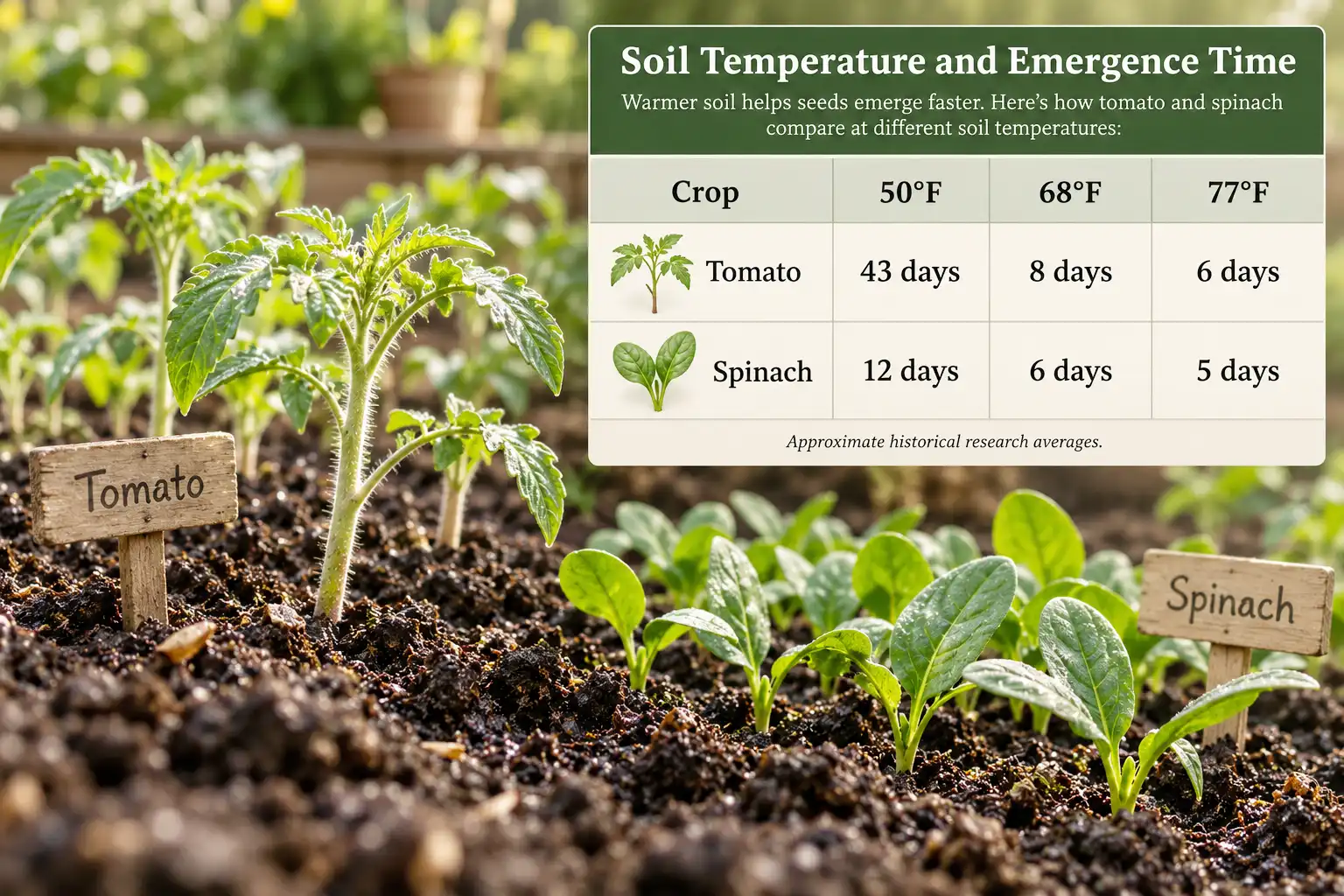
Seed germination time by soil temperature can vary by weeks, even within one crop. The temperature chart below helps you estimate when vegetable and kitchen-herb seedlings should appear, decide when to sow, and identify conditions that may delay sprouting.
Seed germination time by soil temperature changes sharply. Historical University of California data put tomato emergence at about 43 days in 50°F soil but 6 days at 77°F. Measure soil temperature and treat chart times as estimates, not deadlines.
Why Does Soil Temperature Affect Seed Germination?
Soil temperature controls how quickly many vegetable seeds begin growing. Warmth affects the biological processes that allow a seed to absorb water, activate growth, and produce its first root.
However, every crop has a suitable temperature range. Soil that is too cold can delay growth or prevent germination. Excessive heat can also inhibit some crops.
Temperature is only one requirement. Seeds also need sufficient moisture, oxygen, and suitable planting conditions.
Two terms are worth separating:
- Germination: The seed begins growing internally and produces its first root.
- Seedling emergence: The young shoot reaches the soil surface and becomes visible.
The charts below show approximate days to visible seedling emergence, rather than the exact moment germination begins.
The figures come from historical University of California research, presented in the UC Master Gardener Program’s germination tables.
The underlying research dates to 1954. Therefore, the numbers are reference estimates, not promises for modern varieties. Soil moisture, seed vigor, sowing depth, and fluctuating temperatures can change the results.
How Long Do Seeds Take to Germinate by Soil Temperature?
The following charts compare the approximate number of days different crops take to emerge at five soil temperatures.
The reference data were developed using seeds planted about 1/2 inch deep. However, that is not the correct planting depth for every crop. Follow the instructions on your seed packet.
All figures have been rounded to the nearest whole day.
Chart key: NG means little or no germination under the experimental conditions. NT means the temperature was not tested. Neither should be interpreted as an absolute biological cutoff.
Cool-Season Vegetable and Herb Germination Chart
| Crop | 50°F | 59°F | 68°F | 77°F | 86°F |
|---|---|---|---|---|---|
| Beets | 17 | 10 | 6 | 5 | 5 |
| Cabbage | 15 | 9 | 6 | 5 | 4 |
| Carrots | 17 | 10 | 7 | 6 | 6 |
| Cauliflower | 20 | 10 | 6 | 5 | 5 |
| Lettuce | 7 | 4 | 3 | 2 | 3 |
| Onions | 13 | 7 | 5 | 4 | 4 |
| Parsley | 29 | 17 | 14 | 13 | 12 |
| Parsnips | 27 | 19 | 14 | 15 | 32 |
| Peas | 14 | 9 | 8 | 6 | 6 |
| Radishes | 11 | 6 | 4 | 4 | 3 |
| Spinach | 12 | 7 | 6 | 5 | 6 |
| Turnips | 5 | 3 | 2 | 1 | 1 |
Figures represent approximate days to seedling emergence, not days to harvest. Source: UC Master Gardener Program, based on older California research.
The important difference is not simply how quickly these crops emerge.
For example, parsnips emerged in about 14 days at 68°F but took approximately 32 days at 86°F. Higher temperatures can slow some cool-season crops rather than help them.
Also, quick germination does not mean a crop will grow successfully in hot weather.
Warm-Season Vegetable Germination Chart
| Crop | 50°F | 59°F | 68°F | 77°F | 86°F |
|---|---|---|---|---|---|
| Lima beans | NG | 31 | 18 | 7 | 7 |
| Snap beans | NG | 16 | 11 | 8 | 6 |
| Sweet corn | 22 | 12 | 7 | 4 | 4 |
| Cucumbers | NG | 13 | 6 | 4 | 3 |
| Eggplant | NT | NT | 13 | 8 | 5 |
| Cantaloupe | NT | NT | 8 | 4 | 3 |
| Okra | NG | 27 | 17 | 13 | 7 |
| Peppers | NG | 25 | 13 | 8 | 8 |
| Tomatoes | 43 | 14 | 8 | 6 | 6 |
| Watermelons | NT | NT | 12 | 5 | 4 |
Source: UC Master Gardener Program. NG and NT describe the original experimental results.
The tomato comparison is particularly useful. At 50°F, emergence took about 43 days. At 77°F, it took approximately 6 days.
However, the numbers are not a reason to sow every warm-season crop at the highest temperature.
The University of Delaware Cooperative Extension’s seed germination guidance notes that some vegetable varieties have been bred for improved cold germination since the original experiments.
Therefore, the variety on your seed packet may respond differently.
Which Seeds Can Germinate in Cool Soil?
Cool-season vegetables can begin germinating at lower soil temperatures than many warm-season vegetables. However, minimum germination temperatures should not be confused with ideal planting conditions.
Crops That Can Start in Cooler Conditions
Peas, spinach, radishes, onions, carrots, and beets can germinate in relatively cool soil.
For example, the UC data show:
- Peas emerging in approximately 14 days at 50°F.
- Spinach emerging in approximately 12 days at 50°F.
- Radishes emerging in approximately 11 days at 50°F.
These figures help explain why cool-season crops are commonly planted earlier in spring.
However, colder soil generally means waiting longer for seedlings. Cold, saturated seedbeds also raise the risk of seed decay and poor establishment.
Crops That Need Warmer Soil
Snap beans, cucumbers, peppers, squash, and pumpkins generally require warmer soil.
The UC temperature guidance lists approximately 60°F as the minimum germination temperature for snap beans, cucumbers, squash, and pumpkins.
For direct sowing, wait until the seedbed has warmed sufficiently and the weather is suitable for the crop.
Tomatoes, peppers, and eggplant are often started indoors in regions with short growing seasons. This allows seedlings to develop without depending on cold outdoor soil.
Important: A suitable germination temperature does not guarantee protection against frost. Check the local planting calendar and frost risk separately.
Can Soil Be Too Warm for Seeds to Germinate?
Yes. Excessively warm soil can delay or prevent the germination of certain vegetables.
For example, the historical UC data reported little or no lettuce germination at 95°F. Parsnips also became substantially slower as soil temperature increased.
This matters when sowing cool-season crops for fall.
In the Southeast, garden soil may remain warm even as autumn approaches. Meanwhile, uncovered containers and raised beds can heat quickly in direct sunlight.
NC State Extension’s season-extension guidance, updated in February 2026, identifies hot soil as a germination problem for lettuce, spinach, parsnips, and beets.
For hot-weather sowing:
- Place movable containers in bright shade during the hottest part of the day.
- Keep the seedbed evenly moist.
- Use appropriate shading or mulch to help moderate soil temperature.
- Measure the soil before sowing instead of relying on cooler evening air.
Avoid heavily covering freshly sown beds with materials that may trap excessive heat.
How to Measure Soil Temperature Before Planting Seeds
Measuring soil temperature is more reliable than estimating it from the weather forecast.
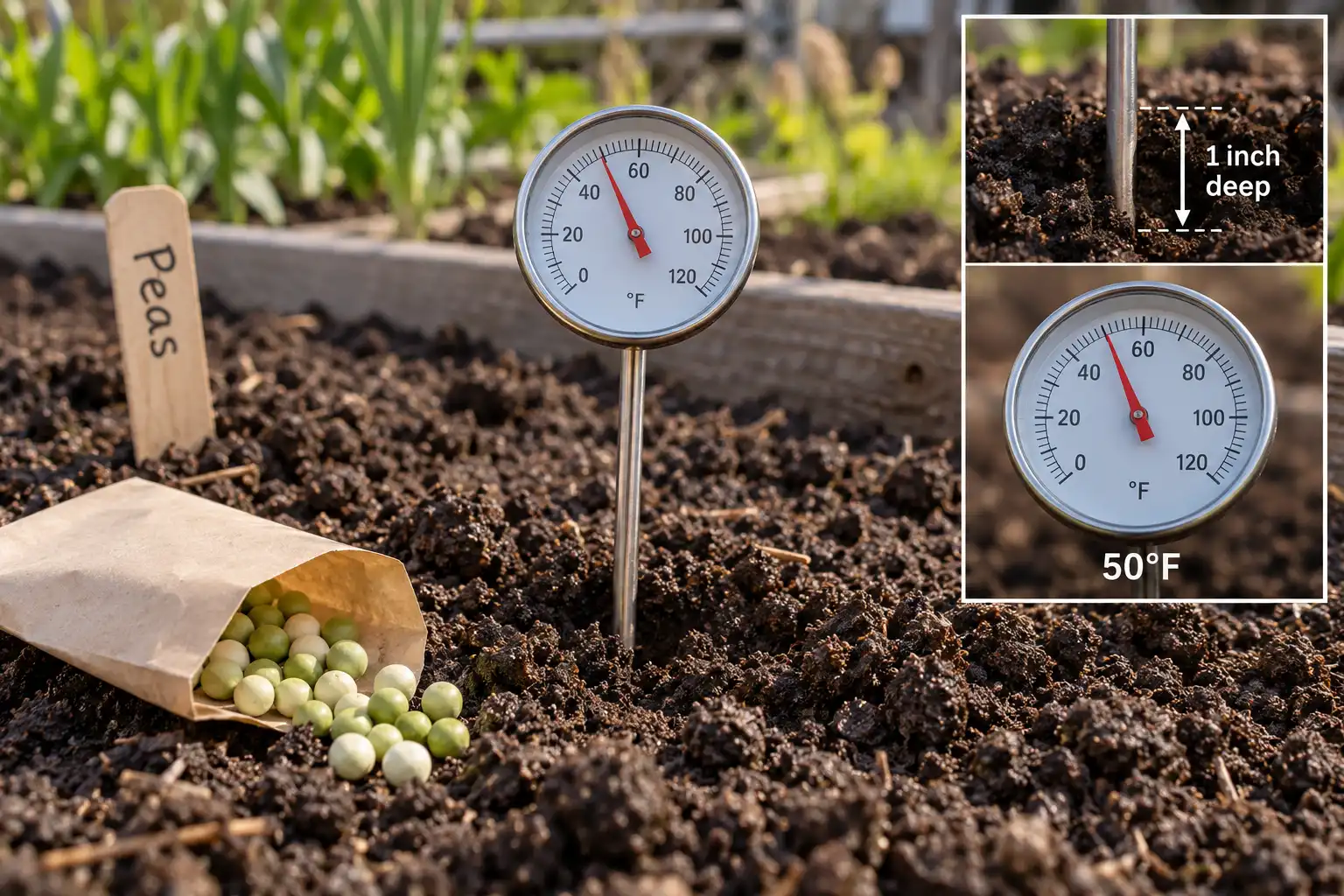
Step 1: Measure at the Intended Planting Depth
Insert a clean soil thermometer into the soil near the depth where you intend to plant the seeds.
Shallow soil can warm much faster than deeper soil. Consequently, a surface reading might not reflect the conditions around the seed.
Step 2: Check More Than One Location
Take readings from different parts of the bed, especially if some areas receive more sunlight.
According to Illinois Extension’s soil thermometer guidance, measurements taken over several days provide a more useful indication of planting conditions.
Step 3: Check Morning Temperatures
Illinois Extension identifies roughly 6 to 8 a.m. as a useful period for assessing the coolest daily soil conditions.
In hot weather, afternoon measurements can also reveal excessive heating.
Rather than planting after one unusually warm day, look for a consistent temperature pattern suitable for the crop.
Worked Example: How Soil Temperature Changes a Tomato Seed-Starting Schedule
Temperature can affect whether seedlings are ready when outdoor planting conditions arrive.
The University of Minnesota Extension’s tomato-growing guidance recommends starting tomato seeds indoors about five to six weeks before the intended outdoor planting date.
Consider a Minnesota gardener who chooses a six-week indoor growing period.
Calculation: Six-week indoor tomato-starting schedule
| Schedule item | Calculation or estimate |
|---|---|
| Available growing period | 6 weeks x 7 = 42 days |
| Tomato emergence at 68°F | About 8 days |
| Growing time left after emergence at 68°F | 42 – 8 = 34 days |
| Tomato emergence at 50°F | About 43 days |
| Growing time left after emergence at 50°F | 42 – 43 = -1 day |
Under the older experimental estimates, the cold tray might not produce visible seedlings until after the planned transplant date.
The difference between 43 days and 8 days is 35 days.
This example uses historical California germination data and a Minnesota seed-starting schedule. It does not predict the timing of a particular tomato variety.
Still, it demonstrates why monitoring potting-mix temperature matters.
How to Improve Germination in Cold or Hot Conditions
Successful seed starting means controlling temperature without creating moisture, ventilation, or electrical hazards.
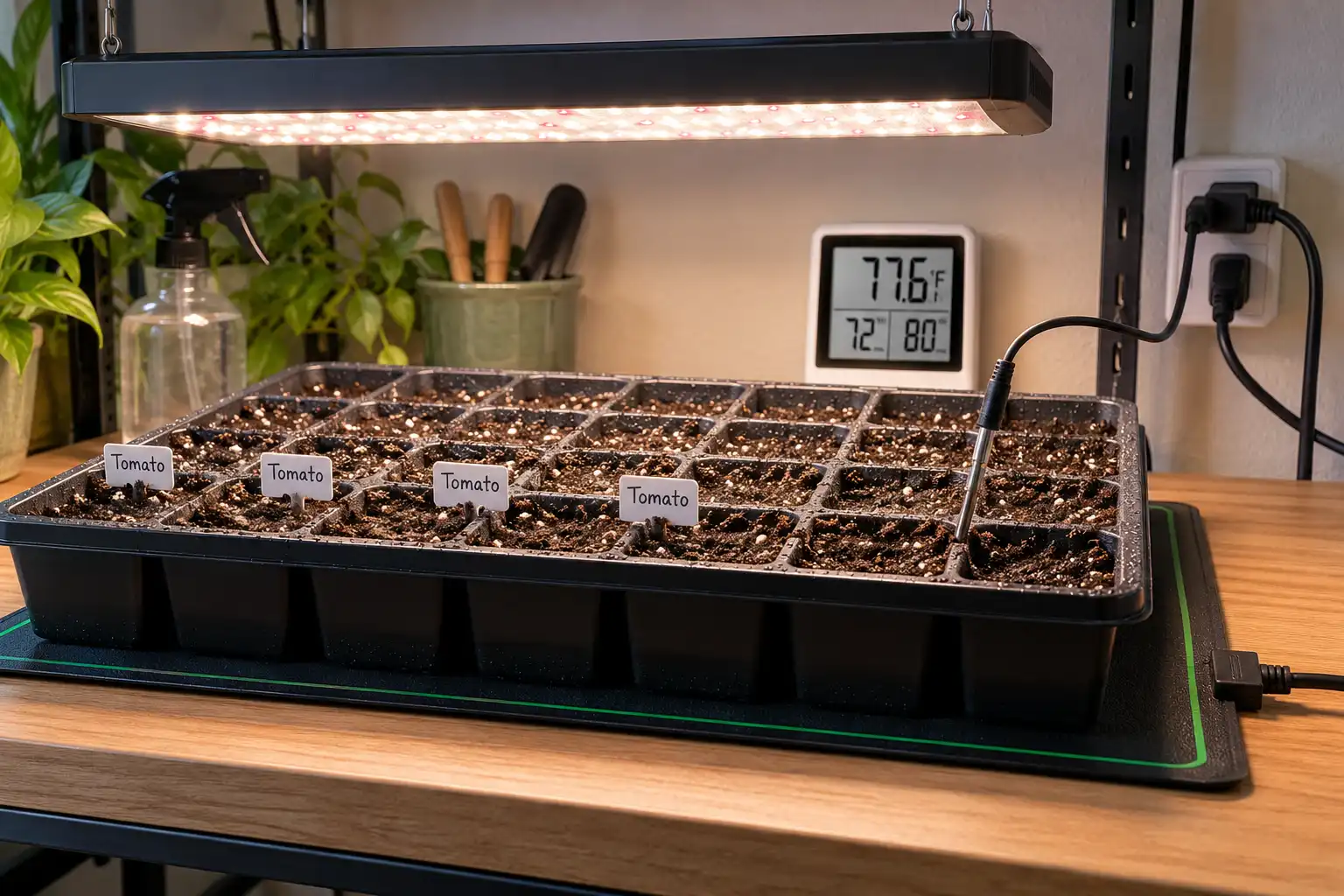
1. Keep Indoor Tomato Seeds Warm
University of Minnesota Extension recommends a potting-mix temperature of approximately 75°F to 85°F for tomato germination.
A purpose-built seed-starting heat mat can help maintain that range.
However, check the actual temperature of the growing medium. Room temperature alone is not enough.
Heat mats can also dry the growing mix faster. Therefore, monitor moisture regularly and reduce or remove supplemental bottom heat when seedlings emerge.
Use equipment rated for seed starting. Follow the manufacturer’s safety instructions and keep electrical connections away from water.
2. Maintain Moisture Without Saturating the Soil
Seeds must absorb water to begin germination.
However, soggy soil can restrict oxygen and encourage seed decay.
Use a loose, well-drained seed-starting mix for indoor trays. Check moisture below the surface instead of repeatedly wetting only the top layer.
Water gently to avoid displacing newly planted seeds.
3. Follow the Correct Seed Depth
Planting too deeply can delay emergence or prevent weak seedlings from reaching the surface.
The University of Maryland Extension’s 2026 sowing guidance recommends lightly covering small seeds while covering larger seeds more deeply, according to the packet.
Firm the soil gently to improve seed contact.
Remember that the research chart’s half-inch depth is an experimental condition, not a universal planting instruction.
4. Avoid Overheating Outdoor Seedbeds
When cold soil delays spring planting, waiting for sustained warmth is often safer than sowing immediately.
Raised beds and exposed soil may warm earlier than surrounding ground. However, covers used to trap warmth can overheat in sunshine.
For fall lettuce and spinach, cooling the seedbed may be more useful than warming it.
Why Seeds Sometimes Take Longer Than the Chart Says
The chart assumes reasonably favorable growing conditions. Actual garden soil can produce different results.
Temperature Fluctuations
Soil does not remain at one temperature throughout the day.
A short warm period cannot necessarily compensate for repeated cold nights. Check several readings before deciding the seedbed is warm enough.
Uneven Moisture
Dry soil may prevent a seed from taking up enough water.
Conversely, saturated soil limits air movement. Seeds need oxygen as well as moisture.
Poor Seed Quality
Old, poorly stored, or damaged seeds may germinate slowly or fail to germinate.
Different varieties can also behave differently at the same soil temperature.
Soil Crusting or Incorrect Planting Depth
A hard soil crust may stop seedlings from reaching the surface even after germination begins.
Deep planting can create similar problems, particularly with smaller seeds.
Possible Seed or Seedling Problems
Soft, decaying seeds or seedlings collapsing near the soil surface can have several possible causes, including growing conditions and pathogens.
These symptoms do not establish a diagnosis.
For repeated failures or suspected disease, contact your county Cooperative Extension office, Master Gardeners, or a university plant diagnostic laboratory.
When Should You Sow Again if Nothing Has Sprouted?
First, check whether the expected emergence period has passed at the temperature your seeds actually experienced.
For example, tomato seeds kept near 59°F may take about 14 days to emerge in the historical data. At 50°F, the estimate increases to about 43 days.
Therefore, a bare seed tray does not automatically mean the seeds are dead.
Before resowing:
- Measure the temperature of the soil or potting mix.
- Check whether the medium is dry, waterlogged, or compacted.
- Gently inspect a small section for swelling, developing roots, or decaying seeds.
- Review seed age, planting depth, and packet instructions.
- Correct unfavorable conditions before sowing fresh seeds.
If seedlings have already started emerging, avoid disturbing them unnecessarily.
Also, do not compensate for poor germination by continuously adding water. Correcting temperature, drainage, and moisture conditions is more useful.
FAQs about Seed Germination Temperatures
Does Air Temperature Tell You How Long Seeds Will Germinate?
No. Seeds respond primarily to conditions around them in the soil or growing medium. Air temperature can differ from soil temperature, especially in sunny beds, cold windowsills, and heated indoor seed trays.
Can Vegetable Seeds Germinate at 50°F?
Some can. The historical California data show peas emerging in about 14 days and spinach in about 12 days at 50°F. Snap beans and peppers showed little or no germination under those same conditions.
Is Higher Soil Temperature Always Better for Germination?
No. Every crop has its own temperature response. Parsnips were much slower at 86°F than at 68°F in the historical data, while very hot conditions prevented lettuce germination in some tests.
Why Does My Seed Packet Give a Different Germination Time?
Seed variety, moisture, growing medium, and planting depth influence emergence. For instance, UC data suggest roughly 3 days for lettuce at 68°F, while Maryland Extension’s 2026 container guidance allows 6 to 10 days under different conditions.
Do Basil and Cilantro Germinate at the Same Speed as Parsley?
Not necessarily. Parsley has its own row in the temperature chart. University of Maryland Extension estimates 7 to 10 days for basil and cilantro in salad-table growing media, but does not provide equivalent temperature-specific figures.
Should a Seed-Starting Heat Mat Stay On After Tomato Seeds Sprout?
Usually, continuous germination-level heat is no longer needed. Check the seedling growing temperature, reduce or remove supplemental heat as appropriate, and provide strong overhead light. Maintain moisture without leaving the growing medium saturated.
Does Faster Germination Mean the Vegetables Will Be Ready to Harvest Earlier?
Not necessarily. Germination measures only the first stage of growth. Harvest timing also depends on the crop variety, later growing temperatures, sunlight, water, nutrition, and the number of days needed to reach maturity.
Make Soil Temperature Part of Every Planting Decision
A soil thermometer can help you avoid sowing vegetables into conditions that delay or prevent germination.
Use the chart to establish a reasonable emergence window, then consider your region, crop, seed variety, moisture, and planting depth.
For warm-season vegetables, patience with cold spring soil can prevent unnecessary reseeding. For cool-season crops planted in warm weather, reducing soil heat may be just as important.