
10-10-10 Fertilizer: What It Means, How Much to Use, and Best Picks

10-10-10 fertilizer is a common all-purpose feed for home gardens. It suits some vegetable beds and overfeeds others. This guide covers what the numbers mean, how much a bed needs, when to skip it, and which products fit which garden.
10-10-10 fertilizer holds 10% nitrogen, 10% phosphate, and 10% potash. It suits vegetable beds where a soil test shows low phosphorus and potassium. Without a test, Penn State Extension suggests 1.75 pounds per 100 square feet per season in Pennsylvania.
What Is 10-10-10 Fertilizer?
10-10-10 is a balanced, complete fertilizer. It carries the three primary plant nutrients, nitrogen, phosphorus, and potassium, in equal percentages. Because the numbers match, UGA Extension calls it a 1-1-1 ratio fertilizer, the same ratio as 8-8-8.
You’ll also see it sold as “triple 10” or simply “balanced” fertilizer.
It comes in two main forms:
- Granules you spread on the soil, then rake in and water
- Liquid concentrates you mix into a watering can
Granular products differ, too. Some dissolve quickly. Others blend in a slow-release share of nitrogen. So read the label before you compare two bags. Liquids work differently again: the liquid products reviewed below all call for repeat feedings through the season.
What Does 10-10-10 Fertilizer Mean on the Label?
The three numbers are percentages by weight. In order, they stand for nitrogen (N), phosphate (P2O5), and potash (K2O). That order is the N-P-K you’ll see on fertilizer labels.
Only the first number is the actual element, though. As a UGA Extension turf specialist explains, phosphorus and potassium are listed as compounds. To get the elements, multiply phosphate by 0.44 and potash by 0.83. So 10-10-10 holds 10% nitrogen, about 4.4% phosphorus, and about 8.3% potassium.
Here’s what that means for one 50-pound bag:
| Label share | Nutrient as listed | Pounds in a 50 lb bag | Actual element |
|---|---|---|---|
| 10% | Nitrogen (N) | 5 lb | 5 lb nitrogen |
| 10% | Phosphate (P2O5) | 5 lb | about 2.2 lb phosphorus |
| 10% | Potash (K2O) | 5 lb | about 4.2 lb potassium |
| 70% | Carrier material | 35 lb | none of the three |
So most of the bag is carrier. That’s normal, but it means less nutrient per pound than a higher-analysis product like 20-20-20.

What Is 10-10-10 Fertilizer Good For?
10-10-10 is good for vegetable beds where a soil test rates phosphorus and potassium low or medium. It also works as a light side-dressing for tomatoes.
The catch is the ratio. UGA Extension notes that crops generally use nitrogen, phosphate, and potash in roughly a 4-1-2 ratio. A 1-1-1 blend delivers about four times more phosphate per pound of nitrogen than that. Over several seasons, the extra phosphorus builds up in the soil.
Penn State Extension shows where that leads. In its example report, phosphate and potash test above optimum, so it calls for nitrogen alone, as urea.
Often no bag matches your test’s ratio. For that case, the University of Minnesota Soil Testing Laboratory says to meet the nitrogen figure first. Then get as close as you can on phosphate and potash.
| Your situation | Is 10-10-10 a fit? | What to do |
|---|---|---|
| Soil test shows low or medium P and K | Yes | Apply at the test’s rate |
| New bed, no test yet | For one season | Use a no-test rate, then test |
| Soil test shows high P | No | Switch to a nitrogen-only feed |
| Tomatoes setting fruit | Yes | Side-dress lightly, away from stems |
| Established lawn | Usually no | Use a lawn grade |
Start by testing your garden soil. If the test rules out 10-10-10, compare other fertilizer types instead.
How Much 10-10-10 Fertilizer Should You Use?
The right amount comes from a soil test. Without one, use a conservative no-test rate for one season only.
Without a Soil Test
Penn State Extension gives one figure for a whole mixed vegetable garden in Pennsylvania. It’s 1.75 pounds of 10-10-10 per 100 square feet for the growing season. Penn State doesn’t split that figure by crop, and it still strongly encourages a soil test.
Carry it to your own bed:
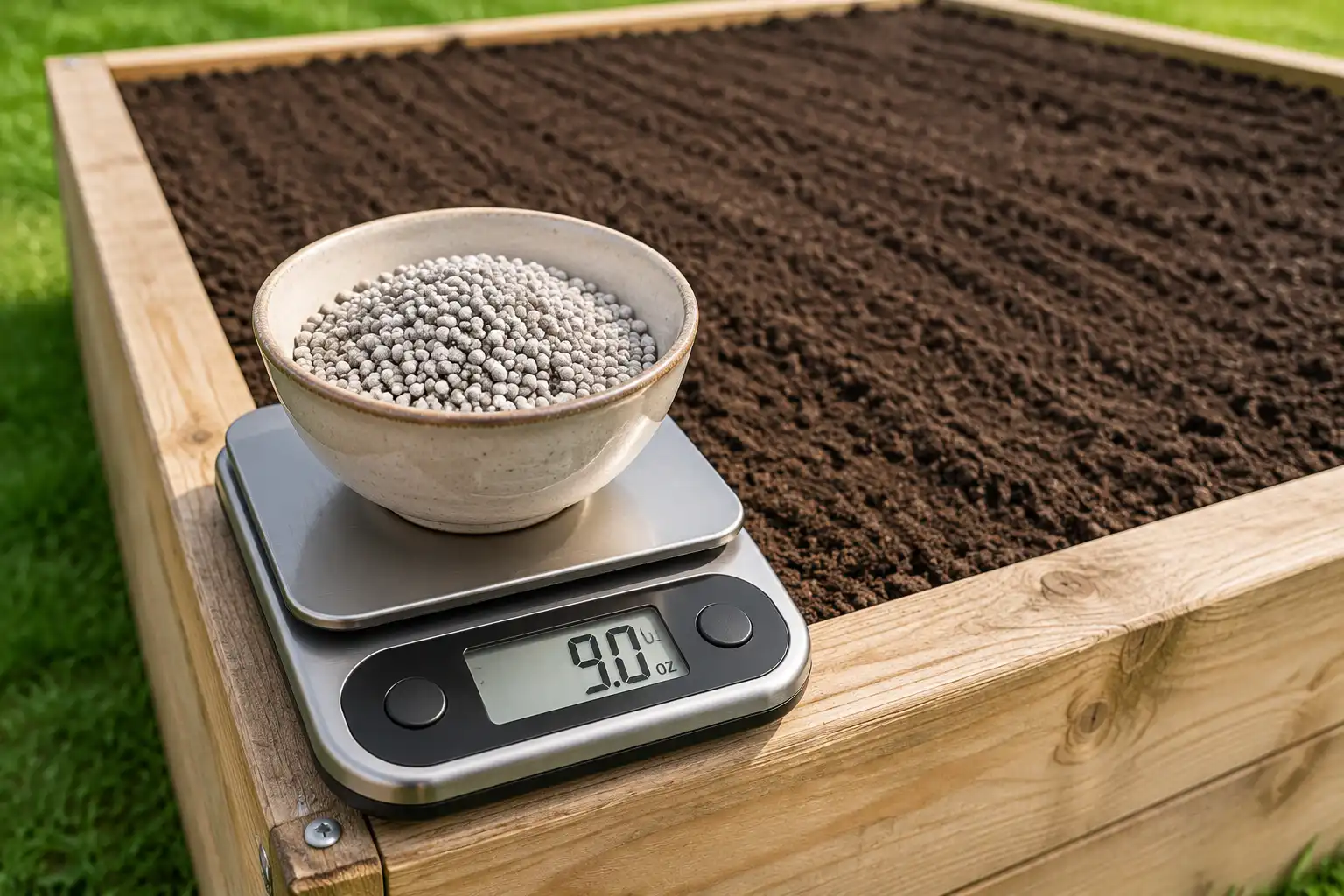
Pounds of 10-10-10 = bed area in square feet / 100 x 1.75- One 4 by 8 foot raised bed (32 sq ft): about 0.56 lb, or 9 ounces
- One 4 by 12 foot bed (48 sq ft): about 0.84 lb, or 13 ounces
- A 10 by 20 foot plot (200 sq ft): 3.5 lb
Weigh the dose once on a kitchen scale, then mark that level on a scoop. A cup of one product won’t weigh the same as a cup of another.
With a Soil Test
Reports list nitrogen in pounds per 100 or 1,000 square feet. Divide that nitrogen figure by 0.10 to get pounds of 10-10-10.
For example, say your report asks for 0.15 pound of nitrogen per 100 square feet. That’s 1.5 pounds of 10-10-10. It also adds 0.15 pound each of phosphate and potash. If the report calls for no phosphate, choose a different product instead.
If you’re planning a first vegetable plot, send the sample before the first feeding. The same goes for filling a raised bed with a fresh mix.
How to Use 10-10-10 Fertilizer in a Vegetable Garden
Using 10-10-10 fertilizer well comes down to the right dose, the right spot, and the right time.
- Test the soil. A test tells you whether the bed needs phosphorus at all.
- Weigh the season’s amount. Use the bed math above or your report’s rate.
- Spread it before planting. Broadcast granules evenly over the bed.
- Work it in. Rake the granules into the top few inches, as most granular labels direct.
- Water the bed. Watering in moves nutrients into the root zone and off the surface.
- Sweep up strays. Granules left on paths, patios, or driveways can wash into storm drains.
That last step is more than tidiness. In Minnesota, it’s the law. The Minnesota Department of Agriculture says you must clean up fertilizer on paved surfaces right away.
For liquid 10-10-10, mix it at the label’s dilution and pour it at the soil line. Some liquid labels also warn against spraying sensitive foliage.
Side-Dressing Tomatoes With 10-10-10
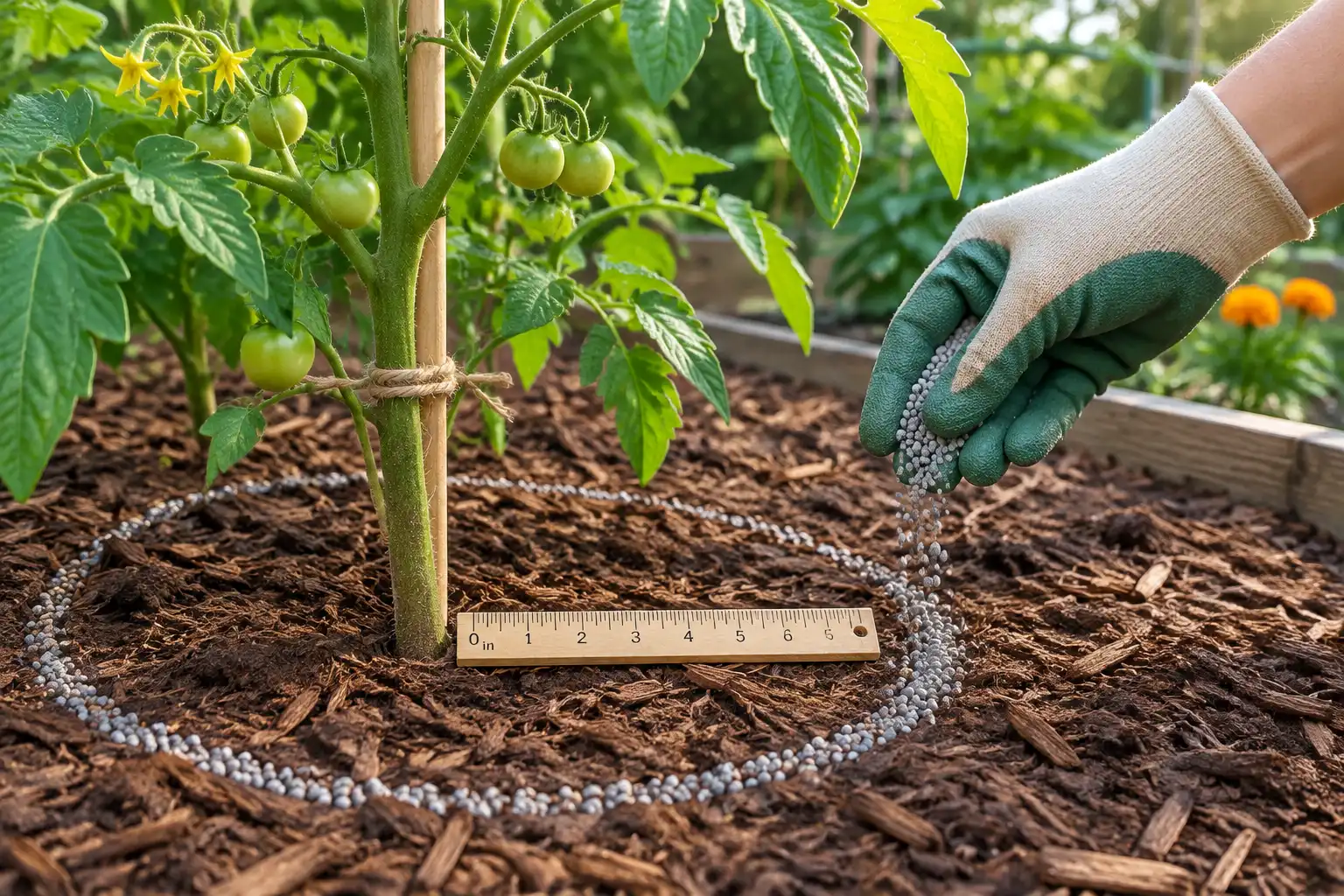
NC State Extension suggests side-dressing tomatoes in North Carolina gardens once fruit starts to set. Use 2 to 3 tablespoons of 10-10-10 per plant, then repeat every 4 to 6 weeks. Keep the granules 4 to 6 inches from the stem to avoid fertilizer burn.
Note that the two sources take different approaches. Penn State’s no-test figure covers a full season in Pennsylvania. NC State’s tomato guidance adds feedings after fruit set. Each writes for its own climate and soils. So follow one plan per bed rather than stacking both.
Common Problems With 10-10-10
Leaf scorch, yellowing, and poor growth each have several possible causes. Your county extension office, local Master Gardener volunteers, or a plant diagnostic lab can confirm what’s going on.
Brown, Crisp Leaf Edges After Feeding
Fertilizer burn is one possible cause, especially when granules touch stems or leaves. Other problems can look similar, so don’t assume. For the next feeding, keep granules well away from stems and water them in.
Soil Test Comes Back High in Phosphorus
Stop using 10-10-10 on that bed. Penn State’s example report in that case calls for nitrogen only. The University of Minnesota’s report adds a second point: keep very high-phosphorus soil from eroding into ditches and surface water.
Plants Still Pale After Feeding
Pale leaves have many possible causes. So adding more fertilizer isn’t a safe first move. Instead, a soil test checks pH and nutrients, and your extension office can examine a plant sample.
Is 10-10-10 Fertilizer Good for Lawns and Grass?
Usually not for an established lawn. University of Minnesota turfgrass specialists size lawn feedings by nitrogen. They also note that phosphorus is generally adequate in most Minnesota soils. Instead, they suggest a grade close to 24-0-12 for most Minnesota lawns. They also suggest 0.75 to 1 pound of nitrogen per 1,000 square feet for most cool-season grasses.
Here’s what 1 pound of nitrogen on 1,000 square feet of cool-season lawn looks like:
- With 10-10-10: 10 pounds of product, plus 1 pound of phosphate and 1 pound of potash
- With 24-0-12: about 4.2 pounds of product, no phosphate, and 0.5 pound of potash
Phosphorus on lawns can also break the law. The Minnesota Department of Agriculture says the state bans phosphorus fertilizer on established lawns. The exceptions are a soil or tissue test showing a need, or a new lawn. The department also notes that ten other states had similar laws as of 2012. So check your own state’s rules before you buy.
Still, 10-10-10 can fit grass in two cases. One is seeding or sodding a new lawn. The other is a soil test that shows low phosphorus and potassium.
Is There an Organic 10-10-10 Fertilizer?
Rarely. Natural materials seldom carry even, double-digit numbers, as UGA Extension’s table of organic fertilizers shows. Blood meal runs about 12-1.5-0.6. Steamed bone meal is high in phosphate with no potash. Compost sits near 1.5-1-1.5.

So organic gardeners usually build the equivalent from parts. UGA’s table matches 5 pounds of 10-10-10 with any of these:
- About 4.2 lb blood meal, 4.5 lb steamed bone meal, and 2.3 lb sulfate of potash magnesia
- About 33 lb of compost
- About 50 lb of an OMRI-approved 1-1-1 organic fertilizer
Now scale the first mix to one 4 by 8 foot bed at Penn State’s Pennsylvania no-test rate. You’d need roughly half a pound each of blood meal and bone meal. Add a quarter pound of sulfate of potash magnesia.
Organic nutrients act more slowly, though. UGA explains that until soil warms and microbes break these materials down, they may not boost growth. So expect a slower response in cool spring soil. Finished compost also adds organic matter.
Certified organic? UGA advises checking the USDA National Organic Program’s National List, OMRI listings, and your certifier first.
Liquid or Granular 10-10-10: Which Fits Your Garden?
Pick the form by garden size and how often you’ll feed. Granules suit larger beds fed a few times a year. Liquids suit containers and small beds fed often.
| Granular | Liquid | |
|---|---|---|
| Best for | In-ground plots and several raised beds | Containers and one or two small beds |
| How often | Before planting, then occasional side-dressing | Repeat feedings through the season, per label |
| Measuring small doses | Harder | Easier |
| Main risk | Burn if granules touch stems | Too strong if label dilution is ignored |
Bag size matters too. At Penn State’s no-test rate for Pennsylvania gardens, a 5-pound bag covers about 285 square feet for a season. That’s nearly nine 4 by 8 foot beds. A 50-pound bag covers about 2,850 square feet. Unless you garden at that scale, a smaller bag is easier to lift and to store dry.
Best 10-10-10 Fertilizers for Vegetable Gardens
Each product below is read the same way: analysis, form, size, and organic listing. That matches how this site covers other soil and compost supplies. Specifications are the makers’ claims, and owner feedback is marked as owner reports.
| Product | Form | Sizes | Best for |
|---|---|---|---|
| Southern Ag All Purpose 10-10-10 | Granular, quick-dissolving | 5 lb | Backyard plot or several raised beds |
| CountryMax 10-10-10 | Pellets | 10, 25, 50 lb | Large in-ground gardens |
| GardenWise 10-10-10 Granular | Granular, partly slow-release | Half quart to 20 quarts | Containers and one or two small beds |
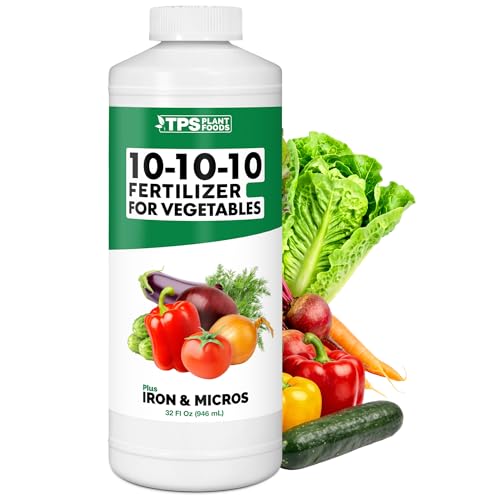
| TPS Nutrients 10-10-10 Liquid | Liquid concentrate | 8 oz, 32 oz, 1 gallon | Raised beds fed by watering can |
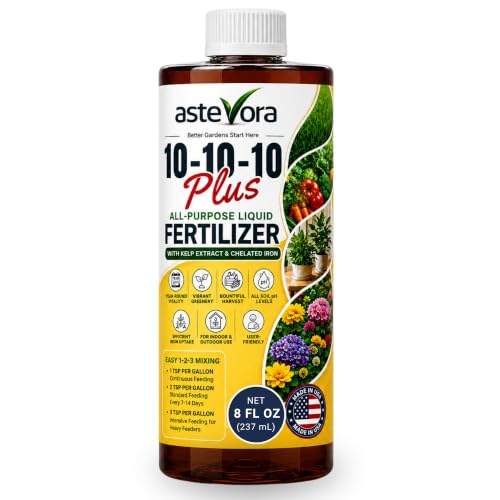
| ASTEVORA 10-10-10 Liquid | Liquid concentrate with kelp | 8 to 128 oz | A few patio containers |
1. Southern Ag All Purpose Granular Fertilizer 10-10-10

- Size: 5 LB
- Uniform, homogenous granular formulation .
- CONTAINS: 10% Nitrogen, 10% Phosphorus (P205), 10% Potassium (K20) plus minor elements .
Best for pre-plant feeding of a backyard plot or several raised beds.
This 5-pound bag holds uniform granules of quick-dissolving 10-10-10, plus magnesium, boron, iron, manganese, and zinc, per the maker. It isn’t slow-release, so the label calls for repeat feedings. The label’s cautions are worth following: keep granules off foliage, away from storm drains, and swept off paving. Owner reports consistently praise how easily it spreads, though opinions on value are mixed.
Pros
- Uniform, easy-spreading granules
- Minor elements included
- Size suits small gardens
- Clear safety directions
Cons
- Not slow-release, so feedings repeat
- Mixed owner views on value
Specifications
- Analysis: 10-10-10 plus minor elements
- Form: granular, quick-dissolving
- Size: 5 lb bag
- Organic listing: none stated by the maker
2. CountryMax 10-10-10 All Purpose Fertilizer
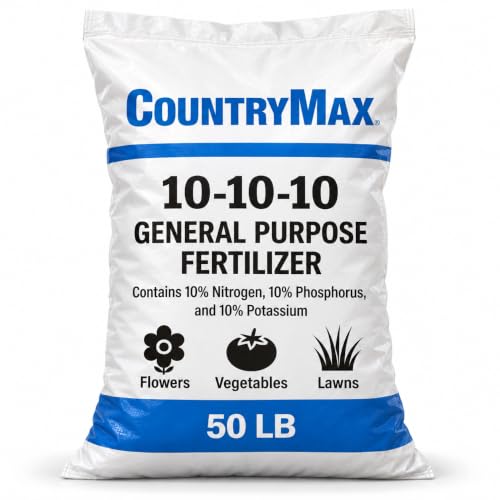
- Balanced Nutrition: Contains an even 10% Nitrogen, 10% Phosphorus, and 10% Potassium in each granule to deliver consiste…
- Promotes Soil Health: Improves the fertility and biological health of your soil over time by encouraging beneficial micr…
- Safe & Effective: Formulated to be safe for use on fruits, vegetables, herbs, grass, and ornamental plants when applied …
Best for large in-ground vegetable gardens that will use a big bag.
CountryMax sells its 10-10-10 as pellets in 10, 25, and 50-pound bags, and labels it for vegetables, fruits, and herbs. The directions fit bed preparation: broadcast, work it into the top few inches, then water well. Owner reports describe a dependable general-purpose feed with granules that are easy to handle. The maker’s claims about feeding soil microbes are its own.
Pros
- Three bag sizes
- Easy-to-handle pellets
- Suits pre-plant broadcasting
- Labeled for vegetables and herbs
Cons
- A 50-pound bag is heavy to lift and far more than a few raised beds use
- Needs dry storage away from children and pets
Specifications
- Analysis: 10-10-10
- Form: pellets
- Sizes: 10, 25, and 50 lb bags
- Organic listing: none stated by the maker
3. GardenWise 10-10-10 All-Purpose Granular Fertilizer
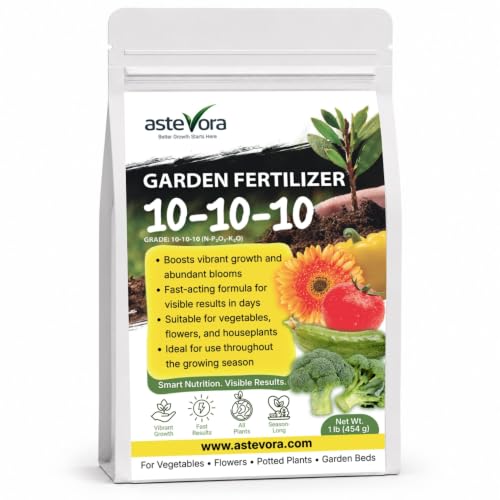
- 🌿 Balanced 10-10-10 Granular Fertilizer for Outdoor & Indoor Plants: All-purpose plant food with 10% Nitrogen, 10% Phosp…
- ⏳ Slow-Release Formula for Continuous Outdoor Feeding: Provides up to 8 weeks of sustained nutrition with fewer applicat…
- 🌼 Promotes Strong Roots, Lush Growth, and Vibrant Outdoor Blooms: Phosphorus supports root health, Nitrogen fuels lush g…
Best for container vegetables and one or two small raised beds.
GardenWise combines quick-release nitrogen with a slow-release portion the maker says feeds for up to 8 weeks. It’s sold by volume, from a half-quart container up to 20 quarts. So a small garden can buy a small amount. Owner reports note strong growth on tomatoes and peppers. Others report plant damage or say the smallest container is poor value.
Pros
- Quick plus slow release
- Small sizes available
- Fine, even granules
- Fewer feedings, per maker
Cons
- Mixed owner reports of plant damage
- Owners call the smallest size poor value
Specifications
- Analysis: 10-10-10
- Form: fine granules, quick and slow-release nitrogen (maker’s claim)
- Sizes: half quart up to 20 quarts
- Organic listing: none stated by the maker
4. TPS Nutrients 10-10-10 Fertilizer for Vegetables
- Supports Roots, Foliage & Yield – Helps encourage strong roots, healthy leaves, and productive harvests.
- All-Purpose Feeding for Garden Crops – Provides balanced nutrients for a wide range of vegetables.
- Ideal for Garden Beds & Raised Planters – Suitable for backyard gardens, rows, and container vegetables.
Best for feeding raised beds and containers with a watering can.
TPS Nutrients makes a concentrated liquid 10-10-10 with added iron and micronutrients, made in the USA. Mix it with water and apply it from a watering can or hose-end sprayer. The maker states 1 ounce covers about 50 square feet. At that rate, one 4 by 8 foot bed takes about two-thirds of an ounce per feeding. Owner reports single out zucchini, tomatoes, onions, and peppers.
Pros
- Mixes easily in water
- Iron and micronutrients added
- Three bottle sizes
- Easy to measure small doses
Cons
- Label calls for frequent repeat feedings
- Label calls for gloves and safety glasses
Specifications
- Analysis: 10-10-10 liquid with iron and micronutrients
- Form: liquid concentrate
- Sizes: 8 oz, 32 oz, and 1 gallon
- Organic listing: none stated by the maker
5. ASTEVORA 10-10-10 Liquid Fertilizer
- COMPREHENSIVE PLANT NUTRITION: The 10-10-10 in our liquid plant fertilizer signifies a balanced blend of Nitrogen (N), P…
- ULTIMATE VERSATILITY AND ALL-PURPOSE FORMULA FOR EVERY GARDEN: Our 10-10-10 liquid fertilizer is meticulously balanced t…
- BOOSTED WITH SEAWEED EXTRACT: Our fertilizer is enriched with premium seaweed extract. This natural powerhouse is brimmi…
Best for a few patio containers of peppers, tomatoes, or eggplant.
ASTEVORA’s 8-ounce concentrate adds seaweed kelp extract, 6% chelated iron, and trace elements to a 10-10-10 base, per the maker. It mixes into a watering can. The maker states it isn’t certified organic and advises against spraying sensitive foliage. Owner reports describe quick growth on peppers, tomatoes, and eggplant, but several owners found the small bottle poor value.
Pros
- Seaweed and iron added
- Simple watering-can mixing
- Four bottle sizes
- Made in USA, per maker
Cons
- The 8-ounce bottle runs out quickly
- Not certified organic despite the seaweed
Specifications
- Analysis: 10-10-10 with kelp extract and 6% chelated iron (maker’s claim)
- Form: liquid concentrate
- Sizes: 8, 16, 32, and 128 oz
- Organic listing: not certified, per the maker
FAQs on Using 10-10-10 Fertilizer
Can I use 10-10-10 fertilizer on tomatoes?
Yes, NC State Extension suggests side-dressing North Carolina tomatoes once fruit starts to set. Use 2 to 3 tablespoons per plant every 4 to 6 weeks, kept 4 to 6 inches from the stem.
Is 10-10-10 fertilizer good for grass?
It feeds grass, but it’s rarely the best match for an established lawn. University of Minnesota turfgrass specialists suggest a grade near 24-0-12 for Minnesota lawns, where state law restricts phosphorus.
Is 10-10-10 fertilizer organic?
Usually not, because natural organic materials rarely reach even, double-digit numbers. UGA Extension matches it with blood meal, bone meal, and sulfate of potash magnesia, or an OMRI-approved 1-1-1 product.
What’s the difference between 10-10-10 and 20-20-20?
Both share the same 1-1-1 ratio, but 20-20-20 is twice as concentrated by weight. Following Penn State Extension’s nitrogen-first method, use half as much 20-20-20 to match a given amount of 10-10-10.
Can 10-10-10 burn my plants?
Yes, granules placed against stems or leaves can cause fertilizer burn. NC State Extension advises keeping side-dressings 4 to 6 inches from tomato stems in North Carolina gardens to avoid it.
When should I stop using 10-10-10?
Stop when a soil test rates phosphorus high or above optimum. Penn State Extension’s example report then calls for nitrogen only, since the soil holds more phosphate than one season uses.
Is 10-10-10 the same as triple 10?
Yes, “triple 10” is simply a common nickname for a bag of 10-10-10. It means 10% nitrogen, 10% phosphate, and 10% potash by weight, with carrier making up the other 70%.
Key Points for Your Garden
Test before you feed. 10-10-10 earns its place where phosphorus and potassium test low, and as a light side-dressing on tomatoes once fruit sets. Where phosphorus tests high, switch to a nitrogen-only feed. For lawns, a lawn grade fits better. And for small beds, weigh the dose. At Penn State’s no-test rate for Pennsylvania, one 4 by 8 foot bed needs about 9 ounces a season.