Does Arugula Bolt? Why It Flowers and What You Can Still Eat
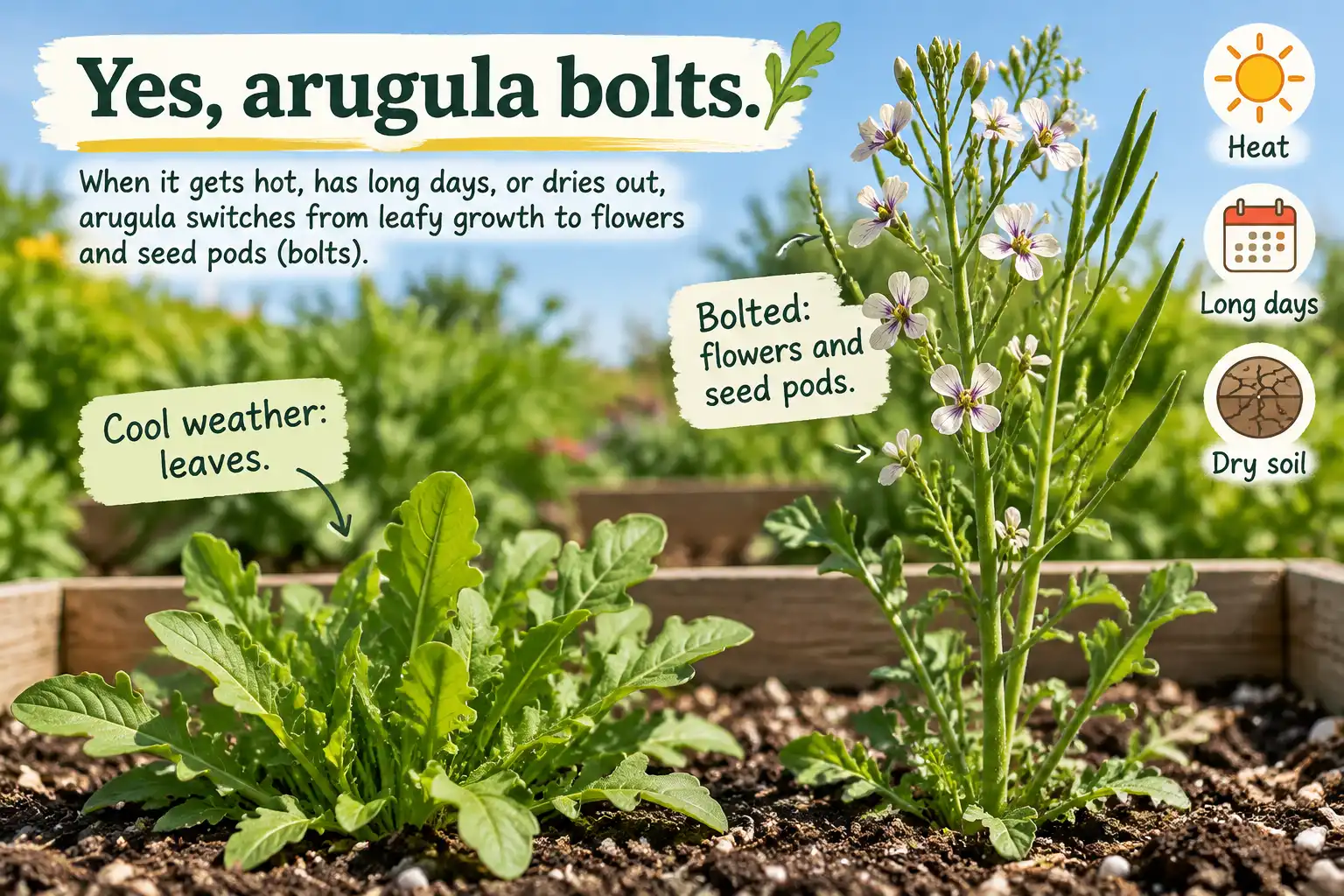
Arugula grows fast in cool weather. Then, often with little warning, it sends up a tall flower stalk. That raises three questions: does arugula bolt for a reason you can control, can you still eat it, and why did the leaves turn so hot?
Yes, arugula bolts. Long days, heat, and dry soil push this cool-season green to grow a 2 to 3 foot flower stalk, per Wisconsin Extension. Leaves turn more bitter after that, yet leaves, flowers, and young pods all stay edible.
Does Arugula Bolt?
Yes. Arugula is an annual, so bolting is the normal end of its life, not a sign you did something wrong. Illinois Extension notes that flowering signals the close of the plant’s life cycle.
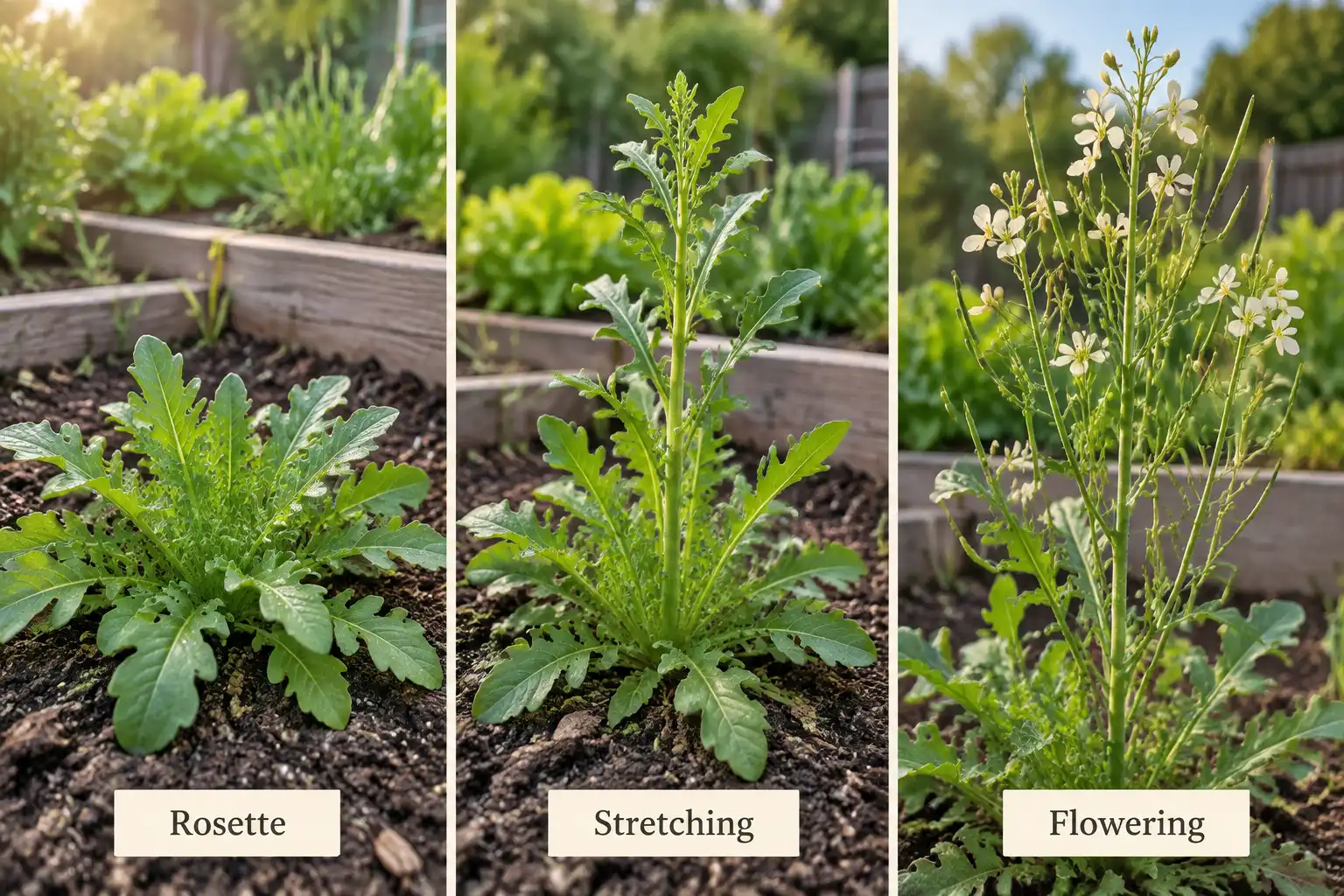
Bolting means the plant stops building a leafy rosette and starts building a flower stem. Wisconsin Extension’s arugula guide describes rosette leaves 3 to 8 inches long. Then a single branched stalk shoots up 2 to 3 feet tall. NC State Extension adds that bolting stops new leaf growth and changes the flavor.
So the real question isn’t whether your arugula will bolt. It’s when, and how much you harvest first.
Signs Arugula Is About to Bolt
Watch the center of the plant. First, the crown stretches upward instead of staying low and flat. Next, the leaves on that new stem come in small, with smooth edges. NC State describes these stem leaves as small and entire, unlike the deeply lobed leaves at the base. Then tight clusters of flower buds form at the tip.
Once you see the stem stretch, pick heavily. The best leaves of that planting are on the plant now.
What Makes Arugula Bolt?
Three conditions set it off: long days, high temperatures, and dry soil. Wisconsin Extension names all three, and any one of them can do it. Illinois Extension points to summer heat and long days. Similarly, UF/IFAS Extension says high temperatures cause arugula to flower in Florida.
| Trigger | What the sources say | What you can change |
|---|---|---|
| Long days | Illinois and Wisconsin Extension list day length as a trigger | Sow in early spring and late summer, when days are shorter |
| Heat | Wisconsin, Illinois, and UF/IFAS all name high temperatures | Sow early, add light shade, favor fall crops |
| Dry soil | Wisconsin lists dry soil; Cornell advises cutting moisture stress | Keep the root zone evenly moist |
One gap is worth knowing. None of these extension guides gives a single temperature that flips arugula into bolting. So treat any exact cutoff you see elsewhere with caution, unless it names the research behind it.
Does Arugula Flower?
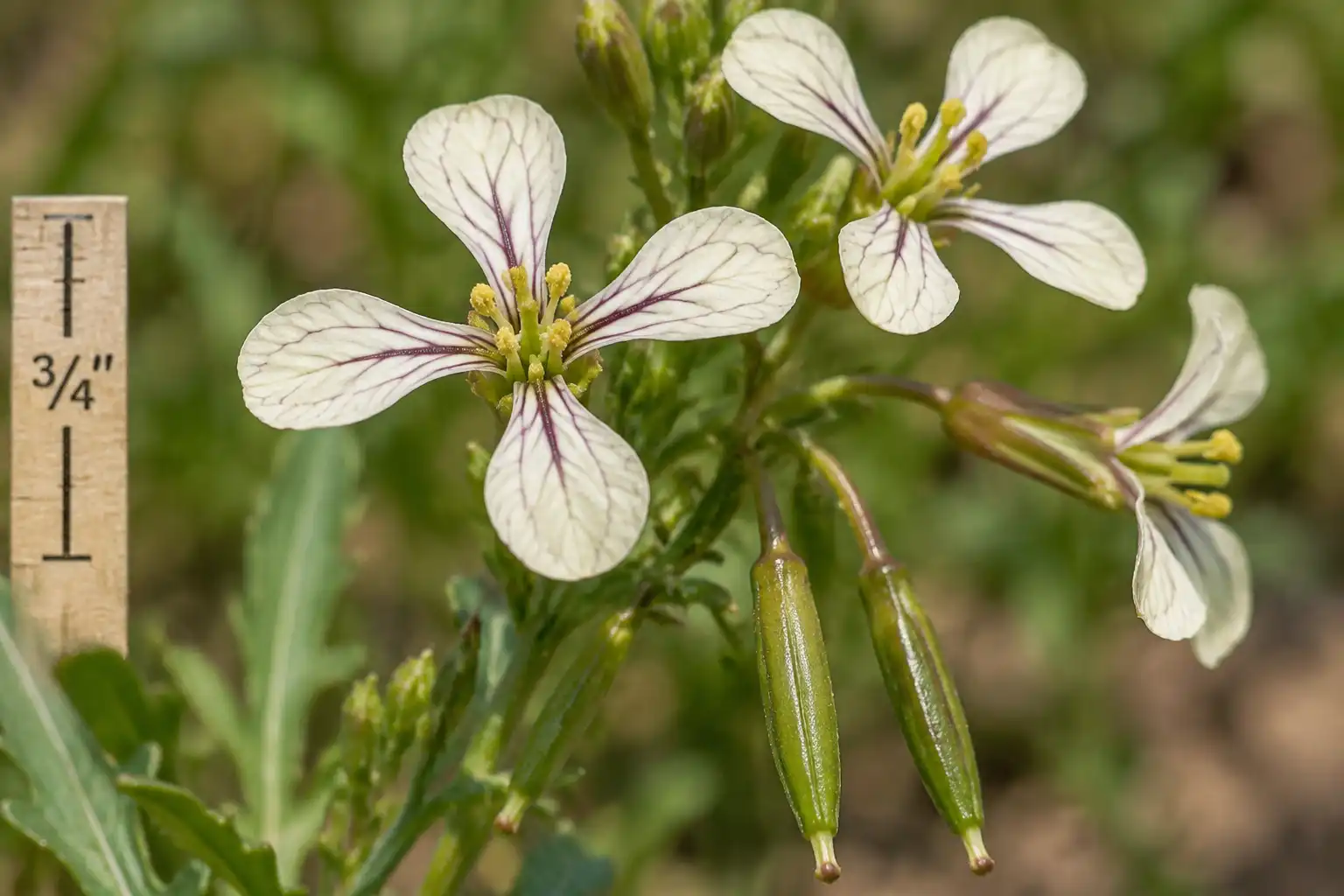
Yes, and the flowers are pretty. Wisconsin Extension describes salad arugula flowers as creamy white, four-petaled, and about 1/2 to 3/4 inch wide. Each petal carries purple to brown-red veins, with bright yellow stamens in the center.
Colors vary a little, though. NC State lists cream, white, or yellow flowers for salad arugula. Wild arugula, which Cornell’s arugula growing guide lists as ‘Sylvetta’ (Diplotaxis tenuifolia), has yellow flowers.
Pods come next. According to Wisconsin Extension, the upright pods reach about 1 1/2 inches and hold 6 to 8 brown seeds each. Cornell adds that arugula is self-sterile and needs insects to pollinate it. That means pods only form after bees and other insects visit the open flowers.
Can You Eat Arugula After It Flowers?
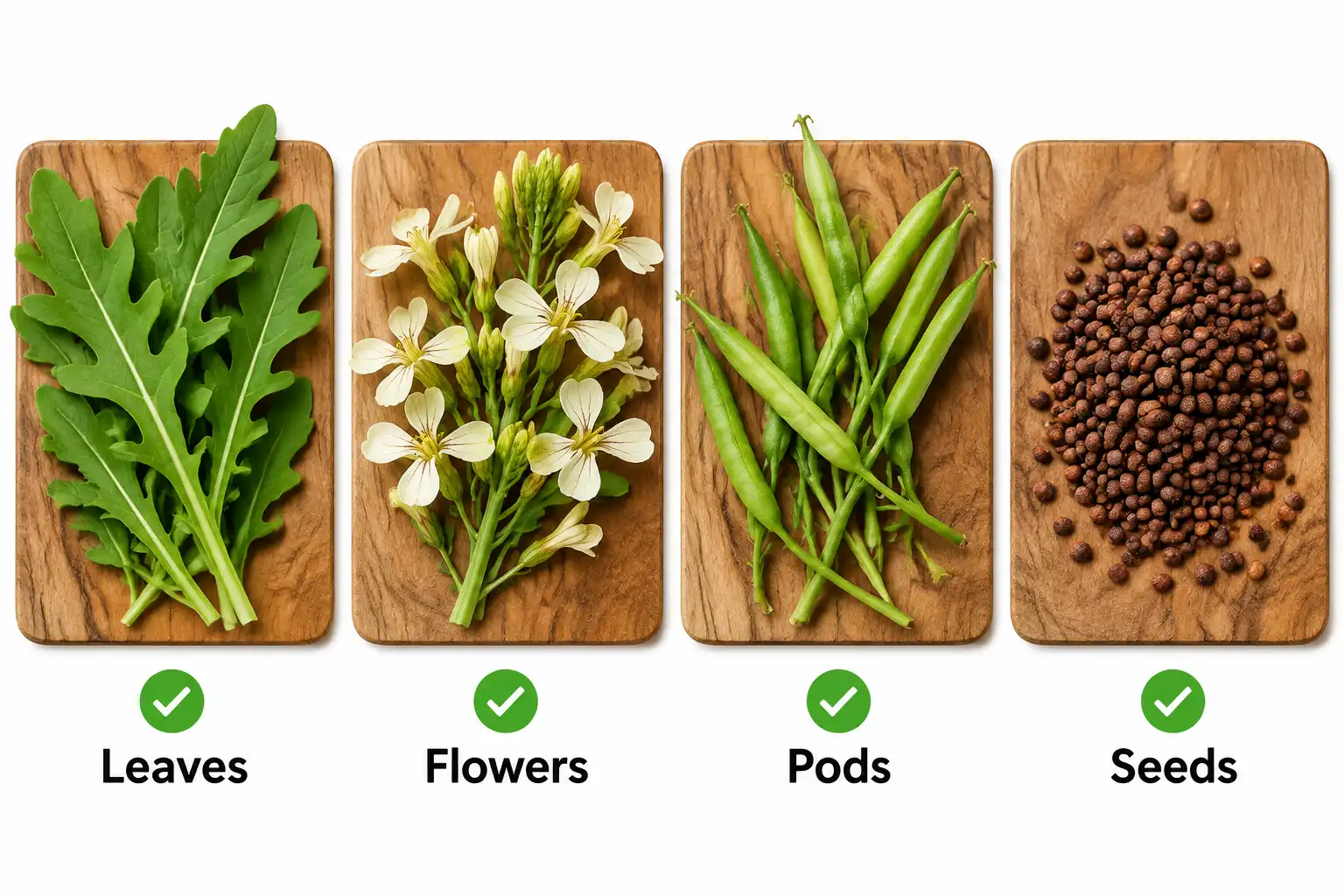
Yes. Every part of a bolted arugula plant is edible, but each part changes. NC State Extension lists the leaves, flowers, young seed pods, and seeds as edible.
| Plant part | Edible? | What to expect |
|---|---|---|
| Leaves | Yes | Tougher and more bitter with age, per NC State; UF/IFAS says they may turn too bitter to enjoy |
| Flowers | Yes | Wisconsin calls them milder than the leaves; Illinois says they concentrate the pepper |
| Young pods | Yes, while tender | Wisconsin and NC State both say to pick them young |
| Seeds | Yes | NC State lists the seeds as edible |
The flower flavor is a genuine split between sources. Wisconsin Extension calls the flowers milder than the leaves. Illinois Extension, by contrast, says they concentrate arugula’s peppery flavor and can taste unappetizing. So taste one before you scatter a handful over a salad.
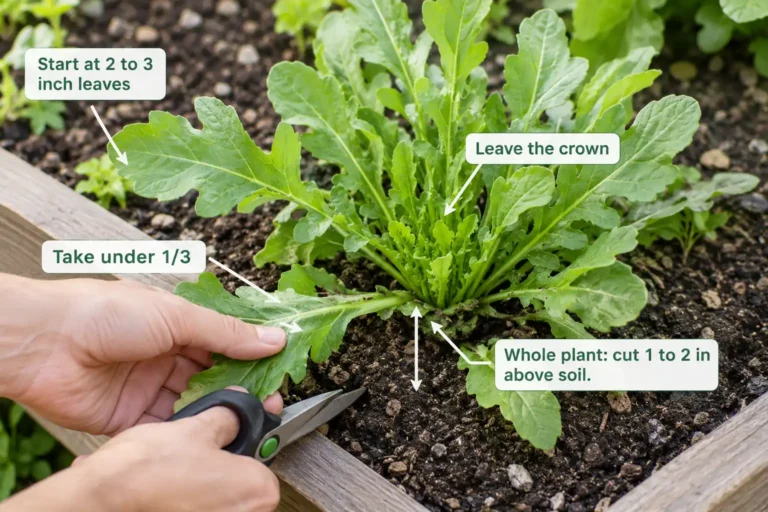
For leaves, pick the youngest ones still on the plant. Wisconsin notes that older leaves develop a stronger, more bitter flavor.
One caution applies to every part. If you used any pest control product on the plants, its label sets whether and when you can harvest.
Why Is My Arugula So Spicy?
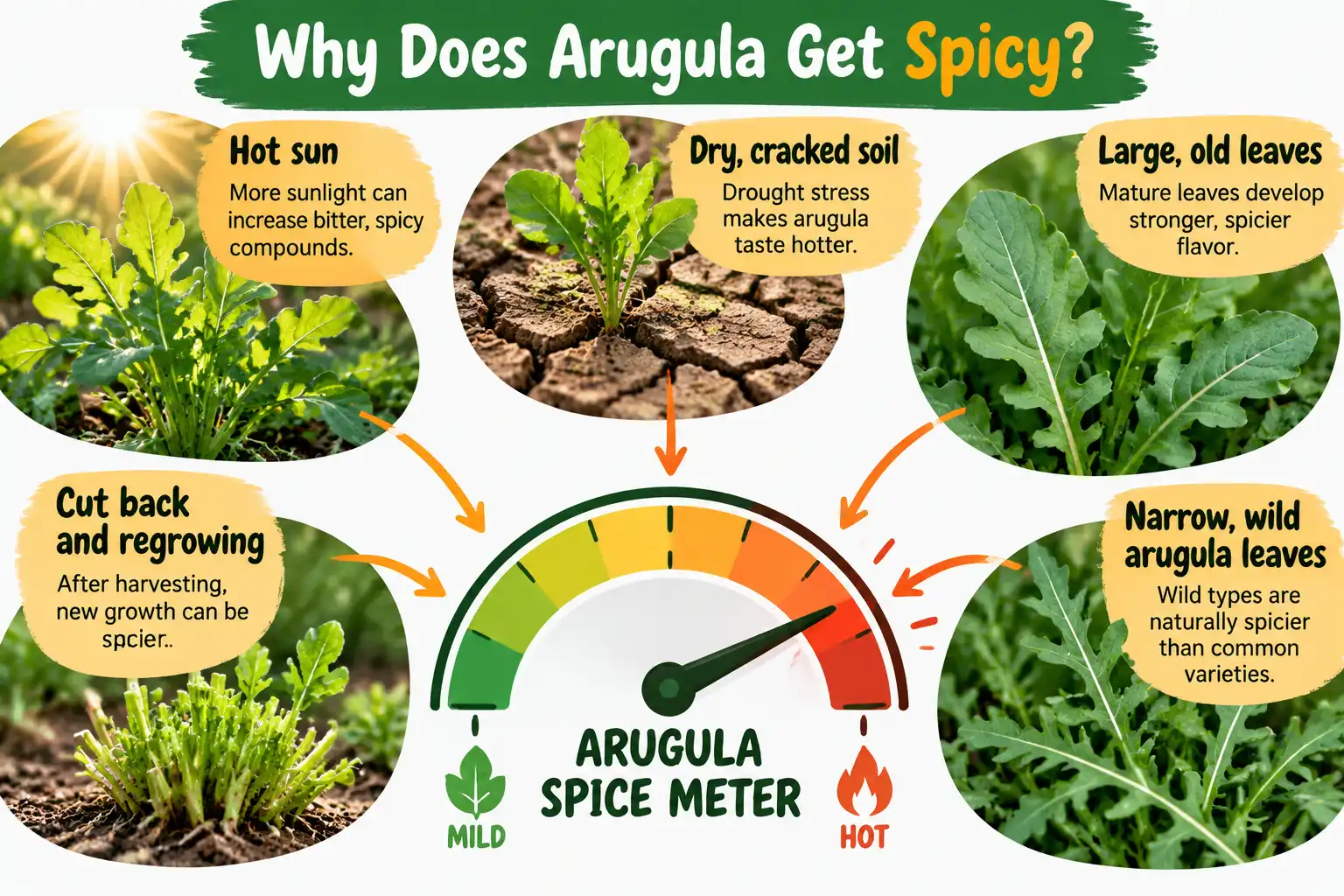
Heat, dry soil, older leaves, repeat cutting, and variety all raise the bite. Each one works through the same compounds: glucosinolates, which break down into arugula’s sharp, peppery flavor.
Wisconsin Extension says older leaves develop a stronger, more bitter flavor. It adds that drought and summer heat intensify the taste.
Research from the University of Reading in the UK backs this up. In a year-long study of commercial arugula, leaves grown in warmer weather carried more glucosinolates. Tasters also rated them more peppery, bitter, and hot. Leaves from second and later cuts scored higher in glucosinolates too, and consumers liked them less.
A separate Reading lab study grew arugula at temperatures up to 104°F (40°C). Those plants built up the most glucosinolates. However, the heat badly stunted their growth and regrowth.
Variety matters as well. Cornell describes wild arugula ‘Sylvetta’ as more pungent than salad arugula.
How to Tame Hot Arugula Leaves
| Cause | Why the leaves taste hotter | What to try |
|---|---|---|
| Hot weather | Warmer growth raised glucosinolates in the Reading study | Grow in spring and fall; add light shade |
| Dry soil | Wisconsin links drought to stronger flavor | Water before the soil dries out |
| Older leaves | Wisconsin says older leaves turn stronger and bitter | Pick leaves a few inches long |
| Repeat cuts | Reading found later cuts higher in glucosinolates | Resow often for first-cut leaves |
| Wild arugula | Cornell rates ‘Sylvetta’ as more pungent | Grow salad arugula for milder leaves |
| Bolting | NC State and UF/IFAS note bitter leaves after flowering | Pull bolted plants and resow |
How to Slow Arugula Bolting
You can’t stop bolting for good. You can delay it, though, and fit more harvests in before it starts.
Sow in the Cool Part of the Year
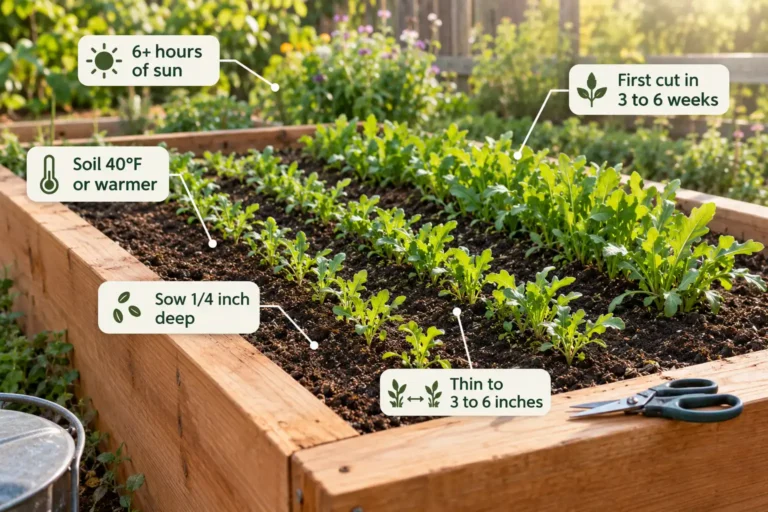
Cornell says to sow arugula as soon as the soil can be worked in spring. Wisconsin Extension adds that arugula tolerates frost, so it can go in several weeks before your average last spring frost. Cold soil isn’t a problem either. Cornell, writing for New York gardens, lists 40 to 55°F as arugula’s germination range, with seedlings up in 5 to 7 days.
Fall often works even better. Illinois Extension says most arugula types survive 22°F. Fall-grown plants there can keep producing into the next spring before they bolt. In Florida, by contrast, UF/IFAS has gardeners sow from fall through spring. Local dates depend on your frost dates, which when to sow arugula in spring and fall lays out. Your county extension office can also confirm local frost dates.
Add Light Shade in Warm Weather
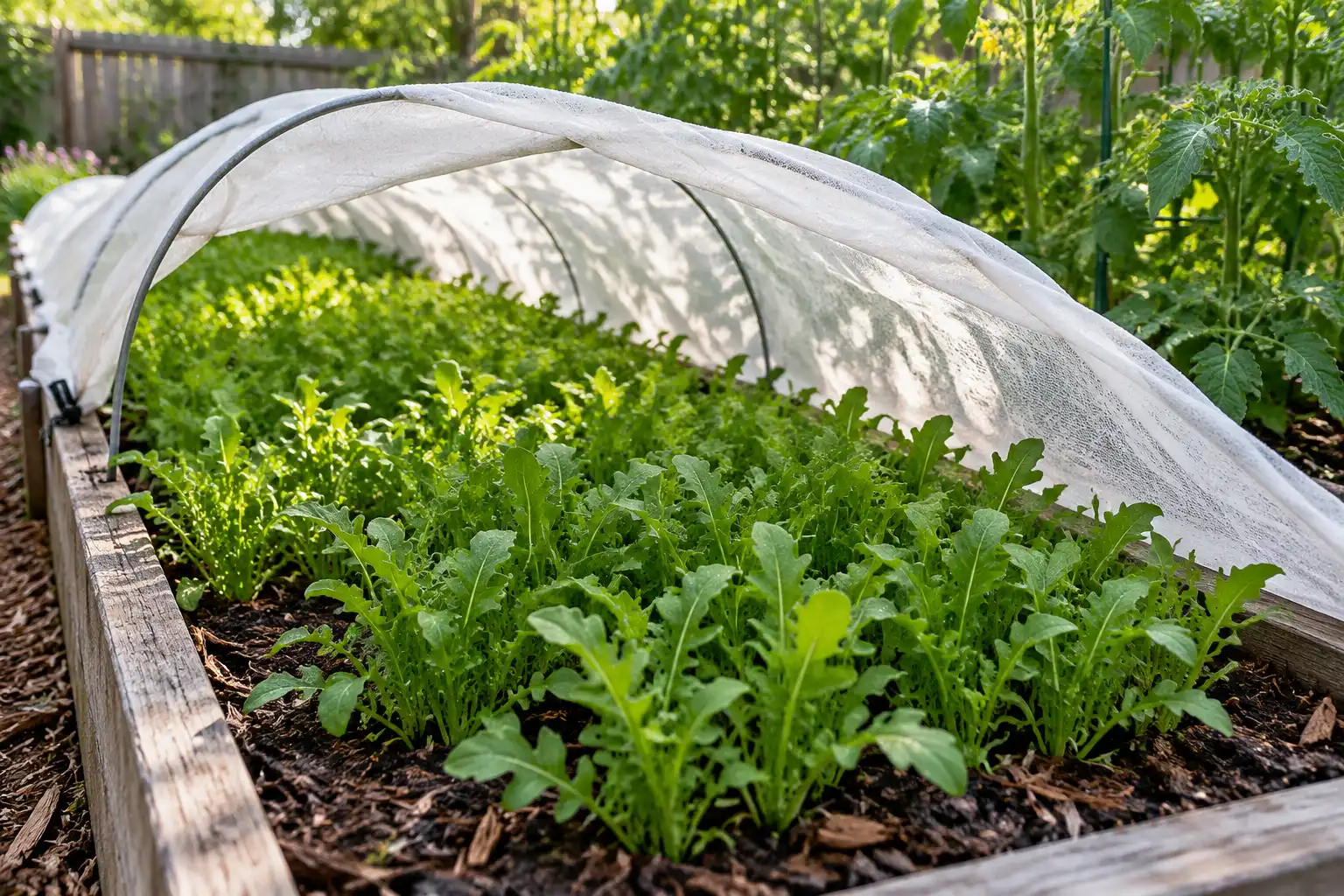
Wisconsin Extension says light shade may slow bolting during the hottest part of the season. Likewise, Cornell suggests some shade for warm-season plantings, and NC State says shade helps in hot climates.
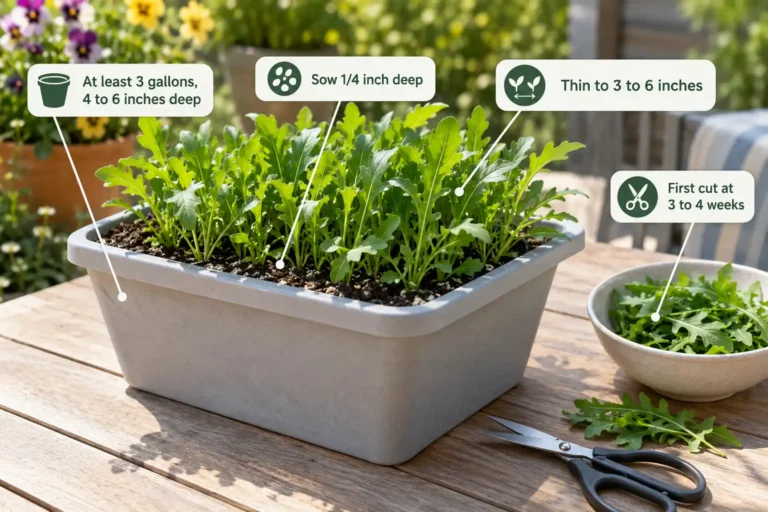
Taller crops on the west side of the bed can cast afternoon shade. Shade cloth on hoops works too. Growing arugula in pots makes this easier, because you can move containers out of the hot afternoon sun. NC State suggests a pot of at least 3 gallons for arugula.
Keep the Soil Evenly Moist
Dry soil is one of the three triggers Wisconsin names. Cornell’s advice is to reduce moisture stress. So water before the top inch of soil dries out, and mulch between rows to slow drying. On a raised bed, a simple drip line on a timer keeps moisture steady through warm spells.
Harvest Young and Often
Wisconsin Extension says picking small leaves regularly helps keep the plant from going to seed. You can pick outer leaves one by one. Or, in as little as 3 to 4 weeks after sowing, cut the whole plant 1 to 2 inches above the soil and harvest the regrowth.
There’s a trade-off, though. Regrowth after a cut tends to run hotter, per the Reading research above. So if you prefer mild leaves, resow often rather than cutting the same plants many times.
Choose a Slower-Bolting Type
Cornell says wild arugula ‘Sylvetta’ is slower to bolt. It also grows more slowly and tastes more pungent. NC State calls wild arugula heat-tolerant and perennial, so it can carry a summer harvest.
Seed catalogs also label some salad arugula varieties as slow to bolt or heat tolerant. Treat those labels as the seller’s own claims, unless a university variety trial backs them.
How Often to Sow Arugula for a Steady Supply
Sources differ slightly here. Wisconsin Extension, Cornell, and UF/IFAS all suggest a new sowing every 2 to 3 weeks. NC State, however, staggers plantings by 1 to 2 weeks. The shorter gap suits places where spring turns hot fast, since each sowing gets fewer cool weeks before it bolts.
Short rows sown often beat one long row. Wisconsin Extension thins arugula to 3 to 6 inches apart. So a 4-foot row holds 8 to 16 plants (48 inches divided by the spacing). If you’re new to the crop, start with growing arugula from seed to harvest, then add these bolting tactics.
Work Out Your Sowing and Harvest Dates
Two quick calculations keep the supply steady. Use your own frost date and sowing date.
- Last fall sowing = your average first fall frost date minus about 1 month (Cornell)
- Harvest start = sowing date plus 30 to 40 days for spring or fall arugula (Illinois Extension)
For example, with an October 15 average first frost, make the last fall sowing around September 15. Likewise, a spring sowing on March 25 reaches harvest size around April 24 to May 4. In summer, Illinois Extension says arugula is ready within about 20 days, but it bolts fast.
What to Do With Bolted Arugula
You have three good options.
- Eat it. Pick the flowers and tender pods for salads and garnishes.
- Pull it and resow. Salad arugula is an annual, so a bolted plant won’t go back to making leaves. Clear it and sow fresh seed if the season allows.
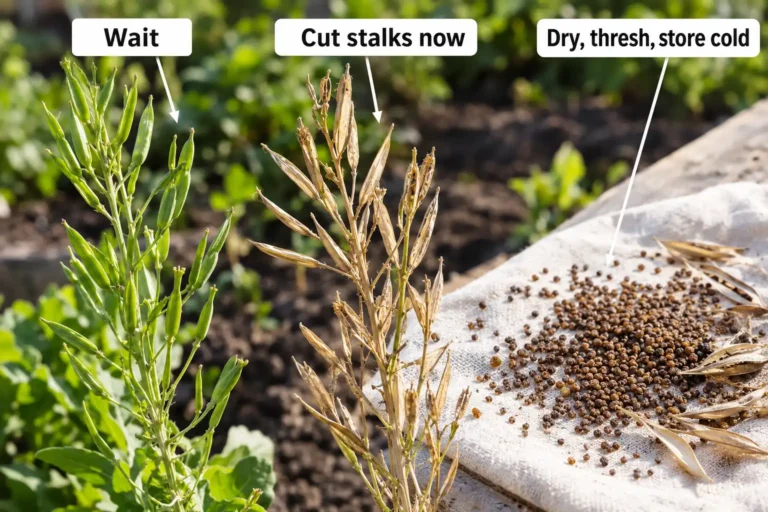
- Let it set seed. Wisconsin Extension describes cutting the stems once plants begin to dry, then hanging them upside down in a paper bag until the pods split. Cornell says arugula seed keeps for 5 years and won’t cross with other mustard-family crops.
Sources differ on how weedy arugula gets. Wisconsin calls it somewhat weedy when plants are left to mature, while NC State says it seldom becomes a weed. So if you don’t want volunteers, pull most pods before they split.
During summer, when outdoor arugula bolts fast, a windowsill crop can fill the gap. Wisconsin Extension notes that arugula grows well in containers, even on a bright windowsill in winter.
Frequently Asked Questions
Can you stop arugula from bolting once it starts?
No, because bolting stops new leaf growth, according to NC State Extension. Harvest the leaves, flowers, and young pods you want, then pull the plant and sow fresh seed for another round.
Does arugula grow back after it bolts?
Not as a leafy plant, because salad arugula is an annual that sets seed and dies after flowering. Wisconsin Extension notes it reseeds readily, though, so fallen seed can start a new crop nearby.
How long does it take arugula to bolt?
No source gives a fixed number of days, because heat, day length, and soil moisture set the timing. NC State says arugula matures in 40 to 50 days in North Carolina, so aim to harvest within that window.
Is wild arugula slower to bolt than regular arugula?
Yes, wild arugula ‘Sylvetta’ is slower to bolt, per Cornell, and NC State calls wild arugula heat-tolerant. The trade-off is smaller, more pungent leaves on a plant that grows more slowly.
Can you grow arugula in summer?
Yes, but expect it to bolt fast. Illinois Extension says summer arugula is ready about 20 days after seeding, so sow small batches often, add light shade, and harvest young.
Can arugula survive frost?
Yes, it handles light frost well. Illinois Extension says most arugula types survive 22°F, and plants protected in a cold frame or low tunnel may last through a whole Midwest winter.
Key Points for Your Garden
Arugula bolts because it’s an annual answering long days, heat, and dry soil. You can delay it, not prevent it: sow early and again for fall, shade it in warm spells, keep the soil moist, and pick young.
Once it flowers, eat the blooms and tender pods, then resow. For milder leaves, sow fresh seed rather than cutting the same plants again and again.