What Is Acorn Squash? How to Spot, Store, Bake, and Roast It
What is acorn squash, and what should you do with one? Below, you’ll learn how to recognize it and tell it from kabocha. You’ll also learn when it’s ripe, how long it keeps, and how to bake or roast it.
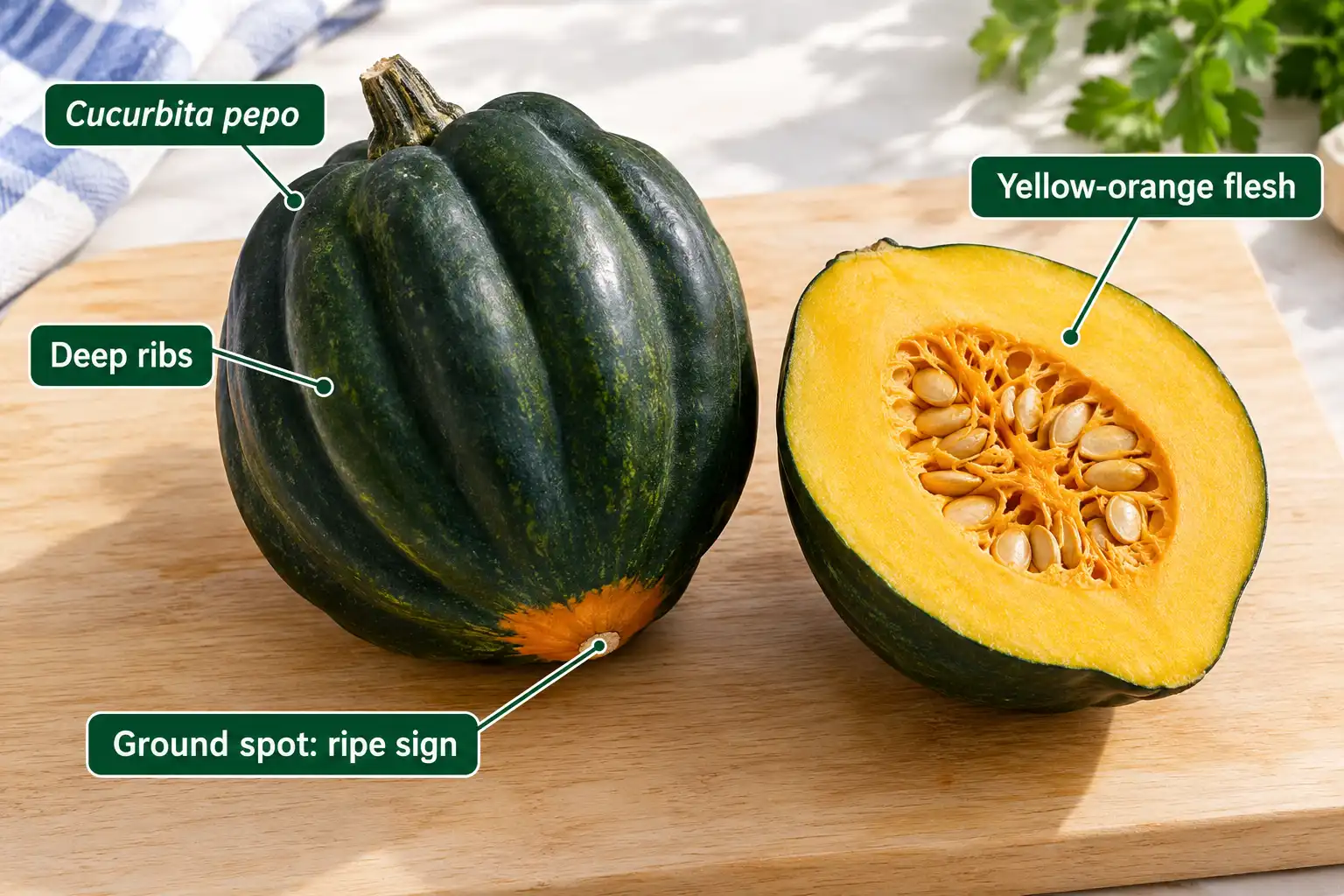
Acorn squash is a small, deeply ribbed winter squash (Cucurbita pepo) with a dark green rind and yellow-orange flesh. It’s ready to eat at harvest, and halves bake tender at 400°F, the setting USDA’s MyPlate recipes use.
What Is Acorn Squash?
Acorn squash is a small winter squash named for its shape. It’s wide at the stem, pointed at the tip, and ribbed from top to bottom.
University of Minnesota Extension places acorn squash in Cucurbita pepo, alongside delicata, spaghetti squash, and most jack-o’-lantern pumpkins. Butternut belongs to a different species, C. moschata. Kabocha, Hubbard, and buttercup belong to a third, C. maxima.
So why call it a winter squash? You pick it fully mature, with a hard rind, then store it into the cold months. But acorn squash has one useful difference. UMass Extension notes that mature acorn squash is ready to eat right after harvest. Most butternut and kabocha, however, need 1 to 2 months in storage first.
Like the other squash and cucumber crops, it grows on long vines or compact bushes. That makes it a fair fit for a backyard plot or a raised bed.
What Does Acorn Squash Look Like?
Acorn squash looks like an oversized acorn. It’s rounded at the stem end, pointed at the blossom end, and cut by deep ribs.
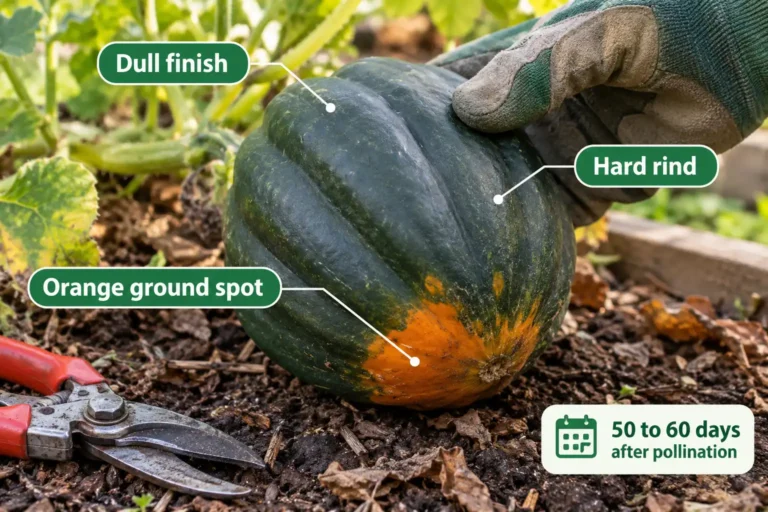
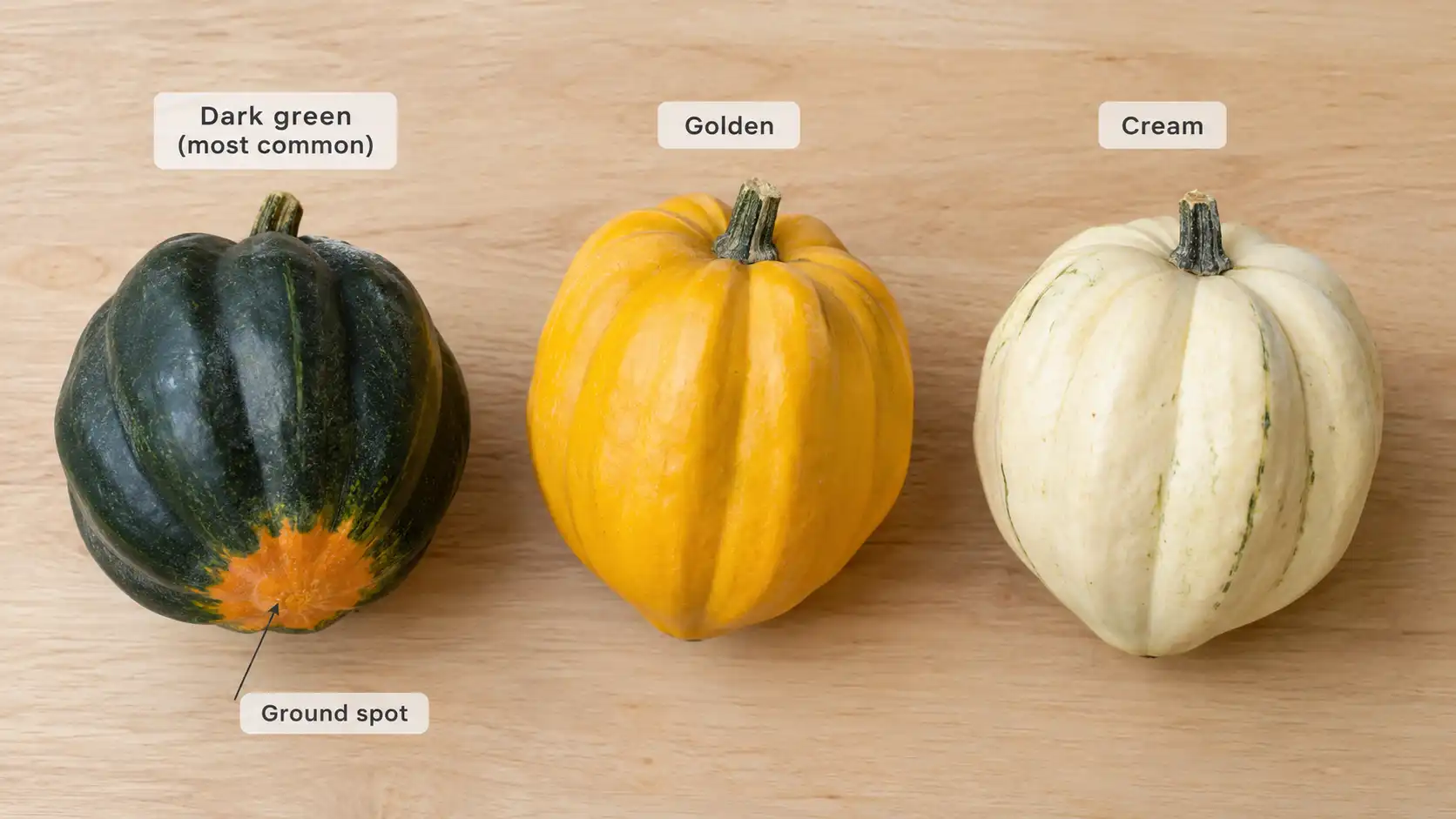
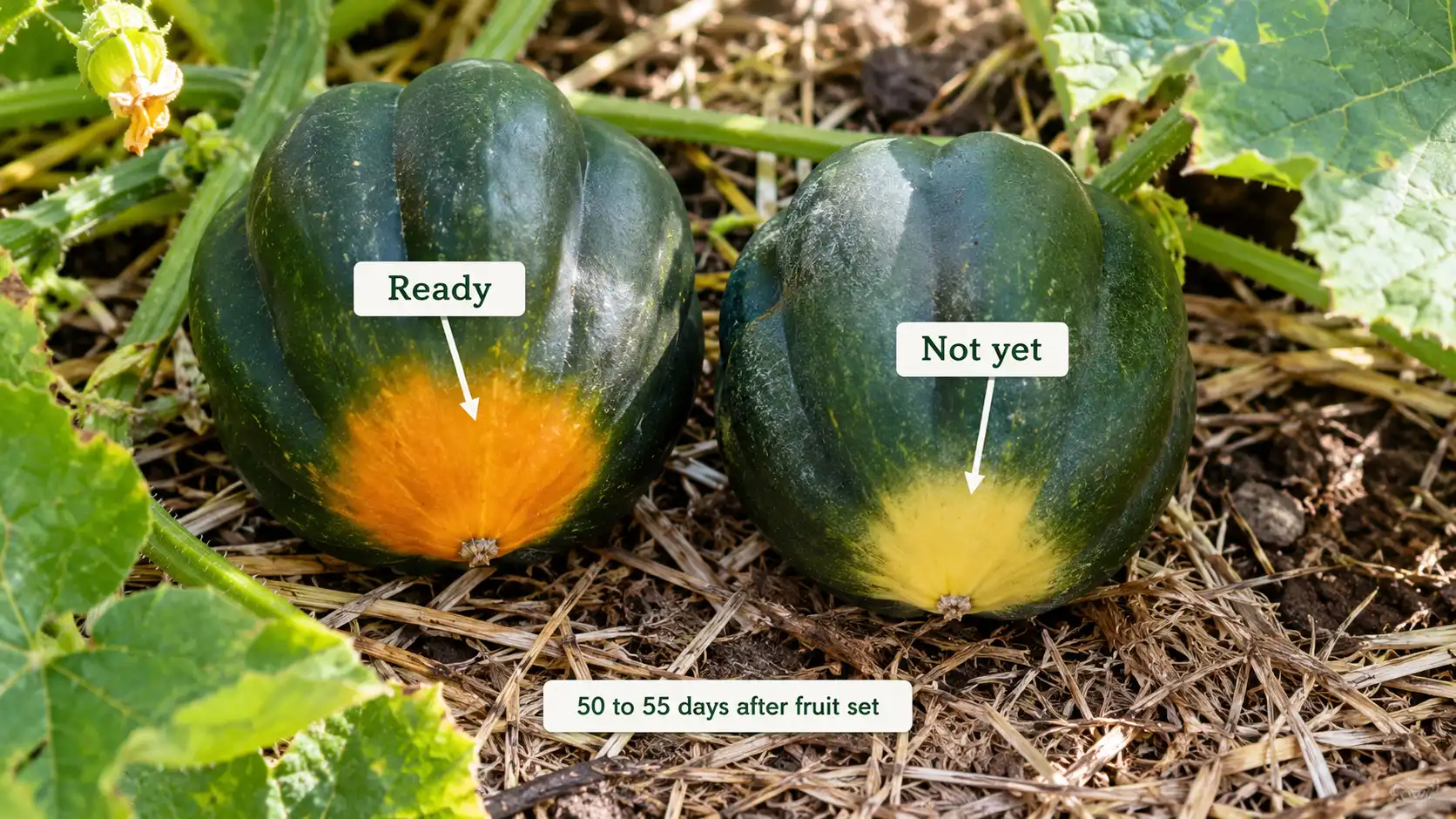
Most varieties have a dark green rind, often with one orange patch. That patch is the ground spot, where the fruit rested on the soil. In fact, UMass Extension treats a dark orange ground spot as a ripeness sign. So some orange is good news.
Inside, yellow to orange flesh surrounds a hollow seed cavity. Seed sellers describe the classic heirloom ‘Table Queen’ as 1 to 2 pounds, with medium-deep ribs. Seed catalogs also list golden, cream, and multicolored acorn types.
However, yellowing all over is a different story. Oregon State Extension’s home storage guide notes that acorn squash kept too long turns yellow and gets stringy. So a squash that has yellowed from end to end is past its best, not riper.
Is Kabocha Squash the Same as Acorn Squash?
No. Kabocha is a Japanese-bred type of Cucurbita maxima, while acorn squash is C. pepo.
Oregon State Extension’s kabocha guide (2019) describes kabochas as round, flattened, or teardrop-shaped. They weigh 1.5 to 5.3 pounds and have dark green, blue-gray, or red-orange rinds. Their dense, starchy flesh often has the texture and sweetness of sweet potato.
Timing is the bigger practical gap. Acorn squash is ready to eat at harvest, but UMass Extension says most kabochas need 1 to 2 months in storage to turn starch into sugar. Mini and red-skinned kabochas are the exception.
| Trait | Acorn squash | Kabocha |
|---|---|---|
| Species | Cucurbita pepo | Cucurbita maxima |
| Shape | Acorn-shaped, deeply ribbed | Round, flattened, or teardrop |
| Rind color | Dark green, orange ground spot | Dark green, blue-gray, or red-orange |
| Typical weight | 1 to 2 pounds (‘Table Queen’, seller figure) | 1.5 to 5.3 pounds |
| Flesh | Yellow to orange | Dense, starchy, and dry |
| Ready to eat | At harvest | After 1 to 2 months in storage (most types) |
| Storage life | 1 to 3 months | 4 to 6 months |
| Powdery mildew resistance | Bred into some varieties | None in C. maxima |
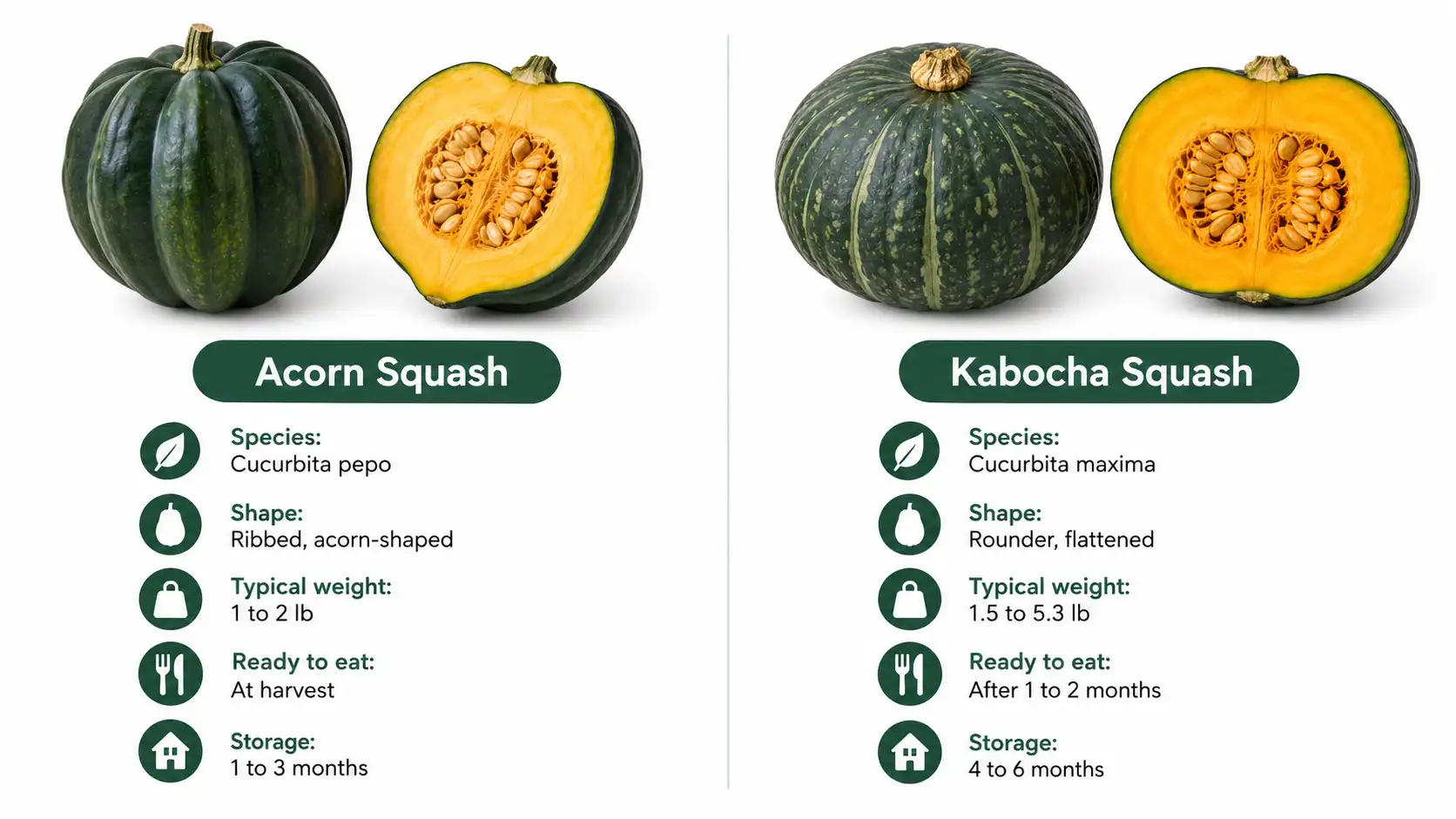
Kabocha traits and the mildew row come from Oregon State’s guide. Timing and storage come from UMass Extension and Oregon State, and the acorn weight is a seller figure. Also, white powdery spots on squash leaves can have more than one cause. Your county extension office can confirm what you’re seeing.
Can you swap one for the other? Yes. Oregon State says kabocha works in any recipe that calls for acorn squash. Expect drier, denser pieces that hold their shape.
Acorn Squash Nutrition
Baked acorn squash is low in calories and high in fiber. USDA FoodData Central lists 56 calories and 4.4 grams of fiber in 100 grams of plain baked acorn squash. One cup of cubes weighs 205 grams, so multiply each figure by 2.05 for a cup.
| Nutrient | Per 100 grams | Per 1 cup of cubes (205 grams) |
|---|---|---|
| Calories | 56 | 115 |
| Carbohydrate | 14.6 g | 30 g |
| Fiber | 4.4 g | 9.0 g |
| Protein | 1.1 g | 2.3 g |
| Potassium | 437 mg | 896 mg |
| Magnesium | 43 mg | 88 mg |
| Vitamin C | 10.8 mg | 22 mg |
These numbers cover the flesh baked without salt or toppings. Butter, maple syrup, and brown sugar add calories on top.
How to Grow Acorn Squash
Grow acorn squash like other warm-season vine crops: sow into warm soil, give the vines room, and water at the roots.
When to Plant
University of Minnesota Extension says vine crops need soil at 65°F, 2 inches down, to germinate well. In Minnesota, that usually means sowing acorn squash in late May to early June. Alternatively, start acorn squash indoors about 4 weeks before transplanting. Cold soil slows sprouting, so check how warm the soil must be for squash seed before you sow.
Spacing and Space-Saving
UMN suggests planting squash seeds 3/4 inch deep and 24 to 36 inches apart, in rows 5 to 6 feet apart. Use the closer spacing for bush types. For a 4 by 8 foot raised bed, run one row down the middle:
- 96 inches ÷ 24 inches = 4 bush plants
- 96 inches ÷ 36 inches = 2 plants, rounded down
Short on room? UMN notes that small-fruited squash such as acorn can climb a trellis, while large squash can’t. A good raised bed soil mix and sturdy supports for climbing vine crops make that work.
Watering
UMN calls for at least 1 inch of water a week for vine crops, from rain or irrigation. One inch over 1 square foot is about 0.62 gallons. So a 4 by 8 foot bed of acorn squash, at 32 square feet, needs about 20 gallons a week without rain. Water the soil, not the leaves. A basic drip setup does that well.
When to Harvest Acorn Squash
Harvest acorn squash about 50 to 55 days after fruit set, once the ground spot turns dark orange.
UMass Extension’s New England guidance draws on University of New Hampshire research. It puts most squash at maturity 50 to 55 days after pollination. Acorn squash can fool you, though. It turns dark green just 2 to 3 weeks after fruit set, still 40 to 50 days before it’s ready.
Seed packets can also mislead. Per UMass, catalogs often list acorn squash at 70 to 76 days from seeding. The UNH research put it closer to 90 to 100 days. So a June 1 sowing of acorn squash in Minnesota would ripen around August 30 to September 9.
Mark the Fruit-Set Date
Don’t worry when the first blossoms drop. UMN explains that the first flowers are male. Female flowers open later with a small swelling at the base, which becomes the squash once bees pollinate it. Write down the date that swelling starts to grow, then add the UMass window:
- Fruit set on July 20 + 50 to 55 days = ready September 8 to 13
Signs an Acorn Squash Is Ready
Before you cut, check three signs:
- The ground spot is dark orange (UMass Extension).
- The rind resists a fingernail scratch (Oregon State Extension).
- No hard freeze has hit yet. UMN advises picking before one and leaving a few inches of stem.
How to Store Acorn Squash
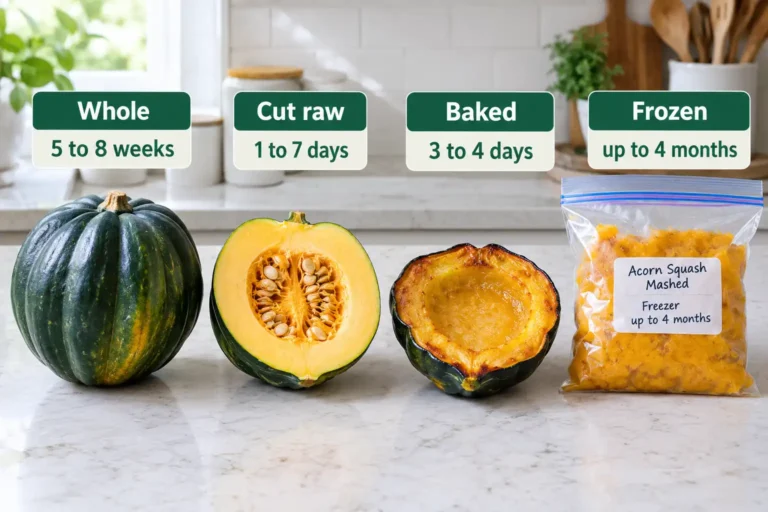
Store whole acorn squash at 50 to 55°F with good airflow, and skip curing.
Sources split on curing. University of Minnesota Extension’s general winter squash advice includes it, in the field or indoors at about 80°F. But UMass Extension makes an exception for acorn and other C. pepo squash, warning that curing can shorten their storage life. Since mature acorn squash is ready to eat at harvest, there’s no ripening to speed up.
Oregon State Extension recommends 50 to 55°F and keeping squash away from apples and pears, whose ethylene gas speeds spoilage. Keep whole fruit out of the refrigerator, too. UMass warns of chilling injury below 50°F.
How long will it keep? Oregon State gives acorn squash 1 to 2 months. UMass gives fully mature C. pepo squash 2 to 3 months. For a September 15 harvest, that means:
- Oregon State’s window: mid-October to mid-November
- UMass’s window: mid-November to mid-December
If you’re not sure the fruit was fully ripe, plan on the shorter window. After cutting, wrap the squash and refrigerate it for up to 1 week, per Oregon State’s Food Hero program. The same habits help when storing other fall crops.
Can You Freeze or Can Acorn Squash?
Yes to freezing, but never can mashed squash.
The National Center for Home Food Preservation’s tested method has you cook the squash until soft, then remove and mash the pulp. Next, cool it, pack it with headspace, and freeze. Follow the full freezing steps rather than a shortcut. Oregon State’s Food Hero program suggests using frozen cooked squash within 8 to 12 months.
Canning is where mistakes turn dangerous. NDSU Extension warns against canning mashed squash for safety reasons. Only chunks can go in a pressure canner, and only with a tested procedure. So don’t improvise canning times or methods for squash.
How to Prepare Acorn Squash
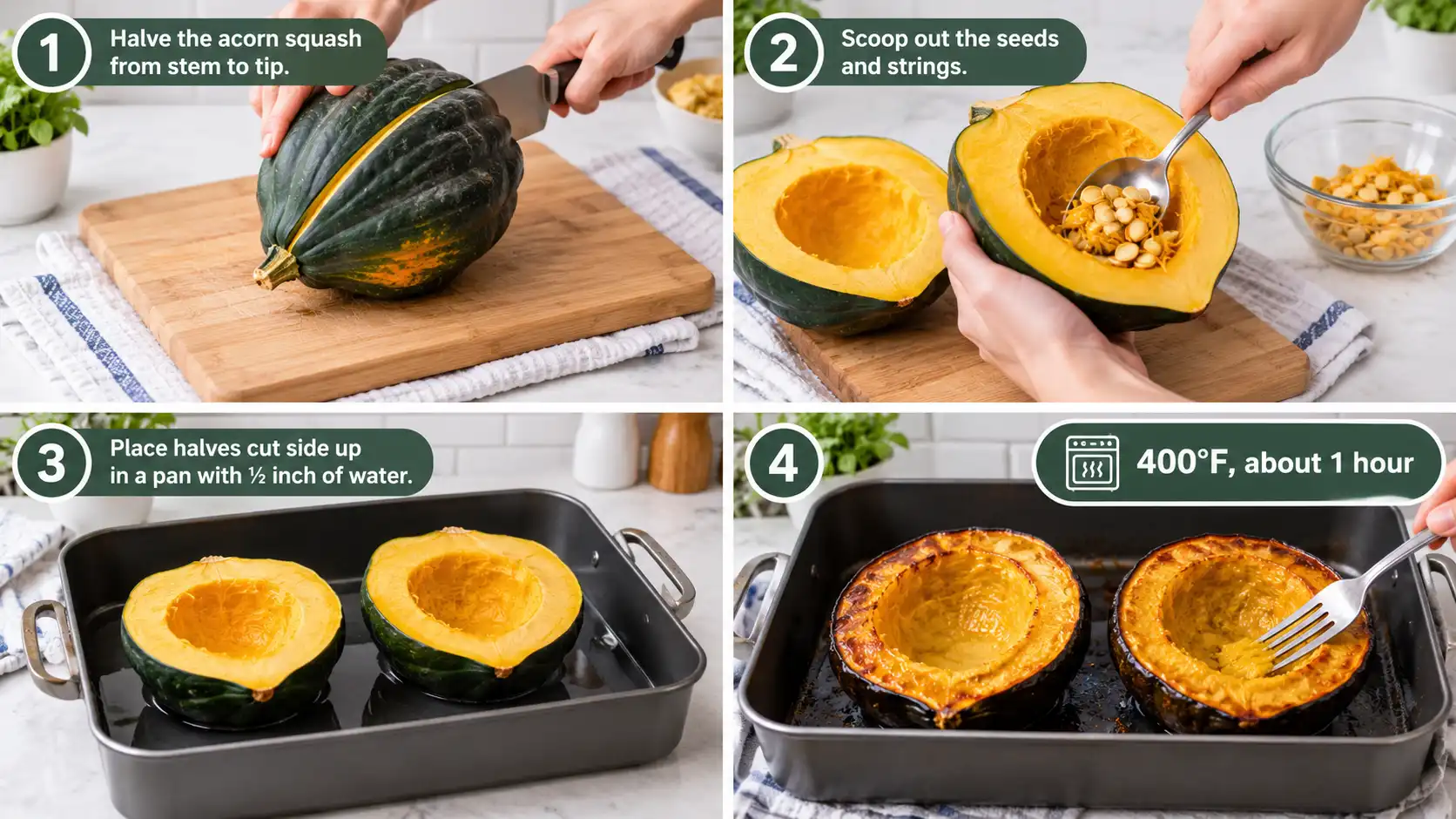
Rinse the squash, steady it, then halve it from stem to tip and scoop out the seeds.
- Rinse it first. Oregon State’s Food Hero program says to rinse winter squash under running water before cutting. That keeps soil on the rind from riding the knife into the flesh.
- Soften a hard rind. One USDA MyPlate recipe microwaves each whole acorn squash on high for 1½ minutes to make cutting easier.
- Steady the squash. Set it on a damp towel on the cutting board so it can’t roll. Keep your free hand flat and away from the blade.
- Cut from stem to tip. Start the knife in a groove between two ribs, then press straight down.
- Scoop the seeds. A sturdy spoon pulls out the seeds and stringy fibers.
- Level the halves. If they wobble, slice a thin piece off the underside so they sit flat.
Want roasted seeds? Food Hero tosses 1 cup of dried winter squash seeds with 2 teaspoons of oil. Then it bakes them at 350°F for 15 to 25 minutes, stirring several times.
How to Bake Acorn Squash
Bake acorn squash halves cut side up at 400°F until a fork slides in easily. Three USDA MyPlate recipes for acorn squash use 400°F, with bake times of 30 to 60 minutes.
Here’s the method from USDA’s Easy Baked Acorn Squash:
- Heat the oven to 400°F.
- Pour about ½ inch of water into a baking pan.
- Set the acorn squash halves in the pan, flesh side up.
- Spread 1 tablespoon of maple syrup in each half, or use black pepper for a savory version.
- Bake about 1 hour, until the flesh is tender.
For a shorter bake, MyPlate’s Sweet Acorn Squash skips the water and bakes 30 to 45 minutes. Its Orange Honeyed Acorn Squash bakes under foil for 30 minutes to hold in steam, then uncovered for 30 more.
Baking a Whole Acorn Squash
Cutting a raw squash is the hard part, so you can skip it. NDSU Extension pokes several holes in a rinsed squash and bakes it whole and uncovered. A medium squash takes about 1 hour at 350°F, or less at 400°F. Once it’s fork-tender, halve it and scoop out the seeds.
How to Roast Acorn Squash
Roast acorn squash wedges at 400°F for about 40 minutes, until a fork pierces them easily.
NDSU Extension’s roasted acorn squash recipe halves one medium squash and scoops out the seeds. Then it cuts each half into 4 wedges, brushes them with olive oil, and seasons them. The wedges bake at 400°F for 40 minutes with the skin on.
For cubes, NDSU’s general winter squash recipe uses peeled 1½-inch chunks at 350°F for 25 to 35 minutes. Still, peeling a ribbed acorn squash is fiddly, so wedges save time.
Baked or roasted? Halves give soft, scoopable flesh you can fill or mash. Wedges put more cut surface against the hot pan, so they brown more and work well as a side dish.
Frequently Asked Questions
Is acorn squash a fruit or a vegetable?
Botanically, it’s a fruit, because it develops from the flower and holds the seeds. NDSU Extension notes that squash is technically the fruit of the plant, even though cooks treat it as a vegetable.
Is acorn squash the same as butternut squash?
No, University of Minnesota Extension lists butternut as Cucurbita moschata and acorn as C. pepo, so they’re different species. Oregon State Extension also gives butternut a longer storage life, 2 to 3 months versus 1 to 2 for acorn.
Can you eat acorn squash skin?
Yes, once it’s cooked, and NDSU Extension’s roasted acorn squash recipe serves each wedge with the skin on. If you dislike the texture, scoop the flesh away from the skin after baking.
Why does my acorn squash taste bland?
Early picking is a common cause. UMass Extension explains that acorn squash turns dark green weeks before it’s ripe, so fruit sold or picked at that stage may never build enough starch to taste sweet.
Should you refrigerate a whole acorn squash?
No, keep it at 50 to 55°F, as Oregon State Extension advises, since UMass Extension warns of chilling injury below 50°F. Refrigerate acorn squash only after it’s cut and wrapped, for up to a week.
How do you choose a good acorn squash?
Choose a firm squash that’s heavy for its size, with no soft spots, per Oregon State’s Food Hero program. A dark orange ground spot is fine, since UMass Extension links it to ripeness.
Putting This Into Practice
Treat acorn squash as a short-keeping winter squash. Note the day fruit sets, then pick 50 to 55 days later, once the ground spot turns dark orange, as UMass Extension advises. Store it uncured at 50 to 55°F, per Oregon State, and plan to eat it within 1 to 2 months. When it’s time to cook, bake halves for soft flesh or roast wedges for browned edges.