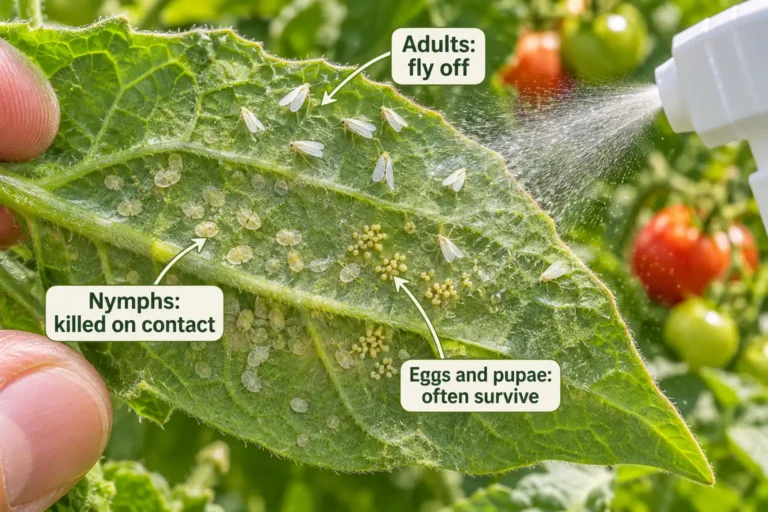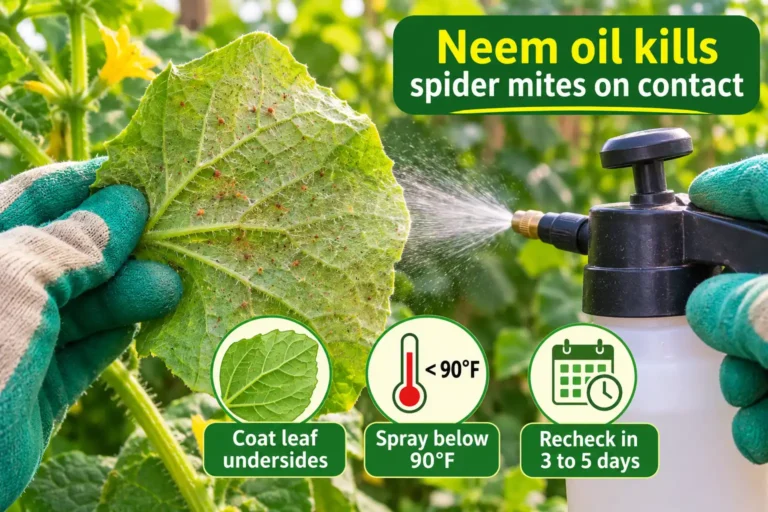
Does Neem Oil Kill Aphids? Yes, on Contact. Here’s How to Use It
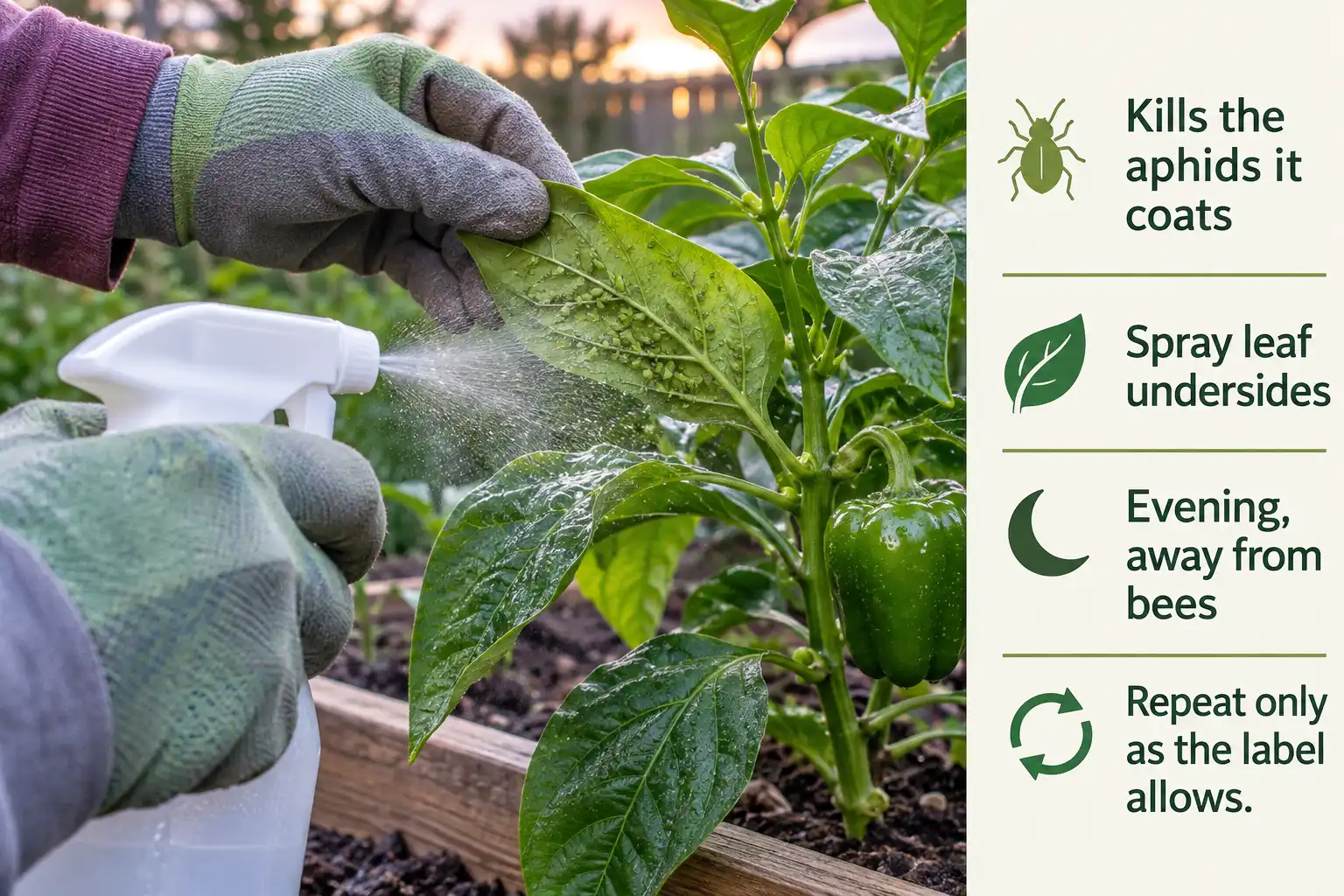
Aphids crowd the undersides of pepper, kale, and squash leaves fast. Neem oil is often the first spray people reach for. Does neem oil kill aphids? Yes, though the product you buy, the weather, and how well you cover the leaves decide how well it works.
Yes. Neem oil kills aphids mostly by coating and smothering them, so it works only on aphids the spray actually touches. It leaves little lasting effect, so check plants often and repeat only as your label allows.
Does Neem Oil Kill Aphids?
Yes, on contact. UC IPM’s Pest Notes on aphids ranks soaps and oils, neem included, as the best insecticide choices for aphids. These sprays kill mainly by smothering. So they have to wet the insects themselves.
That is also their limit. UC IPM notes that soaps, neem oil, and horticultural oil kill only the aphids present on the day you spray. Aphids born after the spray dries survive. So do winged aphids that fly in later and colonies tucked inside curled leaves.
In short, neem oil is a cleanup spray for colonies you can reach. It is not a shield that lasts for weeks. You may not need it at all, either. UC IPM points out that most larger plants tolerate light to moderate aphid numbers. Often, a forceful spray of water is enough.
How Does Neem Oil Kill Aphids?
It depends on which neem ingredient is in the bottle. Neem seed oil is a mixture, and its parts act on aphids in different ways.
The National Pesticide Information Center (NPIC) explains that azadirachtin is the most active compound in neem oil. Once makers pull out the azadirachtin, NPIC calls the remaining oil clarified hydrophobic neem oil.
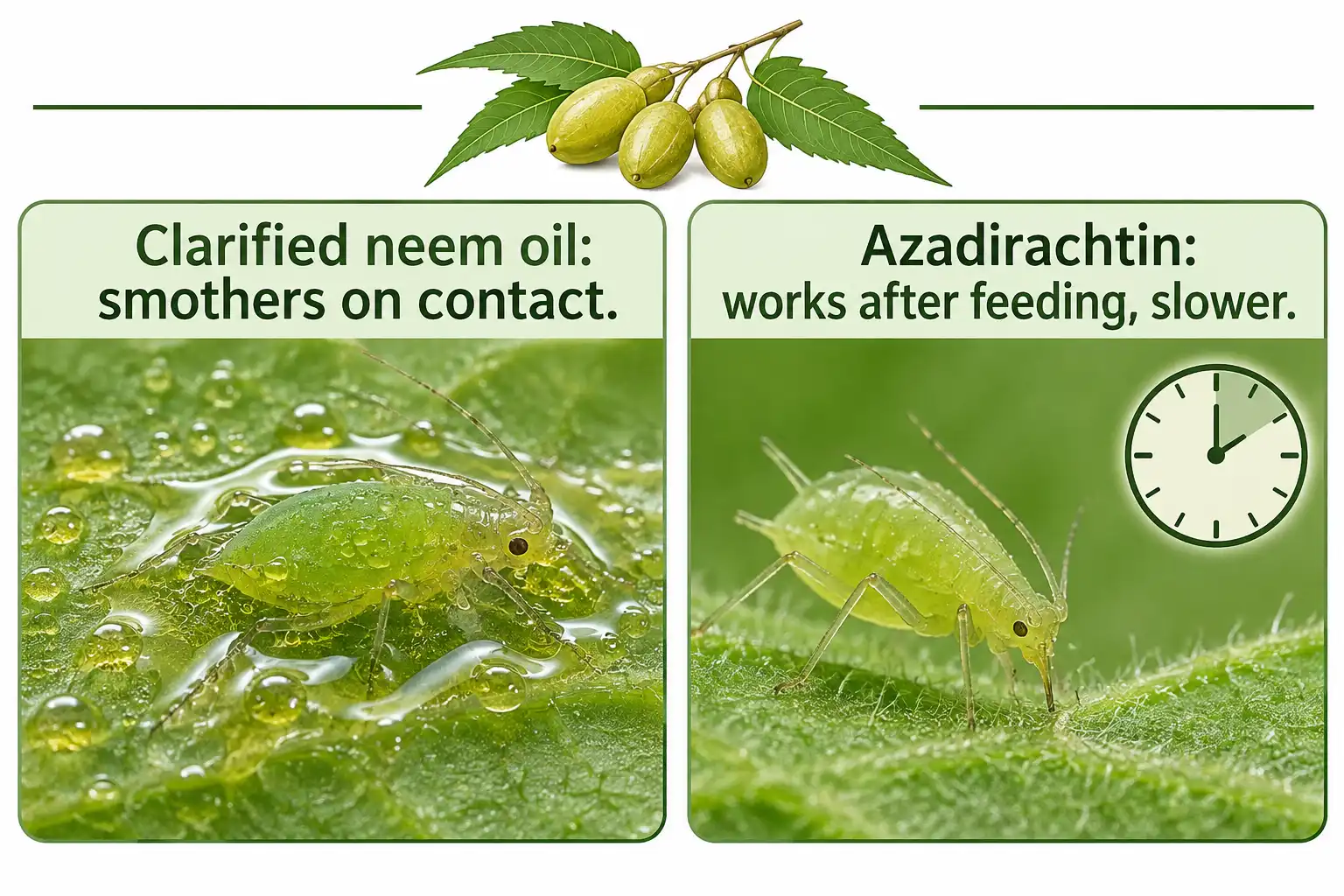
Clarified hydrophobic neem oil: kills on contact
Many garden neem sprays use this oil. Colorado State University Extension notes that it is mostly free of azadirachtin, yet it still works as an insecticide. UC IPM groups neem with the spray oils that kill by smothering. Colorado State explains how: oil blocks the breathing holes, or spiracles, on an insect’s body. It may also disrupt how aphids feed.
Azadirachtin: works after aphids feed
NPIC says azadirachtin cuts feeding, repels insects, and interferes with the hormones they need to grow and lay eggs. However, an insect has to eat treated plant tissue before azadirachtin harms it. So it acts more slowly.
Before you buy, read the active ingredient line. That one line tells you whether you’re getting a contact spray or a feeding-based one.
Neem Oil vs Other Ways to Get Rid of Aphids
Neem oil is one of several low-toxicity options. Often, the gentlest one does the job.
| Option | How it acts on aphids | Lasting effect | Main caution |
|---|---|---|---|
| Strong water spray | Knocks aphids off; most can’t climb back (UC IPM) | None | Spray early in the day so leaves dry (UC IPM) |
| Insecticidal soap | Kills the aphids it wets (UC IPM) | None once dry | Skip on water-stressed plants or above 90°F (UC IPM) |
| Clarified neem oil | Smothers aphids on contact (UC IPM) | Little to none | Leaf burn; bee hazard on labels |
| Petroleum horticultural oil | Blocks breathing holes (Colorado State) | Little; evaporates quickly (Colorado State) | More injury on drought-stressed plants (Colorado State) |
| Azadirachtin product | Cuts feeding and growth once eaten (NPIC) | Short; half-life on leaves of 1 to 2.5 days (NPIC) | Slower; aphids must feed on treated leaves |
UC IPM warns that broad-spectrum insecticides also kill the lady beetles and parasitic wasps that keep aphids down over time. That’s why soaps and oils come first, and the same thinking guides other low-toxicity pest controls for vegetables.
Check Your Plants Before You Spray
First, confirm the pest is aphids. Then look for natural enemies already at work. Either step can save you a spray.
UC IPM describes aphids as soft, pear-shaped insects with long legs and antennae. They may be green, yellow, brown, red, or black. Most species have two small tubes, called cornicles, pointing back from the rear of the body. Unlike leafhoppers and plant bugs, most aphids don’t move fast when disturbed. Many feed on leaf undersides, so turn leaves over and compare what you find with these signs of aphids on vegetables.
If you aren’t sure what you’re looking at, your county extension office or local Master Gardener volunteers can identify it before you treat.
Next, look for help. UC IPM lists lady beetles, lacewing larvae, and syrphid fly larvae as common aphid predators. Also watch for aphid “mummies,” the crusty, golden brown bodies parasitic wasps leave behind. Once mummies appear in warm weather, UC IPM says the aphid population will likely drop sharply within a week or two. Keep in mind that a neem spray kills any of those helpers it hits.
How to Apply Neem Oil So It Reaches the Aphids
Your product label sets the mix, the amount, and how often to spray. This guide gives no rates, because the label is enforceable under EPA rules. Beyond the label, three things decide success: the product, the plant’s condition, and coverage.
Use a product labeled for your crop
Choose an EPA-registered neem product whose label lists vegetables or your crop. For example, the EPA-accepted label for one ready-to-use neem oil spray lists vegetables and names aphids among its targets. By contrast, neem oil bottled for skin or hair care carries no plant directions. Mixing varies too. One widely sold 70% neem concentrate says not to add spreaders or stickers, while some cold-pressed oils call for an emulsifier.
Spray only unstressed plants
That same label says not to spray wilted or stressed plants, or new transplants before their roots establish. Colorado State adds that drought stress raises the risk of oil injury. So water dry beds first, and steady watering with drip lines helps keep plants out of stress. Then test a few leaves. UC IPM suggests treating a small section and waiting several days before a full spray.
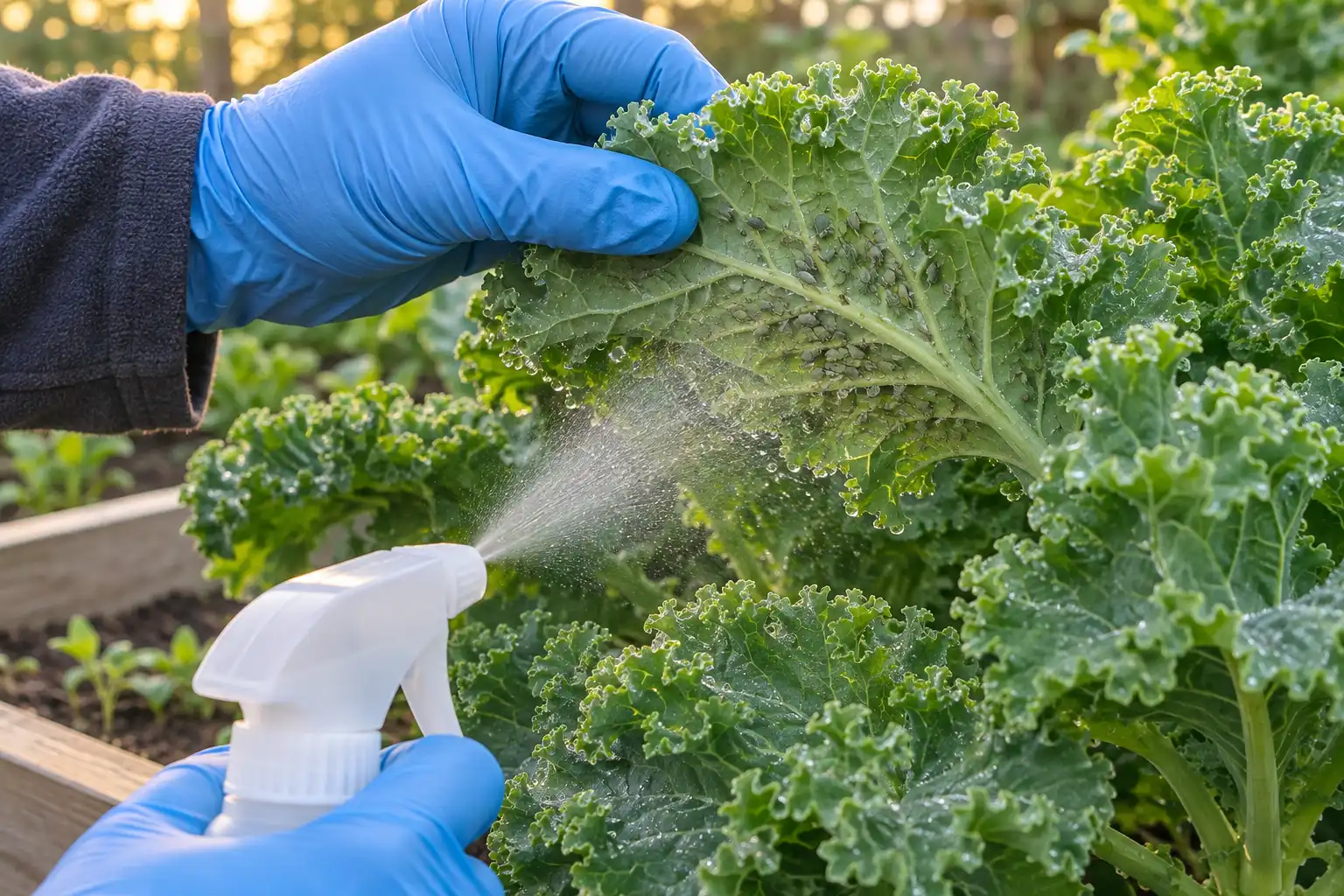
Cover the leaf undersides
UC IPM says to target the underside of leaves as well as the top. Likewise, the label calls for complete coverage of all plant tissue. Lift leaves and aim the spray upward into colonies. Wear the gloves and long sleeves your label lists, and keep children and pets away while you work.
When to Spray Neem Oil: Heat, Time of Day, and Bees
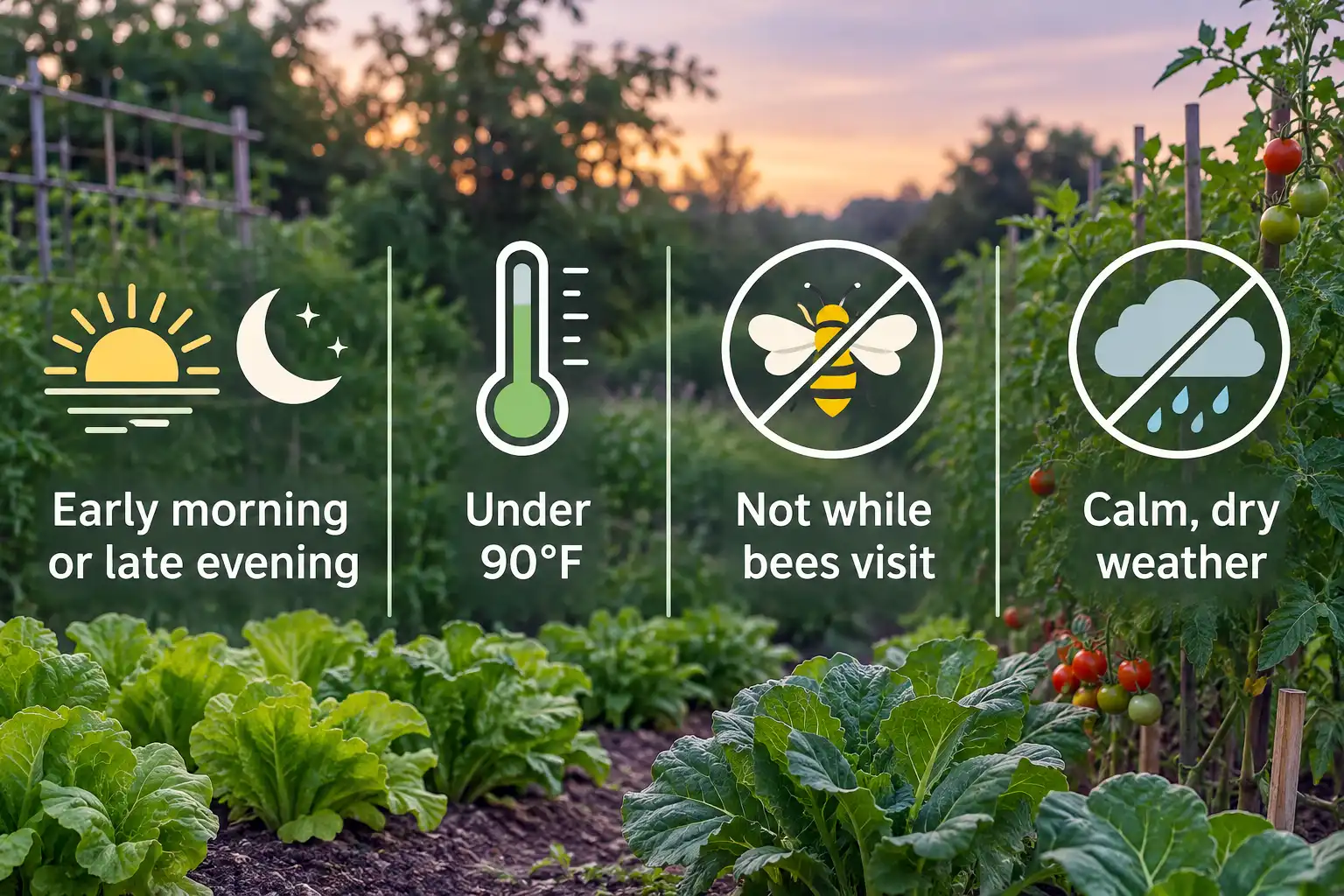
Spray in the early morning or late evening, in mild, calm weather, and never while bees are visiting. Labels for oil-based neem sprays point to those hours to limit leaf burn.
Heat is the next check, and the sources set different limits. UC IPM, writing for California gardens, says not to use soaps or oils above 90°F. Colorado State’s oil fact sheet sets the cutoff at 100°F. That sheet covers mostly trees and shrubs, and it ties the risk to drought stress. For tender lettuce, squash, or pepper leaves, UC IPM’s lower figure is the more cautious one.
Bees are where sources disagree most. NPIC rates neem oil as practically nontoxic to bees, because an insect has to eat treated leaves before neem harms it. Yet the EPA-accepted label above, updated in March 2025, says the product is toxic to bees exposed to direct treatment. One likely reason: azadirachtin acts through feeding, but oil can coat any insect it hits. Follow the label, since it’s the enforceable one, and aim at aphid colonies rather than open flowers.
Finally, keep spray out of water. NPIC rates azadirachtin as moderately toxic to fish. The same label asks for calm weather with no rain forecast for 24 hours. That keeps runoff out of storm drains.
How Often to Spray Neem Oil
Only as often as your product’s label allows, and only while live aphids remain. The label sets the interval, and it’s a legal limit, not a suggestion.
Repeat sprays are common because neem leaves little behind. UC IPM notes that neem oil kills only aphids present on the day you spray. NPIC puts the half-life of azadirachtin on leaves at 1 to 2.5 days. Meanwhile, UC IPM says many aphid species grow from newborn to reproducing adult in 7 to 8 days of warm weather.
So base each spray on what you find, not on the calendar. UC IPM suggests checking plants at least twice a week while they grow fast. Treat again, within the label’s limits, only if live colonies remain. If mummies and lady beetle larvae are building, hold off and let them work.
Why one spray rarely finishes the job
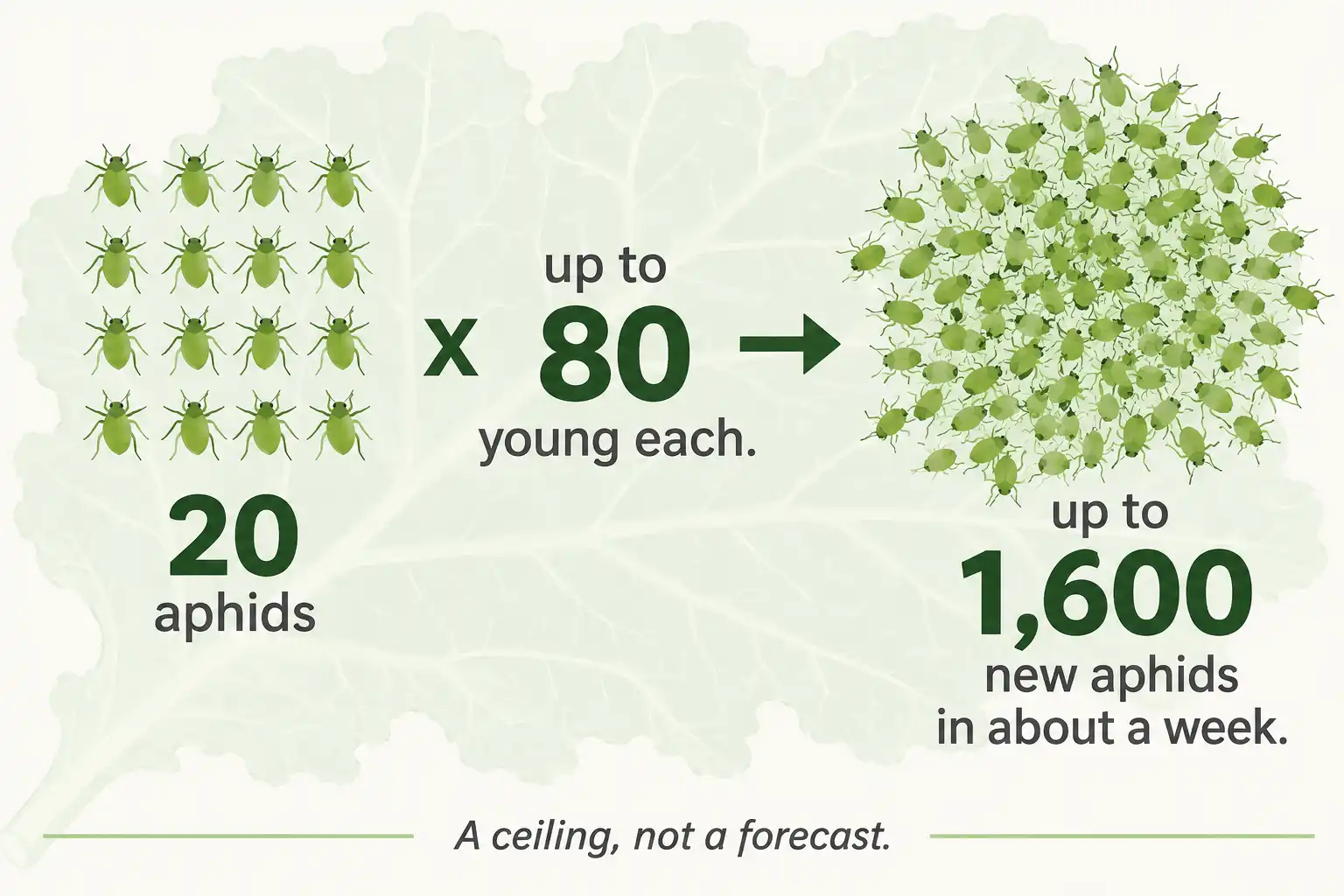
UC IPM notes that each adult aphid can produce up to 80 offspring in about a week. Say you count 200 aphids on a kale plant and your spray reaches 90 percent of them. That leaves 20. If those 20 are adults:
20 surviving adults x up to 80 offspring each = up to 1,600 new aphids in about a weekThat’s a ceiling, not a forecast. Predators, parasites, and summer heat keep most colonies far smaller. Still, it shows why reaching every leaf matters, and why the twice-weekly check catches survivors early.
When Neem Oil Falls Short
Aphids hiding in curled leaves
Contact sprays can’t reach aphids sealed inside distorted leaves. UC IPM says these sprays are generally ineffective once foliage curls around a colony. Instead, prune out a few badly curled leaves or shoot tips and throw them away.
Aphid-spread viruses
UC IPM lists squash, cucumber, pumpkin, melon, bean, potato, lettuce, beet, chard, and bok choy as crops that often carry aphid-spread viruses. An aphid passes a virus in minutes, while a spray takes far longer to kill it. So neem won’t prevent infection. UC IPM says protective covers over seedlings will. Row covers for young plants can stay on until seedlings are older and tougher.
Leaf damage after spraying
Oil sprays can injure tender leaves, especially on hot days or stressed plants. If test leaves show damage, stop and recheck the temperature, the plant’s water status, and the label’s warnings.
Colonies that keep coming back
UC IPM points to two common causes. Ants tend aphids for their honeydew and fend off predators, so managing ants helps. High nitrogen also favors aphid reproduction, so feed with slow-release fertilizer in small amounts, guided by a soil test.
Frequently Asked Questions
Can you spray neem oil on vegetables you’re about to pick?
Only if your product’s label allows it, because the label sets any wait before harvest. NPIC notes the part of neem oil without azadirachtin is mostly fatty acids the FDA considers generally safe, but rinse produce first anyway.
Does neem oil kill aphid eggs?
It rarely needs to. In mild climates such as California’s, UC IPM notes most aphids bear live young through the growing season, while eggs mainly carry some species through winter. Egg-kill claims on labels are the maker’s own.
Can I mix neem oil with dish soap?
Only if your label tells you to. Some neem concentrates say to add nothing, while some cold-pressed oils call for an emulsifier. Either way, the label sets the mix, and a kitchen recipe can’t override it.
Is insecticidal soap or neem oil better for aphids?
Neither has a clear edge. UC IPM ranks soaps and oils, neem included, as the best choices for aphids. Both kill only the aphids they wet, so coverage decides the result more than the product does.
Does neem oil hurt lady beetles?
It can if the spray hits them. UC IPM notes oils can kill natural enemies the spray reaches, but they leave no toxic residue. As a result, lady beetles that arrive after the spray dries aren’t harmed.
What the Research Supports
Neem oil kills aphids on contact, and UC IPM ranks it with soaps as a best choice for aphids. It leaves little behind, so coverage and timing matter more than the spray itself. Read the active ingredient, follow the label for mixing and intervals, and spray in the evening away from bees. Then check twice a week, and let lady beetles and parasitic wasps finish the job once they arrive.