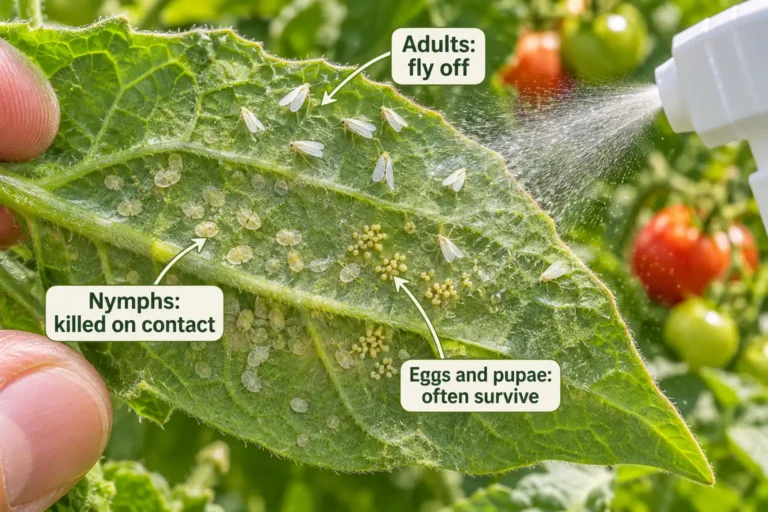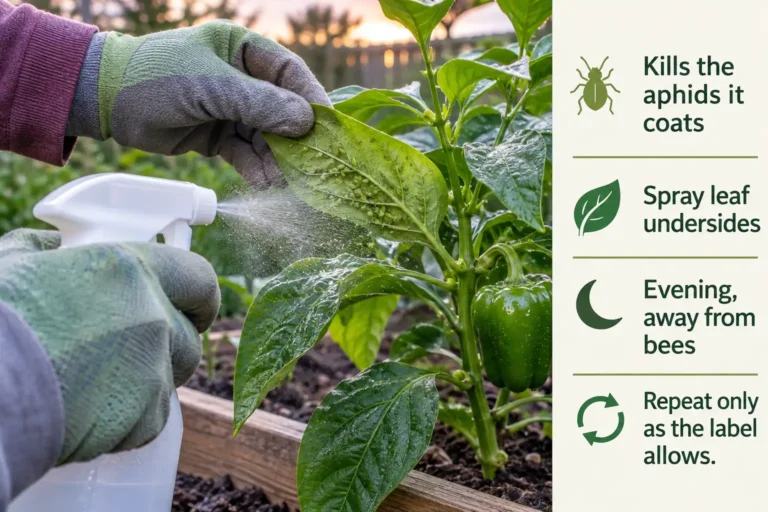
Does Neem Oil Kill Spider Mites? Yes, but Only on Contact
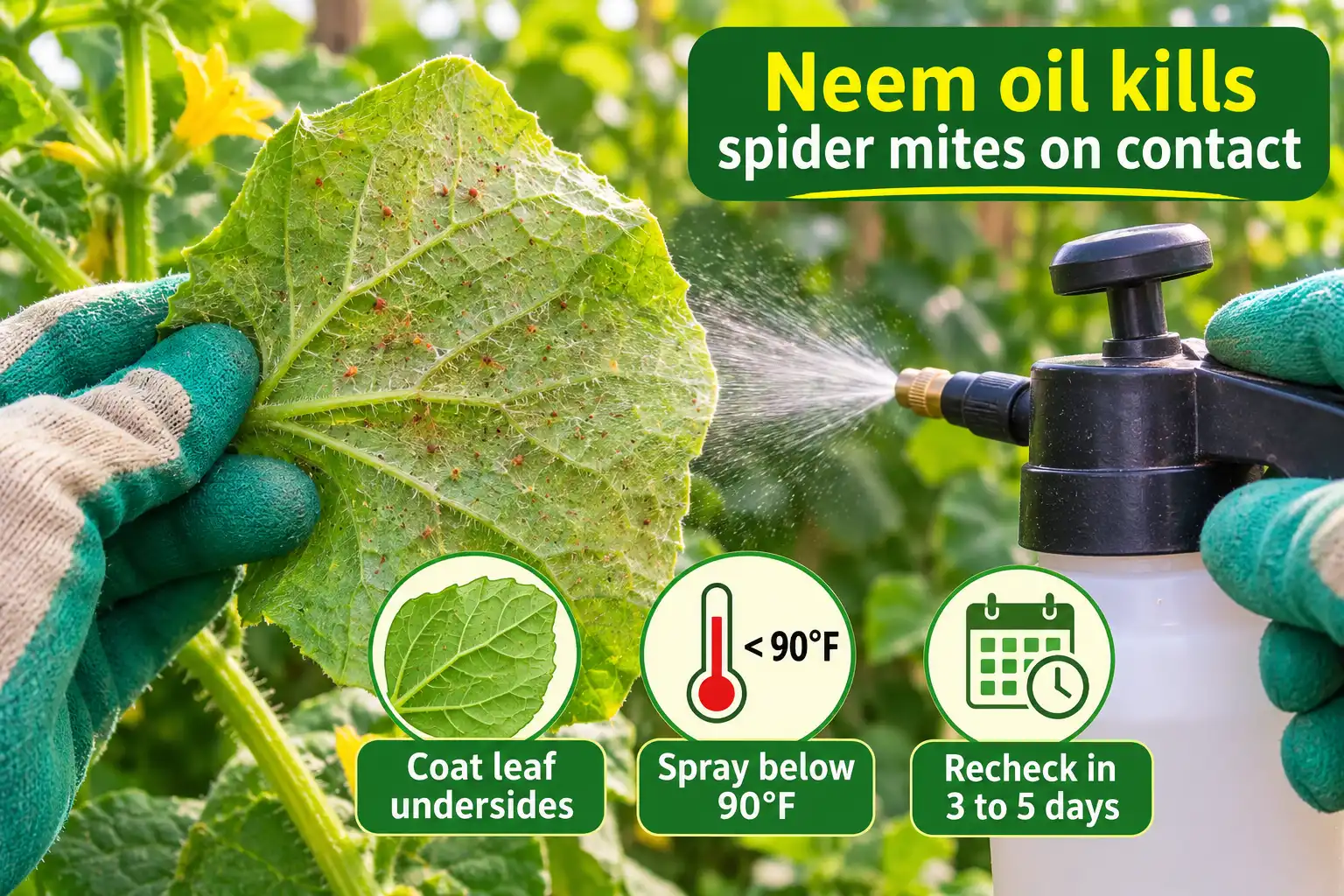
Neem oil is one of the few low-toxicity sprays extension entomologists list for spider mites on vegetables. So does neem oil kill spider mites? It can. But coverage, heat, and timing decide whether a spray saves your beans and tomatoes or just wets the leaves.
Yes, neem oil does kill spider mites, but only the mites the spray coats. It leaves no lasting residue. UC IPM advises full coverage of leaf undersides, on well-watered plants, below 90°F. Repeat sprays follow the label.
Does Neem Oil Kill Spider Mites? What Extension Guides Show
Neem oil kills spider mites on contact, and extension services rank it among the better home garden options. UC IPM’s spider mite guide lists plant-based oils such as neem as acceptable choices when mites need treatment. University of Minnesota Extension calls soaps and horticultural oils, including neem seed oil, reasonably effective against mites.
How neem kills also explains its limits. Clemson Extension says these oils coat the mite’s body and suffocate it. So a mite the spray never touches survives.
Neem also leaves no residual activity, per University of Minnesota Extension. That means mites hatching after the spray dries can rebuild the colony. UConn Extension’s 2026 tomato guide makes the same point: neem works, but only with direct contact and repeat applications.
What the guides don’t give is a garden kill rate. None of the extension sources we checked puts a percentage on one neem spray, so expect knockdown, not a clean sweep. The same contact rule applies to neem oil on aphids, though aphids are larger and easier to spot.
How to Confirm Spider Mites Before You Spray
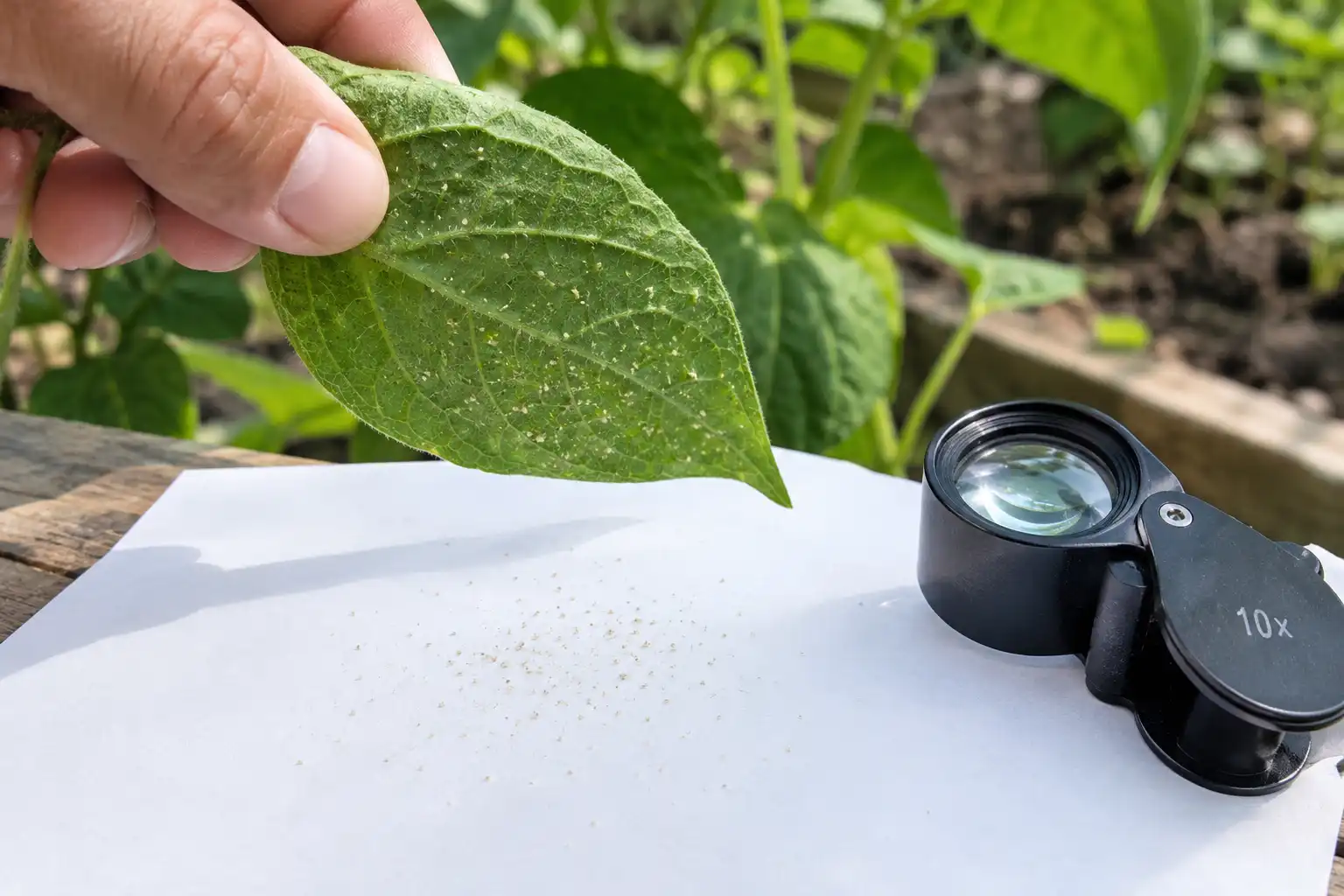
Tap a stippled leaf over white paper and watch for moving dots. Clemson and UC IPM both recommend this test. A hand lens helps too: UConn suggests at least 10x, with 30x better.
University of Minnesota Extension describes what to look for:
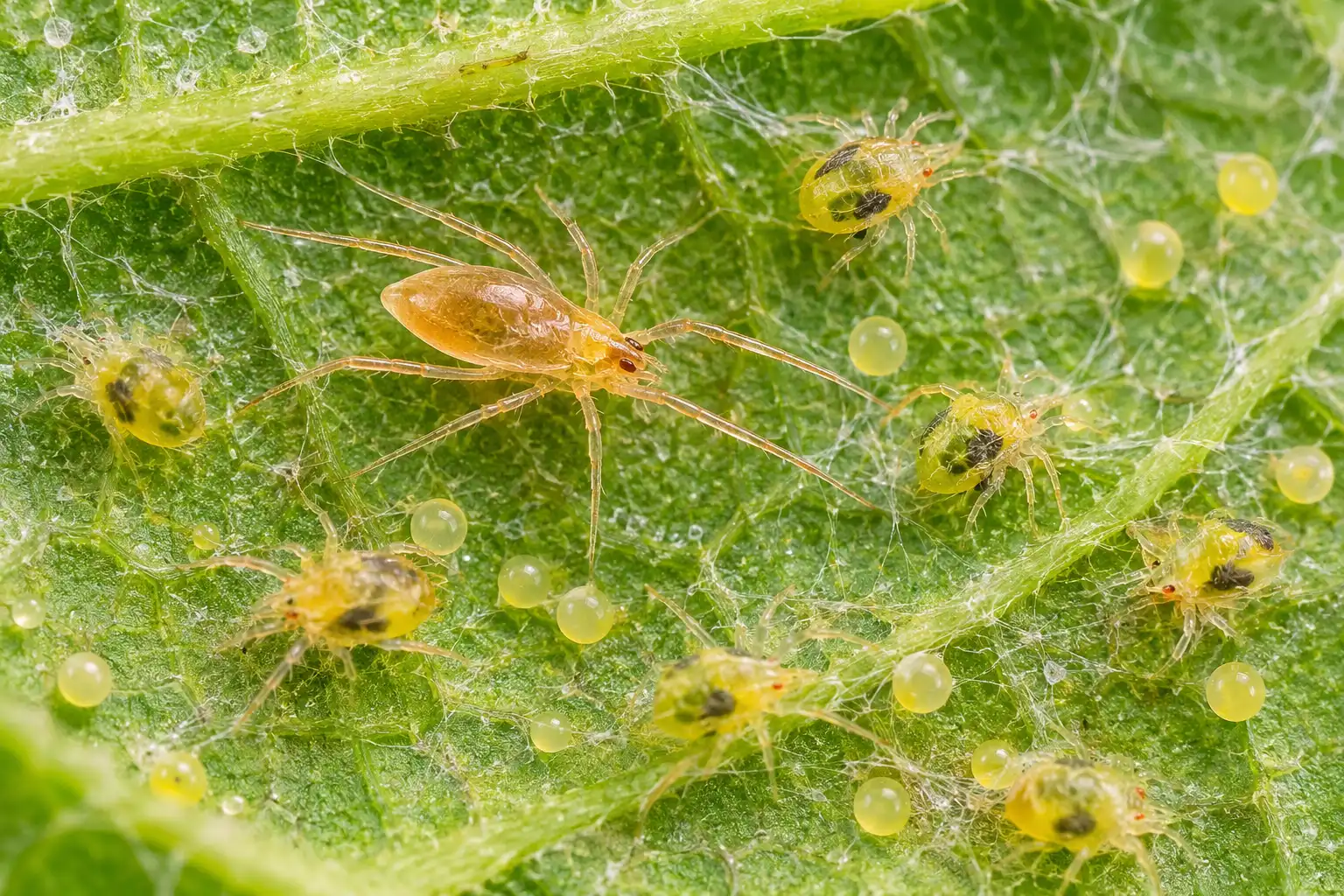
- Mites about 1/50 inch long, yellow-orange, with a dark spot on each side
- Tiny white or yellow dots on leaves, turning bronzed or bleached as feeding builds
- Fine webbing on leaf undersides and stems once numbers climb
Still, several problems mimic this damage. UMN notes that stippling can look like drought stress. NPIC’s spider mite page adds that aphids and thrips can look similar. According to UC IPM, webbing is the giveaway. If you find slower, pear-shaped insects instead, compare them with how aphids look on vegetable leaves.
Your county extension office, local Master Gardener volunteers, or a plant diagnostic lab can confirm the pest from a leaf sample. In South Carolina, Clemson notes, the county office can send samples to a diagnostic clinic for a small fee.
One last check matters. UC IPM says mites are sometimes gone by the time damage shows, and plants often recover. So no live mites means no spray.
Vegetables Spider Mites Hit Hardest
UMN lists cucumbers, snap beans, peas, tomatoes, and lettuce among common hosts. UConn adds eggplant, potatoes, peppers, melons, watermelons, and sweet corn, and calls ground cherries a favorite.
The damage also differs by crop. On squash and melons, UC IPM says leaf loss cuts yield and leaves fruit open to sunburn. On peas and beans, mites can feed on the pods themselves.
Why Spider Mites Spread Fast in Hot, Dry Weather
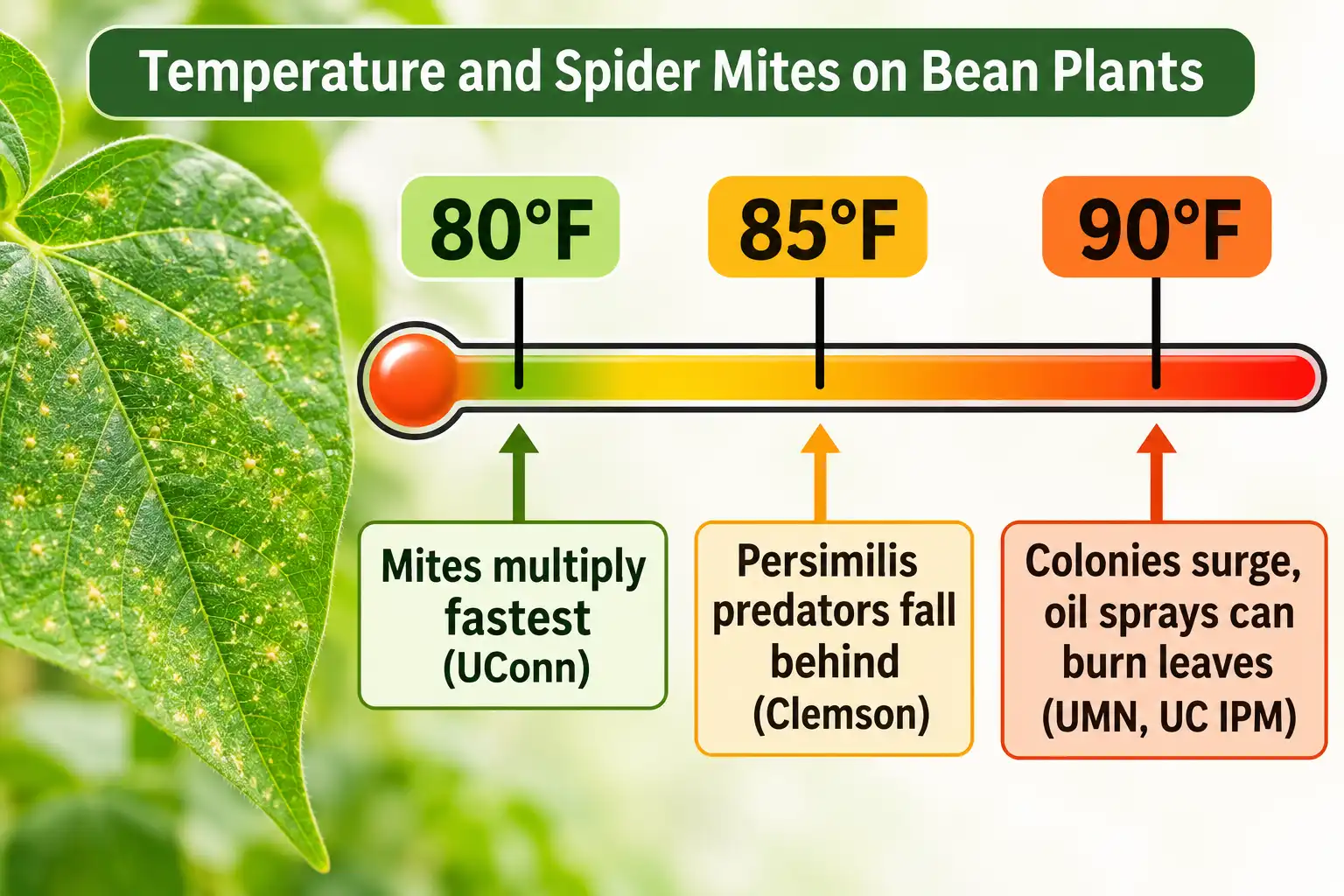
Heat and drought speed spider mites up. UC IPM says a generation can finish in under a week when temperature and food suit them. Numbers usually peak from June through September. UConn puts the fastest reproduction above 80°F, with humidity under 90%. And above 90°F, University of Minnesota Extension says colonies can reach high numbers in under two weeks.
Dust and dry soil add to the problem. UC IPM finds outbreaks often start beside dusty roads or at garden edges, and water-stressed plants suffer most. UConn also sees more mites in high tunnels and greenhouses, where rain never rinses the leaves.
Here’s the catch for neem. The weather that makes mites multiply fastest is the weather when oil sprays are riskiest. UC IPM says to skip soaps and oils above 90°F, and Clemson sets the line at 90°F or higher. So during a heat wave, watering and water sprays do more of the work. Neem waits for a cooler evening.
There’s good news late in the season. UC IPM notes numbers can drop sharply in late summer as predators catch up, weather cools, and rain returns.
How to Use Neem Oil on Spider Mites
Read the Active Ingredient First
The active ingredient on the label tells you how the product works. NPIC’s neem oil fact sheet explains that azadirachtin is the most active part of raw neem oil. It cuts feeding, repels pests, and disrupts insect growth. NPIC calls the oil left after azadirachtin comes out “clarified hydrophobic neem oil.”
So a product listing clarified hydrophobic extract of neem oil acts like other horticultural oils and smothers what it coats. An azadirachtin product works mainly through feeding and growth effects instead. Either way, pick one whose label lists mites and the vegetable you plan to spray.
The label also sets the mix strength, how often to spray, and how long to wait before picking. We don’t publish those figures, because they vary by product and the label carries the force of law.
Spraying Neem Oil for Spider Mites, Step by Step
- Confirm live mites. UC IPM’s rule is to be sure mites are present before you treat.
- Water first. University of Minnesota Extension advises watering thoroughly before any mite spray. That lowers the risk of stressing plants further and causing leaf injury.
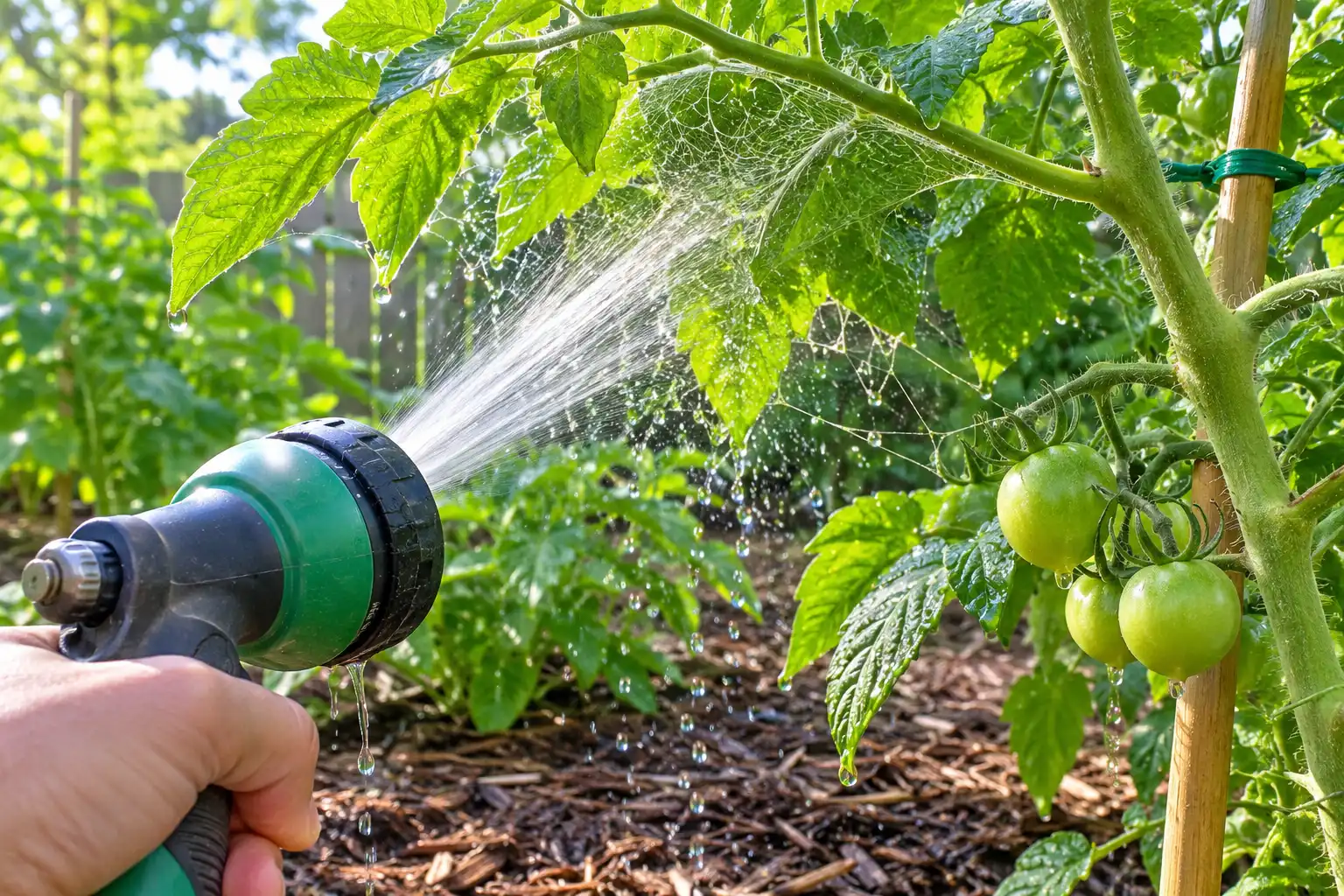
- Hose off the webbing. A strong water spray dislodges mites and washes away their webbing, UMN says. Do this in the morning, then save neem for the evening.
- Wait for cool air. UC IPM says skip oils above 90°F. Clemson suggests spraying in the mid to late evening to avoid leaf burn.
- Test a few leaves. UC IPM suggests treating a small patch several days before a full spray, since oils injure some plants.
- Mix and apply exactly as the label directs. It governs strength, frequency, and the wait before harvest.
- Coat the undersides. Mites colonize the underside of leaves, so spray upward from below.
- Recheck every 3 to 5 days. That’s UMN’s checking schedule. Then repeat a spray only if the tap test still shows live mites and the label allows it.

Spider Mites Treatment Options Compared
Neem oil sits in the middle of the options. It does more than water alone against a growing colony, yet it spares more predators than broad insecticides do.
| Treatment | How it works | Best use | Main limit |
|---|---|---|---|
| Strong water spray | Knocks off mites and webbing | Light infestations, caught early | Fails on heavy infestations (Clemson) |
| Neem oil | Smothers mites on contact | Building colonies, cool evenings | No residual, misses untouched mites (UMN) |
| Insecticidal soap | Smothers mites on contact | Same as neem oil | No residual; homemade soap burns leaves (UMN) |
| Petroleum horticultural oil | Smothers mites on contact | Same as neem oil | Can burn stressed plants or above 90°F (UC IPM) |
| Botanical oil miticides (rosemary, clove, cinnamon) | Labeled plant extracts that act on mites | Alternative to neem oil | Same precautions as soaps and oils (Clemson) |
| Predatory mites | Eat spider mites | Long-term control | Persimilis falls behind above 85°F (Clemson) |
| Broad-spectrum insecticides (pyrethroids, carbaryl) | Kill many insects, including mite predators | Not advised for mites | Often trigger mite outbreaks (UC IPM) |
Start with water, then step up to neem or soap once webbing builds. UMN warns that bifenthrin and permethrin kill natural enemies and can worsen infestations. If oils fail, Clemson notes stronger miticides are mostly limited to licensed applicators.
Spider Mites Home Remedy Options With Real Support
The best-supported spider mites home remedy is plain water: forceful sprays on leaf undersides plus steady irrigation. Kitchen sprays have far less behind them.
Spray Leaf Undersides With Water
UC IPM suggests spraying or misting the undersides of infested leaves at least once a day. It also says regular forceful sprays often keep garden mites low enough. Clemson agrees that rinsing helps, but warns it must be frequent and won’t control high populations. Read together, water works early. Once webbing covers the leaves, add neem or soap.
Keep Plants Watered and Dust Down
Thirsty plants draw more mites. For tomatoes, beans, and most garden vegetables, University of Minnesota Extension suggests about 1 inch of water a week. Here’s what that means for one bed:
- 1 inch of water over 1 square foot is about 0.62 gallon
- A 4 by 8 foot raised bed covers 32 square feet
- 32 × 0.62 = about 20 gallons a week when it doesn’t rain
That’s a Minnesota guideline, so in hotter, drier climates, check soil moisture instead of relying on the number alone. Drip lines under mulch make that weekly amount easier to deliver evenly. UMN also advises mulching and holding off on fertilizer during drought. And UC IPM suggests wetting dusty paths near the garden.
Skip the Kitchen Sprays
University of Minnesota Extension says not to mix homemade soap solutions, because they can burn and damage plants. NPIC’s home remedies guide adds that recipes using dish soap, vinegar, vegetable oil, or cayenne come without a label. That means no tested dose, no protective gear advice, and no warning about harm to plants or bees. NPIC also notes that homemade sprays could break residue laws if you sell the produce.
What about rubbing alcohol or buttermilk? None of the extension guides we checked tests them on vegetables, so the evidence is thin. The rosemary, clove, and garlic oils UC IPM mentions are formulated, labeled miticides, not kitchen blends.
Predatory Mites for Long-Term Control
Natural enemies often keep spider mites in check, especially where no pesticide sprays disturb them, per UC IPM. The main ones are predatory mites, sixspotted thrips, the spider mite destroyer lady beetle, lacewing larvae, and minute pirate bugs. Predatory mites look like spider mites but have longer legs, more activity, and a teardrop shape.
If you buy them, match the species to your weather. Clemson gives these working ranges:
- Persimilis (Phytoseiulus persimilis): 55°F to 85°F, falling behind above 85°F
- Swirskii (Amblyseius swirskii): above 68°F, suited to hot summers
- Californicus (Amblyseius californicus): 55°F to 110°F
UC IPM adds that the western predatory mite does better in hot, dry conditions. Clemson suggests about 1 persimilis per square foot in a garden, or about 32 for one 4 by 8 foot bed.
Timing matters, too. For heavy infestations, UC IPM suggests knocking mites down with soap first, then releasing about 1 predator per 10 spider mites. Spray before release, not after, since Clemson notes oils and soaps kill beneficial mites they hit.
Sources differ on preventive releases. UC IPM says predators released without prey starve or leave. Clemson, by contrast, calls californicus best used as a preventive. Releasing it when the first mites appear fits both.
Is Neem Oil Safe for Bees, Pets, and Your Harvest?
Mostly, if you follow the label and time the spray well. The bee question is where sources differ.
NPIC rates neem oil practically nontoxic to bees, reasoning that insects must eat treated plants to be harmed. Clemson, though, says oils can kill pollinators and beneficial insects the spray hits directly. The gap likely reflects two modes of action: azadirachtin acts on feeding, while the oil smothers on contact. Either way, spray in the evening when bees aren’t foraging, and follow any pollinator directions on your label.
NPIC also flags these cautions:
- Neem oil can mildly irritate eyes and skin, so wear what the label requires.
- Cats have had adverse reactions when people applied neem to them for fleas in other countries. Keep pets off treated plants for as long as the label says.
- Neem oil is slightly toxic to fish, and azadirachtin is moderately toxic. Keep spray and rinse water away from ponds and storm drains.
Before harvest, the label sets the waiting period. UC IPM also warns against applying sulfur soon after an oil spray, so check both labels before you combine products.
Why Neem Oil Didn’t Kill Your Spider Mites
Most failures come down to coverage, timing, or heat. Whiteflies also gather under leaves, which is why coverage matters just as much with neem oil on whiteflies.
- The spray missed the undersides. Neem works only where it lands.
- New mites hatched. Neem leaves no residual, and NPIC puts azadirachtin’s half-life on leaves at 1 to 2.5 days.
- Webbing blocked the spray. Hose the plants first to wash it off.
- Heat outran the spray. Colonies surge above 90°F, the same heat at which oils burn leaves. Water and hose daily until a cooler evening.
- The plants were thirsty. Water stress draws more mites and raises the risk of leaf burn.
- An earlier insecticide killed the predators. UC IPM ties many mite outbreaks to broad-spectrum sprays.
- It wasn’t spider mites. Drought stress, thrips, or aphids can mimic the damage, so get a sample checked.
If mites persist on plants you value, University of Minnesota Extension suggests a landscape professional with a wider range of products. Late in the season, though, cooler weather and rain often bring numbers down on their own, per UC IPM.
FAQs
Does neem oil kill spider mite eggs?
The extension guides we checked don’t promise it, so plan as if eggs survive. Neem leaves no residual activity, so recheck every 3 to 5 days, as University of Minnesota Extension suggests, and repeat only as your label allows.
How fast does neem oil kill spider mites?
None of the sources we checked gives a kill time, so judge results by live mites, not by the calendar. Do the white paper tap test 3 to 5 days after spraying, matching University of Minnesota Extension’s checking schedule.
Can I spray neem oil on tomatoes in summer?
Yes, if the label lists tomatoes and the air is below 90°F. UC IPM and Clemson Extension both warn that oils can burn leaves in high heat or on drought-stressed plants, so water first and spray in the evening.
Is neem oil or insecticidal soap better for spider mites?
Neither ranks higher in the extension guides we checked, since both kill only the mites they touch. Choose the product whose label lists your crop, and test it on a few leaves first, as UC IPM advises.
What is the best home remedy for spider mites?
A forceful water spray on leaf undersides, at least once a day, is the home remedy UC IPM backs. Pair it with steady watering, since drought-stressed plants attract more mites and suffer more damage.
Does rubbing alcohol kill spider mites on plants?
No extension guide we checked tests it on vegetables, so its effect and plant safety are unknown. NPIC warns that home remedies lack labels for dose and plant safety, which makes a registered soap or oil the safer choice.
Putting This Into Practice
Neem oil works on spider mites when it touches them, on well-watered plants, in air below 90°F. Start with daily water sprays and steady irrigation. Add neem or soap once webbing builds, then recheck every 3 to 5 days. Keep broad-spectrum insecticides out, and let predators and other low-toxicity pest controls carry the long-term load.