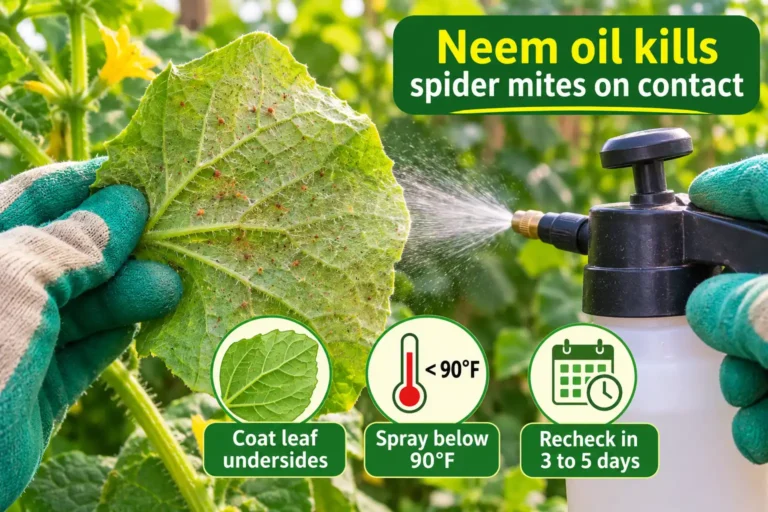
Does Neem Oil Kill Whiteflies? Yes, but Only the Stages It Touches

Tiny white insects lift off your tomato, squash, or kale leaves when you brush past. Neem oil looks like an easy fix. But does neem oil kill whiteflies well enough to end the problem? Partly, and the reason comes down to which life stage it hits.
Yes. Neem oil kills whiteflies it coats, mainly the young nymphs stuck to leaf undersides. Eggs, pupae, and adults that fly off often survive. So neem works best with hosing, yellow sticky traps, and reflective mulch.
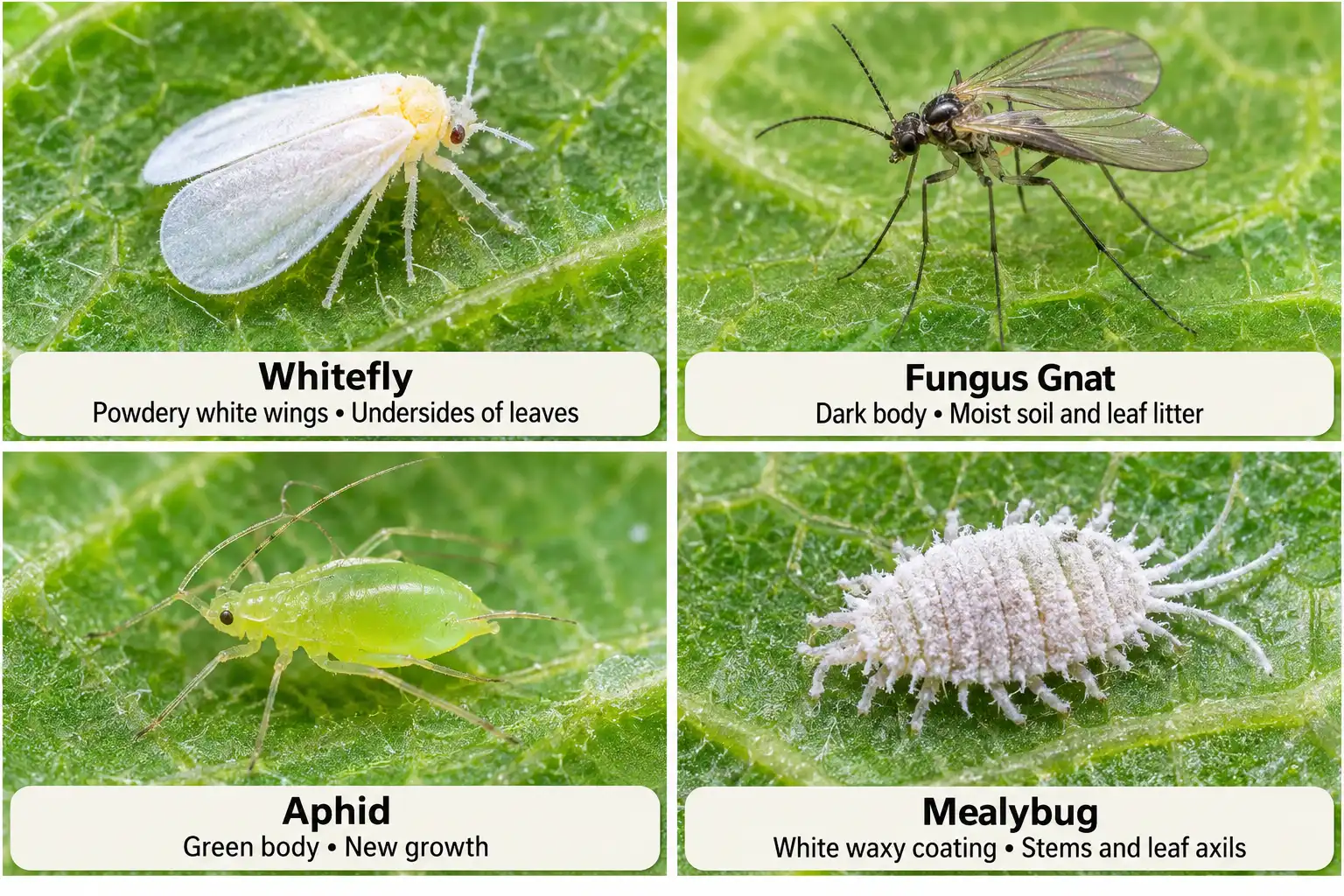
Is It Whiteflies? How to Tell Little White Flying Bugs Apart
Whiteflies on plants give themselves away when you disturb the leaves. The adults flutter up, then settle back on the undersides. UC IPM describes them as tiny insects with yellowish bodies and four whitish wings. Texas A&M AgriLife Extension puts adults at 1 to 3 millimeters, about 1/25 to 1/8 inch.
Other small white flying bugs look alike at that size. Unsure? Your county extension office or local Master Gardener volunteers can identify the insect from a leaf sample.
| Insect | What to look for | Where it shows up |
|---|---|---|
| Whitefly | Powdery white wings and a yellowish body; flat, oval, pale nymphs that don’t move | Leaf undersides of tomato, pepper, eggplant, squash, cucumber, and bean |
| Fungus gnat | Dark, delicate, mosquito-like fly, 1/16 to 1/8 inch, with gray to clear wings | Around potted plants, damp potting mix, and windows |
| Winged aphid | Soft, pear-shaped body in green, yellow, brown, red, or black; wings show up mostly in crowded colonies or in spring and fall | Clusters on stems, new growth, and leaf undersides |
| Mealybug | Oval body coated in white wax; adult females have no wings | Stems, leaf joints, and other sheltered spots |
The descriptions above come from UC IPM pest notes. If the insects are pear-shaped and cluster on new growth, start with identifying aphids on your crops. If nothing matches, check other common vegetable garden pests.
How Neem Oil Works on Whiteflies
Neem products come in more than one form, and they work differently. The National Pesticide Information Center (NPIC) explains that neem oil is a mix of compounds. Its most active part, azadirachtin, repels insects and cuts their feeding. It also disrupts the hormones insects need to grow and lay eggs. NPIC calls what’s left after azadirachtin comes out clarified hydrophobic neem oil.
So check the active ingredient line on the label. It will name azadirachtin, clarified hydrophobic extract of neem oil, or cold-pressed neem oil.
Texas A&M AgriLife Extension’s whitefly guide (August 2024) sorts them this way. Azadirachtin products act as insect growth regulators, so they affect only immature whiteflies. Neem oil works as a contact spray, which means it has to touch the insect. Either way, Colorado State University Extension lists horticultural oils and neem among the best controls for immature greenhouse whiteflies.
Neem has the same contact-only limit on aphids and other soft-bodied pests.
Which Whitefly Stages Does Neem Oil Kill?
Neem oil kills crawlers, settled nymphs, and any adults it wets, but rarely eggs or pupae.
| Stage | Where it is | What neem does |
|---|---|---|
| Eggs | Undersides of the newest leaves | Generally not affected by sprays that kill nymphs (Colorado State) |
| Crawlers | Moving for several hours after hatching (UC IPM) | Killed if the spray wets them |
| Settled nymphs | Flat and fixed in place on leaf undersides | Main target: contact kill, plus growth disruption from azadirachtin |
| Pupae (last nymph stage) | Same spot, not feeding, for almost a week | Generally not affected (Colorado State) |
| Adults | Fly up when the plant is disturbed | Killed only when the spray wets them |
That gap explains a lot. UC IPM says soaps and oils such as neem oil may reduce whitefly populations but won’t eliminate them. Still, the nymphs neem hits best are the stage that causes most of the damage, according to UC IPM. So a well-aimed spray helps the plant even when some whiteflies survive.
Why One Neem Spray Rarely Ends a Whitefly Problem
A single spray can’t keep pace with the whitefly life cycle. Colorado State’s greenhouse whitefly fact sheet lays out the timing:
- Eggs hatch in 5 to 7 days.
- Nymphs pass through three feeding stages, 2 to 4 days apart.
- A non-feeding pupal stage lasts almost a week.
- One generation takes 3 to 4 weeks in good conditions.
Each female can lay 400 eggs, though most lay far fewer. Texas A&M gives a wider window of 2 to 5 weeks from egg to adult. Its guide covers several whitefly species, and timing shifts with species, temperature, and host plant.
Now put that on a calendar. Say you spray on June 1 and coat every nymph. Eggs already on the leaves still hatch by about June 8. Pupae the spray couldn’t kill release new adults that same week. Then eggs laid on June 1 can reach adulthood between June 22 and June 29.
That’s why Colorado State says repeat applications are usually needed. The label on your product sets how often you can reapply. Meanwhile, keep checking leaf undersides through at least one full generation, about a month.

Before You Spray Neem Oil on Whiteflies: What to Check
The label governs how you use any neem product. Extension guidance adds a few checks around it.
- The label fits. Confirm it lists whiteflies and the crop you’re treating. The label sets the mix, how often to spray, and how long to wait before harvest. Texas A&M notes that using a pesticide in a way that’s inconsistent with its label violates federal law.
- No parasites are at work. UC IPM says parasitized nymphs often darken and leave round exit holes, while healthy adults leave T-shaped slits. If parasites are at work, UC IPM advises skipping the spray.
- A small test came out clean. Neem can injure some plants, so Colorado State suggests trying it on a few plants first.
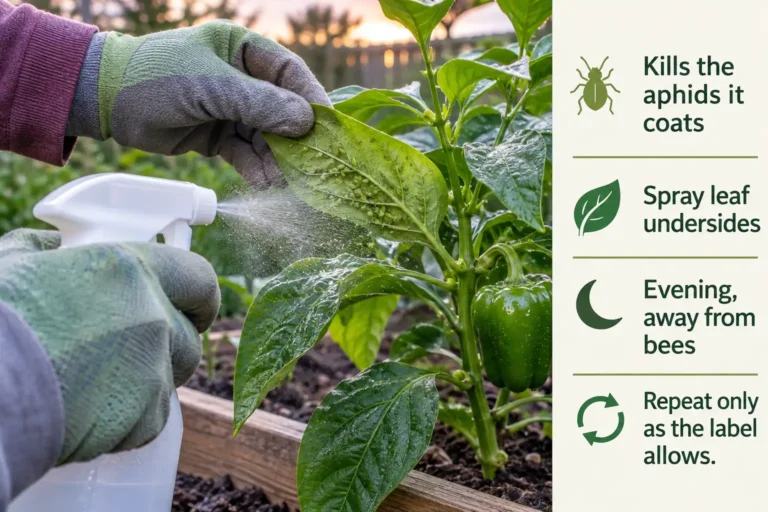
- The weather is mild. UC IPM advises spraying oils only when temperatures are under 90°F and plants aren’t drought-stressed. It also names early evening, with the sun off the leaves, as a good time.
- The spray reaches the undersides. Infested leaves are usually the lowest and hardest to reach, per UC IPM. University of Arizona Extension warns that spraying only leaf tops kills beneficial insects but spares the whiteflies.
- Live nymphs are still there. Look again a few days later. Then reapply only as the label allows.
Neem Oil and Bees: The Sources Differ
NPIC’s neem oil fact sheet, reviewed in 2012, calls neem oil practically non-toxic to bees. Its reason is that insects must eat treated plants to be killed. However, some neem oil product labels are stricter. They state the product is toxic to bees exposed to direct treatment. They also say not to apply it while bees are visiting the area.
When the two differ, follow the label. Spraying in early evening, when fewer bees work squash and cucumber flowers, keeps contact low. NPIC also rates azadirachtin as moderately toxic to fish. So keep spray and rinse water out of storm drains and streams. And keep children and pets off treated plants for as long as the label says.
Skip Homemade Neem and Dish Soap Sprays
Online recipes often mix raw neem oil with dish soap. Colorado State University Extension, in guidance reviewed in August 2025, says homemade pesticides aren’t consistently made or tested. So there’s no evidence they control pests. It adds that dish soaps contain detergents that can injure plants. Using household soaps as pesticides is also of questionable legality. A labeled product gives you a tested formula and directions you can legally follow.
How to Get Rid of Whiteflies Without Spraying
Fewer whiteflies means fewer sprays. These low-spray pest control methods also spare the lacewings, lady beetles, and tiny wasps that feed on whiteflies.
Hose them off. UC IPM suggests knocking adults off with a strong stream of water. Watering also cuts the hot, dusty conditions that favor whiteflies and slow their natural enemies.
Pick off early infestations. UC IPM advises pruning isolated infested leaves when you first spot them. After harvest, pull infested vegetable plants so the whiteflies have nowhere to build up.
Vacuum the adults. University of Arizona Cooperative Extension (June 2024) suggests a handheld vacuum in early morning, when whiteflies are sluggish. Then seal the bag in plastic and freeze it overnight.
Keep ants away. Ants protect whiteflies from their natural enemies, per UC IPM.
How Many Yellow Sticky Traps You Need
The counts differ slightly by source. UC IPM’s quick tips suggest one trap for every medium-size vegetable plant. However, its full pest note and University of Arizona Extension suggest up to one trap for every two large plants.
Here’s the math for one 4 by 8 foot raised bed:
- Four large indeterminate tomato plants: 4 / 2 = 2 traps
- Eight pepper plants, counted as medium-size: 8 x 1 = 8 traps
Set the yellow surface level with the infestation, with the sticky side facing the plants and out of direct sun. Even so, UC IPM says traps work best for monitoring and won’t wipe out a damaging population.
How to Repel Whiteflies Before They Settle In
Reflective mulch is the repellent UC IPM recommends. Shiny metallic-coated construction paper or reflective plastic mulch repels whiteflies, especially from small plants. It also turns away aphids and leafhoppers.
To lay it, clear the weeds, spread the mulch over the bed, and bury the edges with soil. Then cut 3 to 4 inch holes for seeds or transplants. Plastic mulch needs a drip line underneath, while sturdy paper can take sprinkler water. Pull the mulch once summer heat climbs, because it can overheat plants. For young plants, University of Arizona Extension also notes that aluminum foil on the soil discourages whiteflies.
A few habits help too:
- Inspect transplants and houseplants for nymphs before they reach your garden (UC IPM).
- Avoid heavy feeding, watering, and pruning, which Texas A&M says can help whitefly numbers build. Fertilize to what a soil test calls for.
- Expect little from neem as a repellent. NPIC says azadirachtin breaks down on leaves with a half-life of 1 to 2.5 days.
Marigolds, basil, and nasturtiums often show up in whitefly advice. None of the extension guides behind this article lists them as a whitefly control, so treat those claims as untested.

Where You Garden Changes the Whitefly Problem
Cold-winter areas. Colorado State says greenhouse whitefly can’t survive outdoors where winters freeze, such as Colorado. So summer outbreaks on tomatoes, peppers, and cucumbers start from infested plant material. That makes checking transplants the step that does the most good. Winter infestations can still persist on indoor plants, which matters if you start seeds indoors.
Warm-winter areas. UC IPM says greenhouse and sweetpotato whiteflies breed year-round in warmer parts of California. Texas A&M says the same for warmer climates in general. Its guide also notes silverleaf whiteflies can spread more than 100 plant viruses. It lists cucurbit leaf curl virus, cucurbit stunting disorder virus, and squash leaf curl virus among those reported in Texas.
Neem can’t cure a plant virus. UC IPM links leaf silvering and distortion to sweetpotato whitefly nymph feeding. But viruses, nutrient problems, and other pests can look similar. Your county extension office or a plant diagnostic lab can confirm the cause.
Why Whiteflies Come Back After Neem
If whiteflies return, match what you see to the likely reason below.
| What you see | Likely reason | What to change |
|---|---|---|
| New whiteflies a week after spraying | Eggs and pupae survived the spray (Colorado State) | Recheck undersides and repeat only as the label allows |
| Numbers rise despite repeat sprays | Sprays killed natural enemies or missed leaf undersides (Univ. of Arizona, UC IPM) | Coat undersides, and hold off when you see parasitized nymphs |
| Brown or scorched spots after spraying | Heat above 90°F or drought-stressed plants (UC IPM) | Water first, spray in early evening, and test a few leaves |
| Sticky leaves with a black coating | Honeydew and sooty mold from whitefly feeding (UC IPM) | Hose the leaves, since Texas A&M notes a strong water spray removes both |
Frequently Asked Questions
Does neem oil kill whitefly eggs?
Not reliably. Colorado State University Extension says whitefly eggs and the non-feeding pupal stage generally aren’t affected by sprays that kill nymphs, so new nymphs keep hatching after a single application.
Will neem oil hurt ladybugs and other beneficial insects?
It can if the spray hits them directly. UC IPM names soaps and oils as products least harmful to natural enemies, but it still advises skipping sprays when lady beetles or parasitized whitefly nymphs are present.
Can I spray neem oil on tomatoes that are almost ready to pick?
Only if the label allows it. The label on your product sets how long to wait between spraying and harvest, so read it before treating plants with ripening tomatoes, peppers, or squash.
Are yellow sticky traps enough to get rid of whiteflies?
No, not on their own. UC IPM says traps may reduce adult numbers somewhat but won’t eliminate a damaging population, so use them mainly to see whether whiteflies are rising or falling.
Do whiteflies die off in winter?
Outdoors in freezing-winter areas, yes. Colorado State says greenhouse whiteflies can’t overwinter outside there but can persist on indoor plants, while Texas A&M notes silverleaf and greenhouse whiteflies breed year-round in warmer climates.
Putting This Into Practice
Neem oil kills the whitefly nymphs it coats, and those nymphs do most of the damage. Aim it at leaf undersides on a mild evening, follow the label, and keep checking for about a month. Pair it with hosing, a few yellow traps, and reflective mulch on young plants. In cold-winter areas, checking transplants stops whiteflies at the source.