Does Neem Oil Kill Squash Bugs? What the Research Shows
Squash bugs suck sap from zucchini, pumpkins, and winter squash, and neem oil is a common organic spray for them. Whether neem oil kills squash bugs depends on the life stage you hit. For adults and eggs, the answer is mostly no.
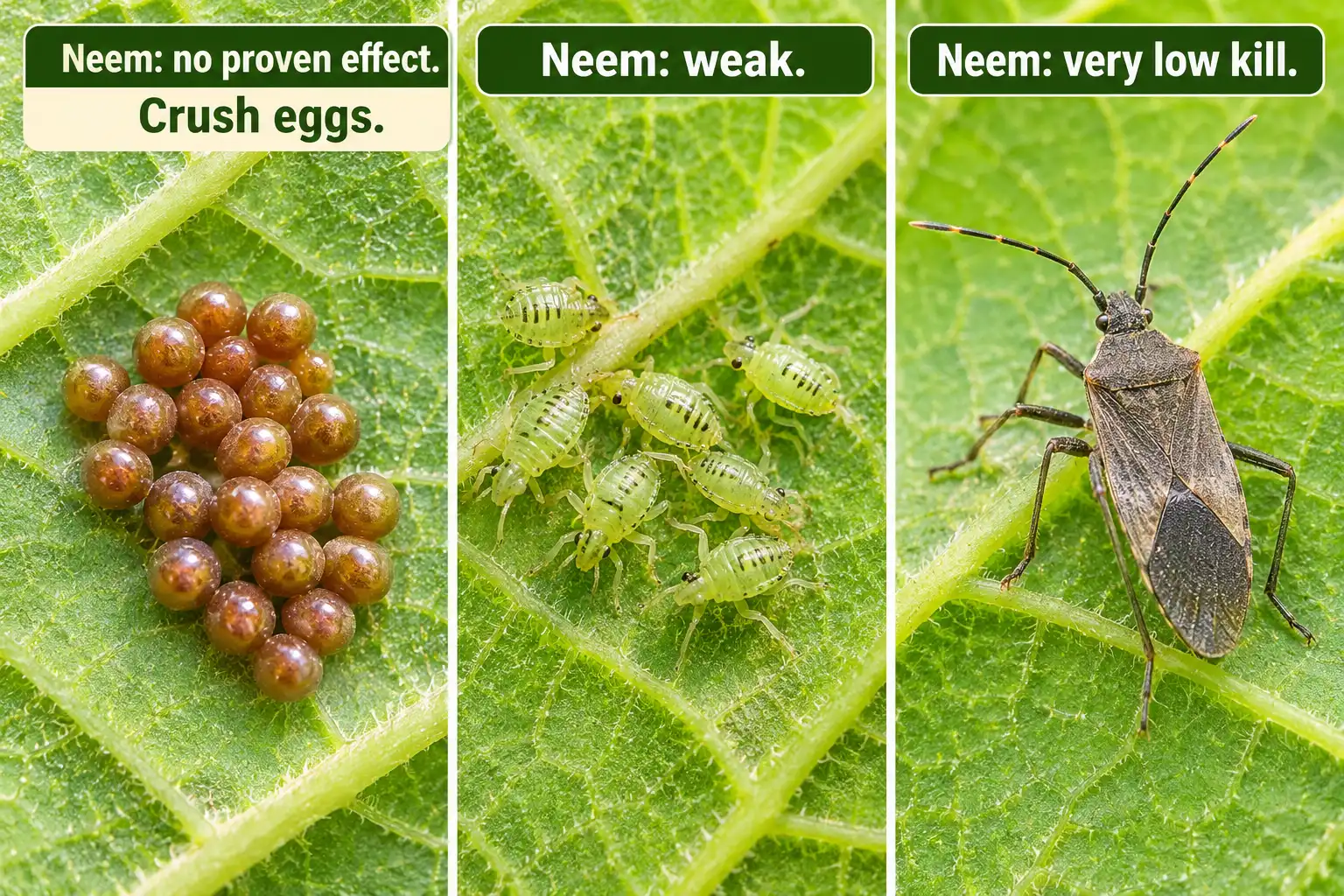
Neem oil does not reliably kill squash bugs. In University of Georgia lab tests, a neem oil spray killed very few, even when sprayed directly on them. At most, it may slow newly hatched nymphs.
Does Neem Oil Kill Squash Bugs?
Not reliably, and almost never the adults. In University of Georgia lab tests, researchers sprayed six organic insecticides directly onto squash bug nymphs and adults. The neem oil product showed very low death rates. In contrast, a pyrethrin spray killed 100 percent of young nymphs within 24 hours. A premix of pyrethrin and azadirachtin, the main active compound in neem, killed 80 percent.
So the Georgia team concluded that azadirachtin likely does little to kill squash bugs. The premix worked because of its pyrethrin.
Field results in New York point the same way. Cornell’s organic squash trial team used a similar pyrethrin and neem premix. The team notes it kills, at best, 60 to 70 percent of squash bugs. For that reason, they started treating at half an egg mass per plant instead of the usual one.
Life stage matters most. In the Georgia tests, products did better on young nymphs than on older nymphs or adults. Each molt gives a nymph a tougher outer shell. As a result, the window for any spray closes fast.
Also know: Get Rid of Cucumber Beetles
Neem Oil and Squash Bugs by Life Stage
This table pairs each stage, as University of Minnesota Extension describes it, with what the research above found.
| Life stage | What it looks like | Neem oil effect | What works better |
|---|---|---|---|
| Eggs | Bronze ovals, 1/16 inch, in clusters of about 20 on leaf undersides | No evidence it stops hatching | Crush clusters by hand |
| Young nymphs | Light green body, black head and legs | Very low kill in lab tests; may slow growth | Crush clusters, or spot-treat right after hatch |
| Older nymphs | Light gray, then brownish gray | Very low kill | Board traps and hand-picking |
| Adults | Dark gray to dark brown, 5/8 inch long | Very low kill | Hand-pick into soapy water; board traps |

Wilting alone doesn’t prove squash bugs are the cause. Virginia Tech’s home garden guide notes that squash vine borer and bacterial wilt can also make squash plants collapse. Your county extension office or local Master Gardener volunteers can confirm which problem you have.
How Neem Oil Works on Squash Bugs and Cucumber Beetles
Neem works mainly by stopping insects from eating, not by killing them on contact. The National Pesticide Information Center (NPIC) explains that azadirachtin reduces feeding and repels insects. It also disrupts insect hormones, so young insects struggle to grow and adults lay fewer eggs. But an insect has to eat treated plant tissue before neem kills it.
Labels add a twist. NPIC calls the oil left over after azadirachtin extraction clarified hydrophobic neem oil. So check the active ingredient line to see which one you’re buying.
Cucumber beetles chew leaves and flowers, so they swallow what sits on the surface. That gives neem a better chance against them. University of Minnesota Extension says a pyrethrin and neem combination can manage cucumber beetles. Expect to need more than one application. The same guide notes kaolin clay repels cucumber beetles but doesn’t kill them.
Squash bugs feed differently. They pierce the leaf and suck sap from inside it. That feeding style is one likely reason neem does less against them. The same limit applies to other sap-sucking garden pests. Small, soft-bodied insects tend to respond better, as the research on neem against aphids shows.
Does Neem Oil Kill Squash Bug Eggs?
No research we found shows that it does. Cornell’s trial team points out that most insecticides aren’t effective against insect eggs. So they wait until most egg masses hatch, then spray the new nymphs. In Virginia, Virginia Tech entomologists tested squash bug egg masses against several insecticides, including a broad-spectrum one. They found no significant effect on egg hatch.
Crushing works better than any spray. University of Minnesota Extension advises crushing eggs on leaf undersides and stems. In Minnesota, those eggs hatch 7 to 10 days after the female lays them.
How often you check decides how many you catch. Colorado State University Extension calls for egg checks at least once a week in June. Virginia Tech says every few days. The shorter interval catches more, and the math shows why.
Shortest hatch time for squash bug eggs
(Univ. of Minnesota Extension, Minnesota)      = 7 days

Check every 7 days      -> a mass laid just after a check can hatch before the next one
Check every 3 to 4 days -> every egg mass gets seen at least once before it can hatch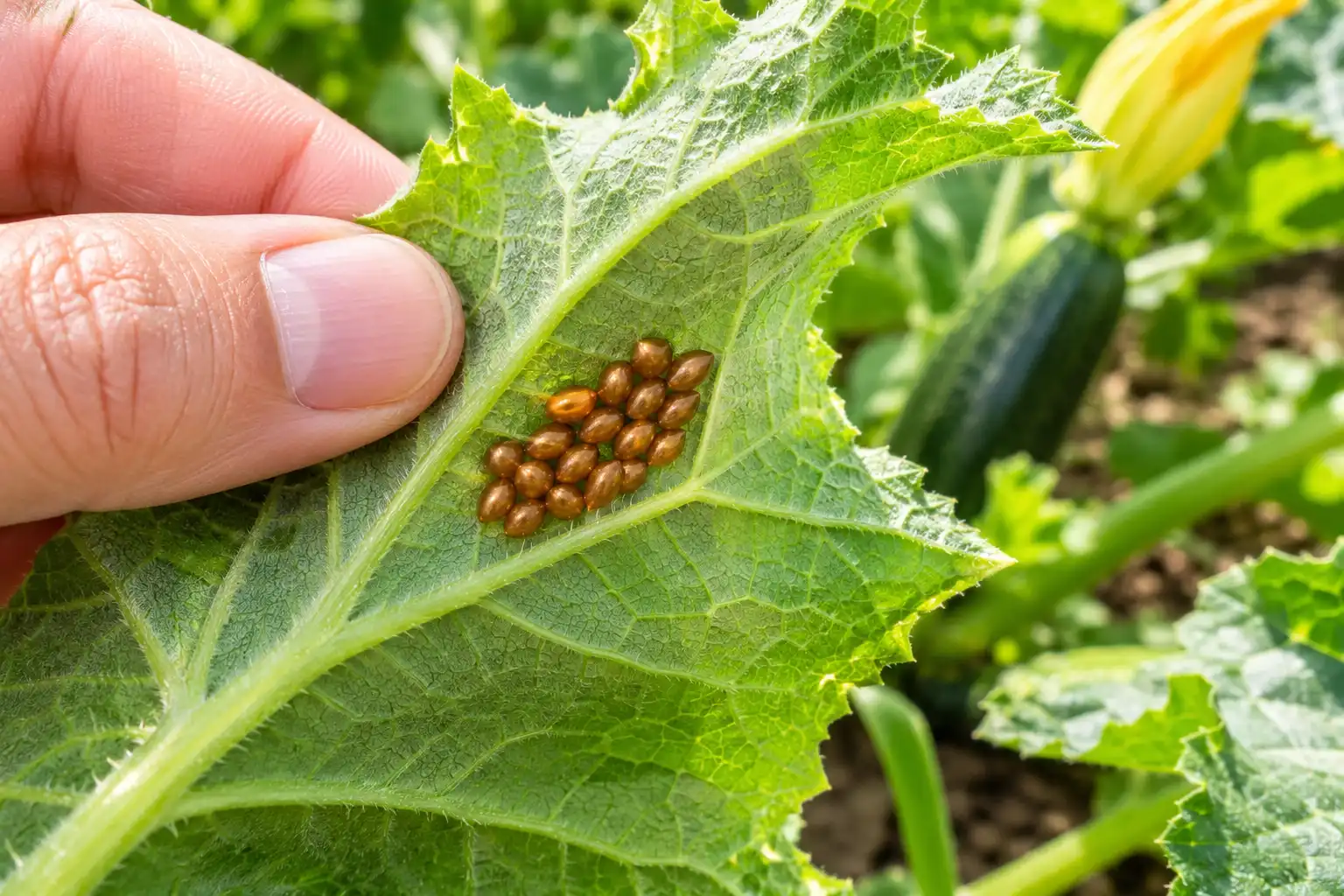
How to Get Rid of Squash Bugs
Most home gardens don’t need a spray at all. University of Minnesota Extension states that insecticides are normally not required to manage squash bugs. These steps do most of the work.
Crush Eggs and Hand-Pick Bugs
Turn leaves over and crush every bronze cluster you find. Then drop nymphs and adults into a pail of soapy water, as University of Minnesota Extension suggests. This works best when only a few plants are infested, because squash bugs hide under leaves and scatter fast. Virginia Tech notes adults often climb to the tops of plants after watering or rain, which makes them easier to grab.
The numbers add up quickly. University of Minnesota Extension puts a typical cluster at about 20 eggs.
Egg clusters you crush x about 20 eggs = nymphs that never hatch
Example: 8 clusters x 20 eggs          = about 160 nymphs
Set Board Traps Overnight
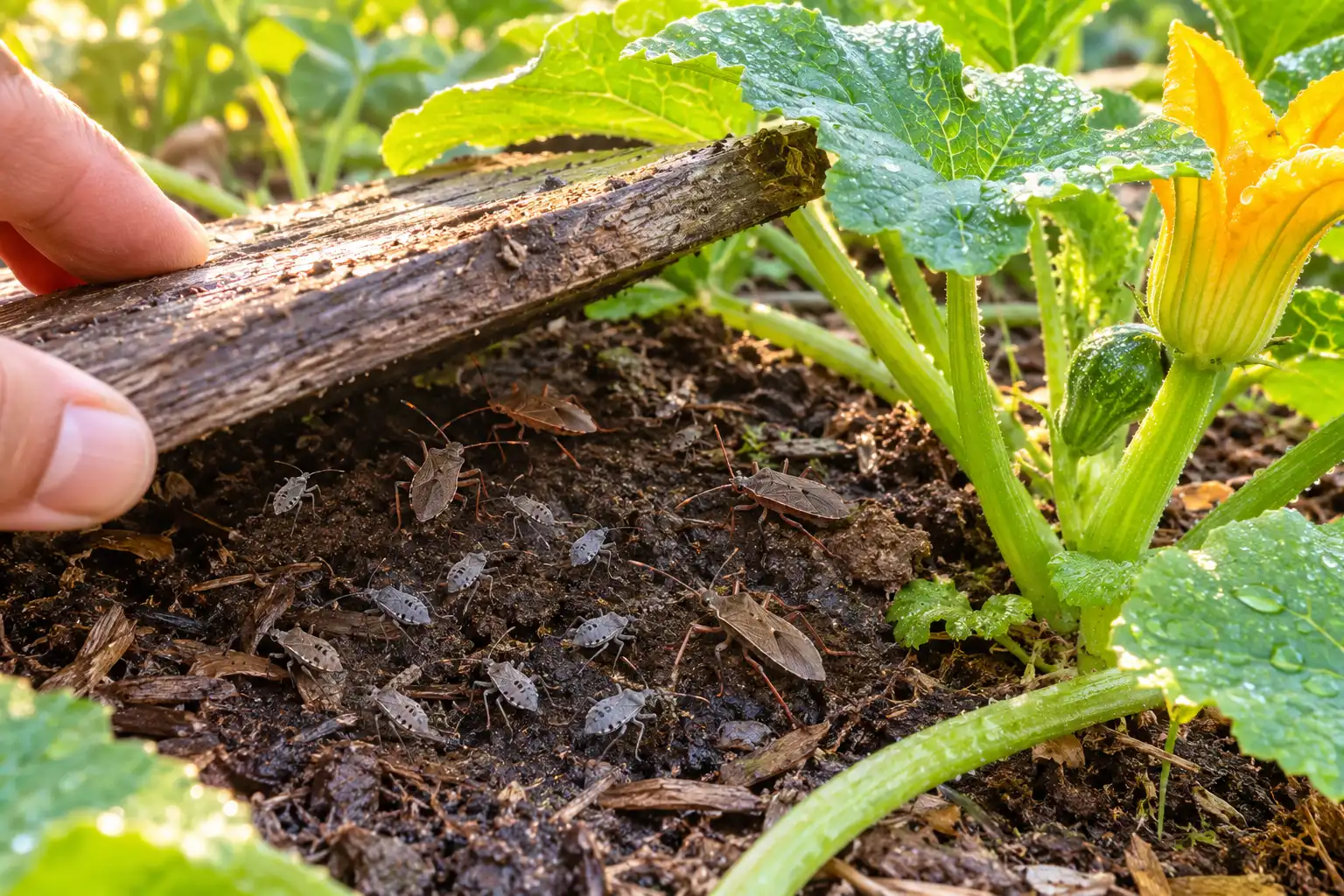
Squash bugs hide at night, and you can use that habit. Lay a flat board or heavy cardboard on the soil beside your plants. Colorado State University Extension says nymphs and adults gather underneath overnight. Lift the board early in the morning, before they scatter, and collect or crush them. Virginia Tech suggests flipping boards daily.
If You Spray, Target Young Nymphs
Timing matters more than the product. University of Minnesota Extension says treatments work best on freshly hatched nymphs. Because nymphs hide under leaves, coverage underneath counts. Spot-spray clusters right after hatch.
Choose with pollinators in mind. In the Georgia tests, pyrethrin killed the most squash bugs. However, the researchers warn it can also kill honeybees, spiders, and parasitic wasps, and it’s very toxic to fish. So spray late in the day after squash flowers close, as University of Minnesota Extension advises. Also keep any spray away from storm drains and streams.
The label on the product you buy sets the mixing rate, how often you can spray, and any wait before you pick. Follow its pollinator directions too. For gentler choices, compare other low-toxicity pest controls for vegetables.
Diatomaceous Earth for Squash Bugs
Diatomaceous earth alone is a weak choice for squash bugs, especially in humid weather. Sources split on this, so here are both views.
Colorado State University Extension says diatomaceous earth combined with pyrethrins, applied around the base of the plant, can control squash bugs. It adds that certified organic production allows this treatment. In contrast, University of Georgia extension specialists don’t recommend diatomaceous earth. They note it loses most of its effect in damp or humid conditions, and the dust is hard to avoid breathing.
Climate likely drives the difference. Colorado summers run dry, while Georgia summers stay humid. Also, the Colorado advice pairs diatomaceous earth with pyrethrin. That’s the ingredient that killed the most squash bugs in the Georgia lab tests. So if you garden in a humid region or water overhead, don’t count on plain diatomaceous earth. Avoid breathing the dust, and follow the product label.
How to Prevent Squash Bugs
Prevention starts before the first egg. University of Minnesota Extension says seedlings and flowering plants are the most vulnerable stages. Virginia Tech adds that squash bugs spread cucurbit yellow vine disease, so early-season control matters most.
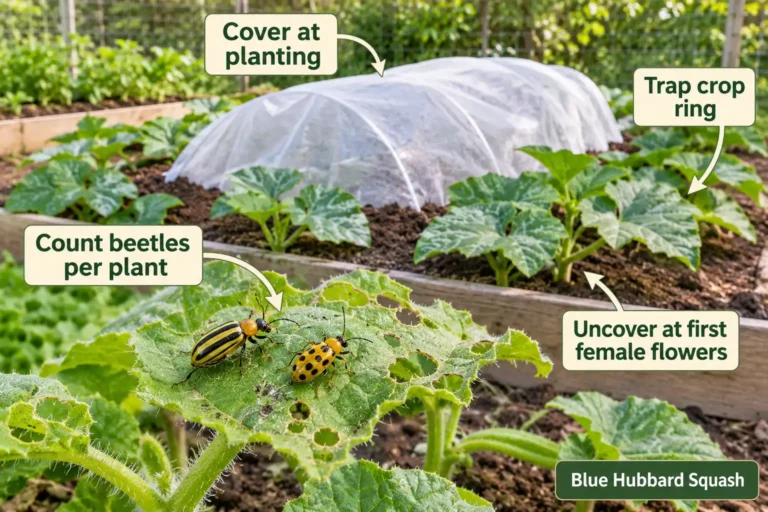
Cover Young Plants Until Bloom
Virginia Tech recommends floating row covers from planting until the plants flower. Then remove them so bees can reach the blooms. Leave extra fabric pooled along the sides so squash bugs can’t crawl under. If you grow only a few plants, you can leave covers on and hand-pollinate instead. In that case, use hoops for room and watch for heat stress. When choosing row covers and hoops, pick a width that leaves fabric to spare along both edges.

Time Your Planting
In Virginia, Virginia Tech suggests planting squash in mid-June to miss early summer egg-laying. Transplants reach maturity faster than direct-seeded squash, which helps because young plants suffer most. But that date doesn’t travel. In Colorado, Colorado State University Extension says egg-laying often begins around mid-June. In Minnesota, University of Minnesota Extension says females show up in early June and lay eggs through midsummer. So ask your county extension office when egg-laying starts locally.
Choose Squash Types Squash Bugs Like Less
Butternut is the safest bet, and sources agree on it. University of Minnesota Extension says butternut squash, buttercup squash, and ‘Sweet Cheese’ pumpkins tolerate squash bug feeding better than other varieties. Virginia Tech names butternut, cushaw, and other Cucurbita moschata types as less favored.
Beyond butternut, sources disagree. Virginia Tech says squash bugs strongly prefer summer squash and pumpkins. But Colorado State University Extension reports hard winter squash and pumpkins as the most commonly damaged crops in Colorado. Summer squash gets damaged less often there. Local populations and nearby crops likely explain the split. If you’re planning an acorn squash bed, note that neither source lists acorn among the tolerant types.
Skip Heavy Mulch and Clean Up in Fall
Mulch gives squash bugs cover. Colorado State University Extension notes damage can be worse on mulched plants than on bare soil. Where squash bugs are a constant problem, University of Minnesota Extension advises avoiding straw mulch.
Fall cleanup matters just as much. Adults spend the winter under plant debris, around buildings, and under rocks, per University of Minnesota Extension. So remove old vines, leftover fruit, and mulch once the season ends. Virginia Tech also suggests clearing plastic sheets, row covers, and empty pots.
Plants That Repel Squash Bugs: What the Evidence Supports
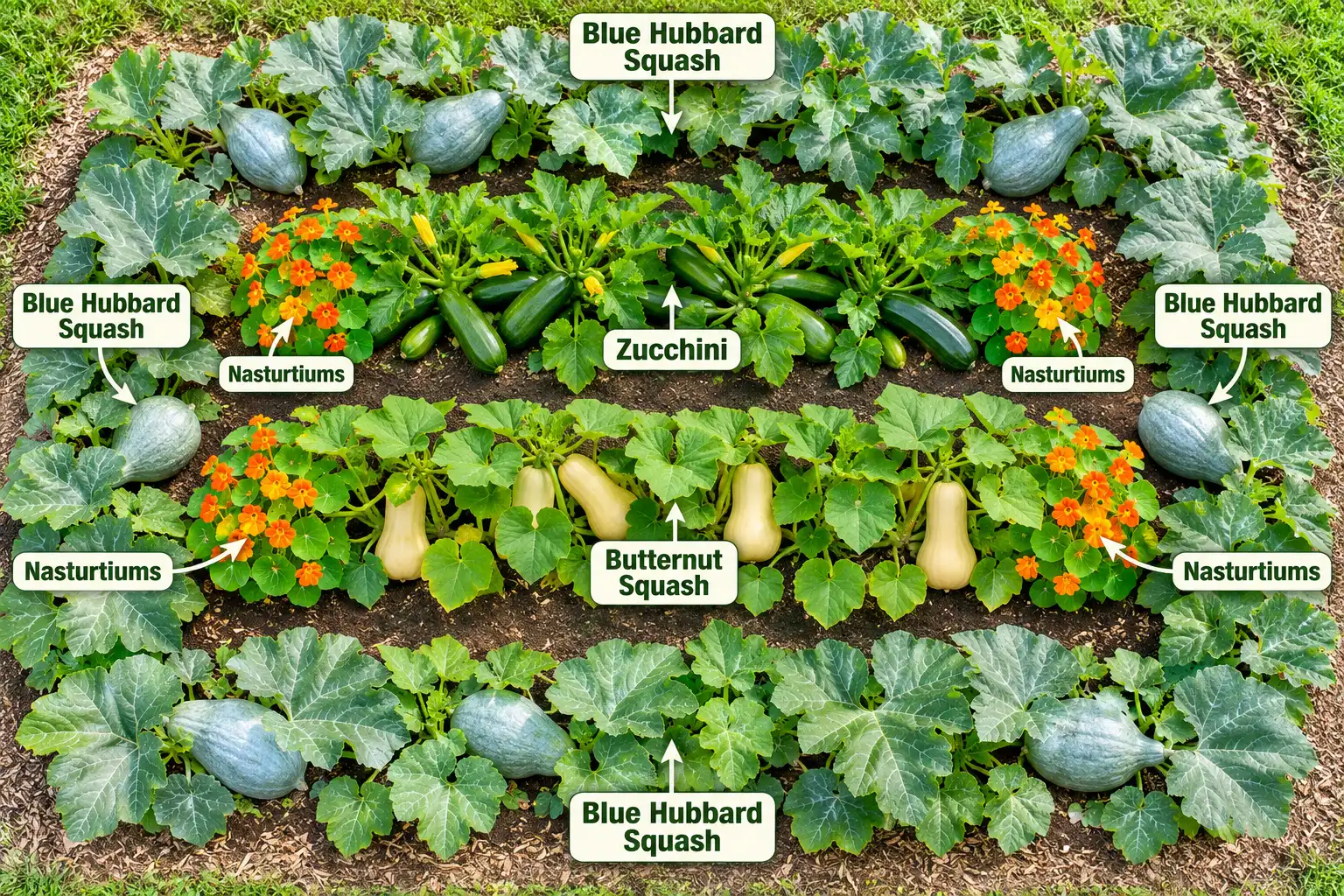
Nasturtium is the one repellent plant with research behind it. University of Minnesota Extension’s companion planting review says research supports planting nasturtium to reduce squash bug populations. It also cites an Iowa study where nasturtium and marigolds reduced damage from squash bugs and cucumber beetles. Still, the review warns that online companion charts are often inaccurate. It lists no other repellent plant for squash bugs.
A trap crop works the opposite way. University of Minnesota Extension says blue hubbard squash planted around the edges draws squash bugs out of the main crop. But you still have to crush eggs on the trap plants or treat them. Otherwise, they just raise more squash bugs.
Not every planting helps. In Georgia field trials, buckwheat, cowpeas, and sunn hemp planted beside summer squash drew more predatory insects. However, squash bug numbers didn’t drop consistently, and squash yields fell. That pattern matches what the evidence shows on companion planting in general: a few pairings hold up, and most don’t.
Squash Bug Season at a Glance
Timing shifts by region. This table uses the Minnesota and Colorado timing cited above.
| When | What squash bugs are doing | What to do |
|---|---|---|
| At planting | Overwintered adults move to young plants | Cover plants; set boards |
| Early to mid-June onward (Minnesota, Colorado) | Females lay egg clusters | Check leaf undersides every 3 to 4 days; crush eggs |
| 7 to 10 days after laying (Minnesota) | Nymphs hatch in clusters | Crush clusters; spot-treat young nymphs only if needed |
| First flowers | Plants at their most vulnerable | Remove covers; spray only late in the day |
| Fall | Adults look for winter shelter | Remove vines, fruit, mulch, and debris |
FAQs on Squash Bugs and Neem Oil
Does neem oil kill cucumber beetles?
Neem mostly deters cucumber beetles from feeding rather than killing them outright. University of Minnesota Extension says a pyrethrin and neem combination can manage them, though you’ll likely need more than one application.
Will neem oil hurt bees on my squash flowers?
NPIC rates neem oil practically nontoxic to bees, because an insect has to eat treated plant tissue before neem affects it. Still, follow the label’s pollinator directions and spray late in the day when squash flowers have closed.
How long after spraying neem oil can I pick zucchini?
The label on the neem product you buy sets any waiting period before harvest. Check it before you spray, because waiting periods vary between products and the label is the legal limit.
Why do squash bugs come back every year?
Adults survive winter under plant debris, around buildings, and under rocks, then fly to new squash plants in spring, per University of Minnesota Extension. Clearing old vines, fruit, and mulch each fall removes many of those shelters.
When is the best time to spray squash bugs?
Spray right after eggs hatch, while nymphs are small and clustered. University of Minnesota Extension says treatments work best on freshly hatched nymphs, and Cornell researchers wait for most egg masses to hatch before spraying.
What kills adult squash bugs?
Hand-picking and board traps remove adults most reliably in a home garden. In University of Georgia lab tests, pyrethrin sprays killed more adults than neem did, but adult death rates stayed below nymph rates.
What the Research Supports
Neem oil is a weak tool against squash bugs. It does little to adults, has no proven effect on eggs, and gives at best partial results on tiny nymphs. Crushing egg clusters every few days, setting boards overnight, and covering young plants until bloom do most of the work. If you do spray, hit freshly hatched nymphs late in the day, and let the label set the rest.