How to Get Rid of Spider Mites on Houseplants: A 5-Step Plan

Pale speckles and fine webbing on a houseplant are classic signs of spider mites. These tiny pests multiply fastest in warm, dry winter rooms. This guide covers how to get rid of spider mites on houseplants, which home remedies hold up, and how to keep mites from returning.
To get rid of spider mites on houseplants, isolate the plant, cut off the worst leaves, and rinse leaf undersides hard in a shower. Repeat until checks stay clean. If mites persist, add insecticidal soap or horticultural oil as labeled.
How to Tell It’s Spider Mites
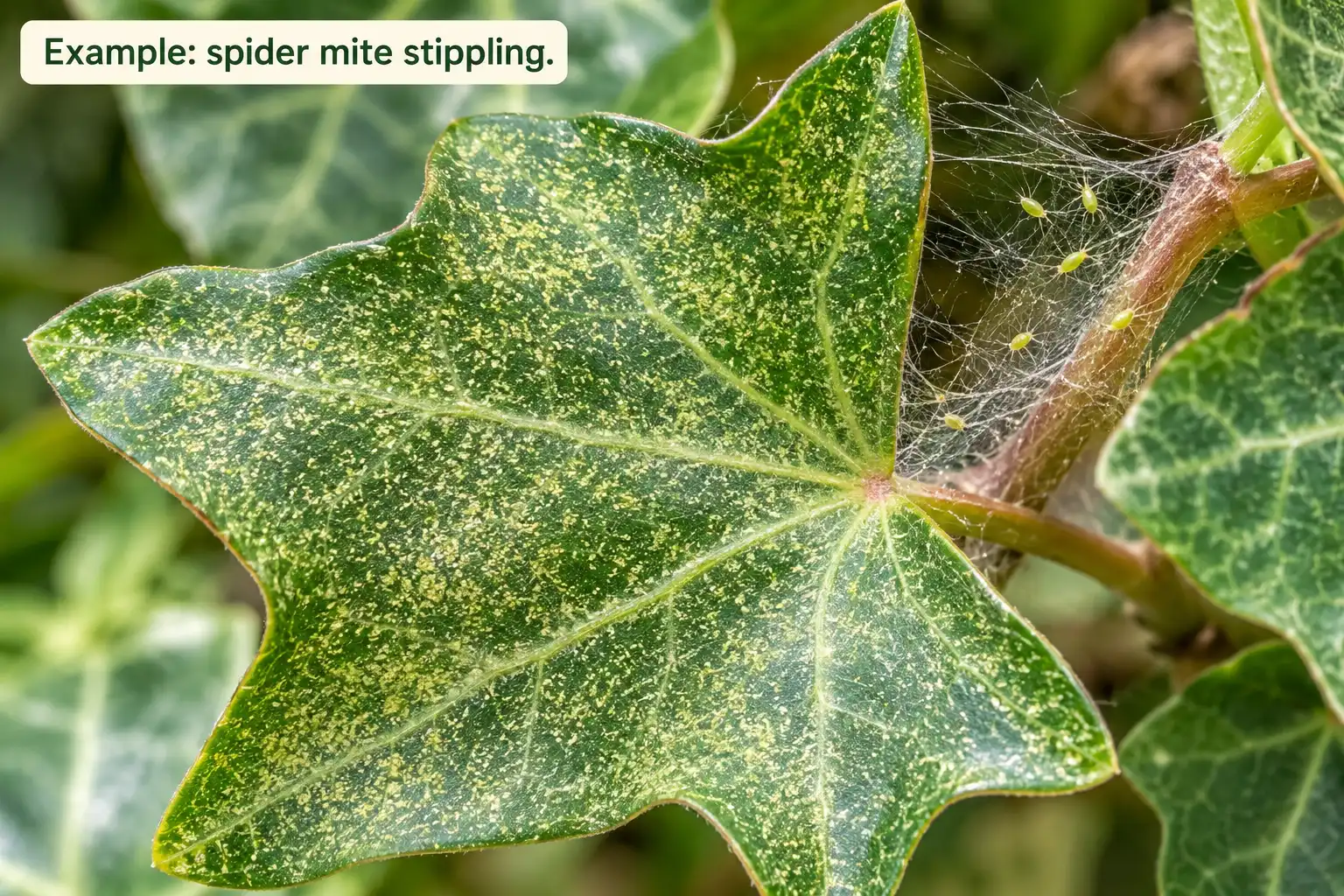
Spider mite damage usually shows up before you spot the mites. UC IPM describes the first sign as stippling, a scatter of tiny light dots on the leaves. Then leaves can turn bronze or yellow and drop. Fine webbing appears once numbers climb.
Other pests and problems can look similar, though. Your county extension office, local Master Gardener volunteers, or a state plant diagnostic lab can confirm what is on the plant. Clemson Extension notes that a county office can send a leaf sample to a diagnostic clinic for a small fee.
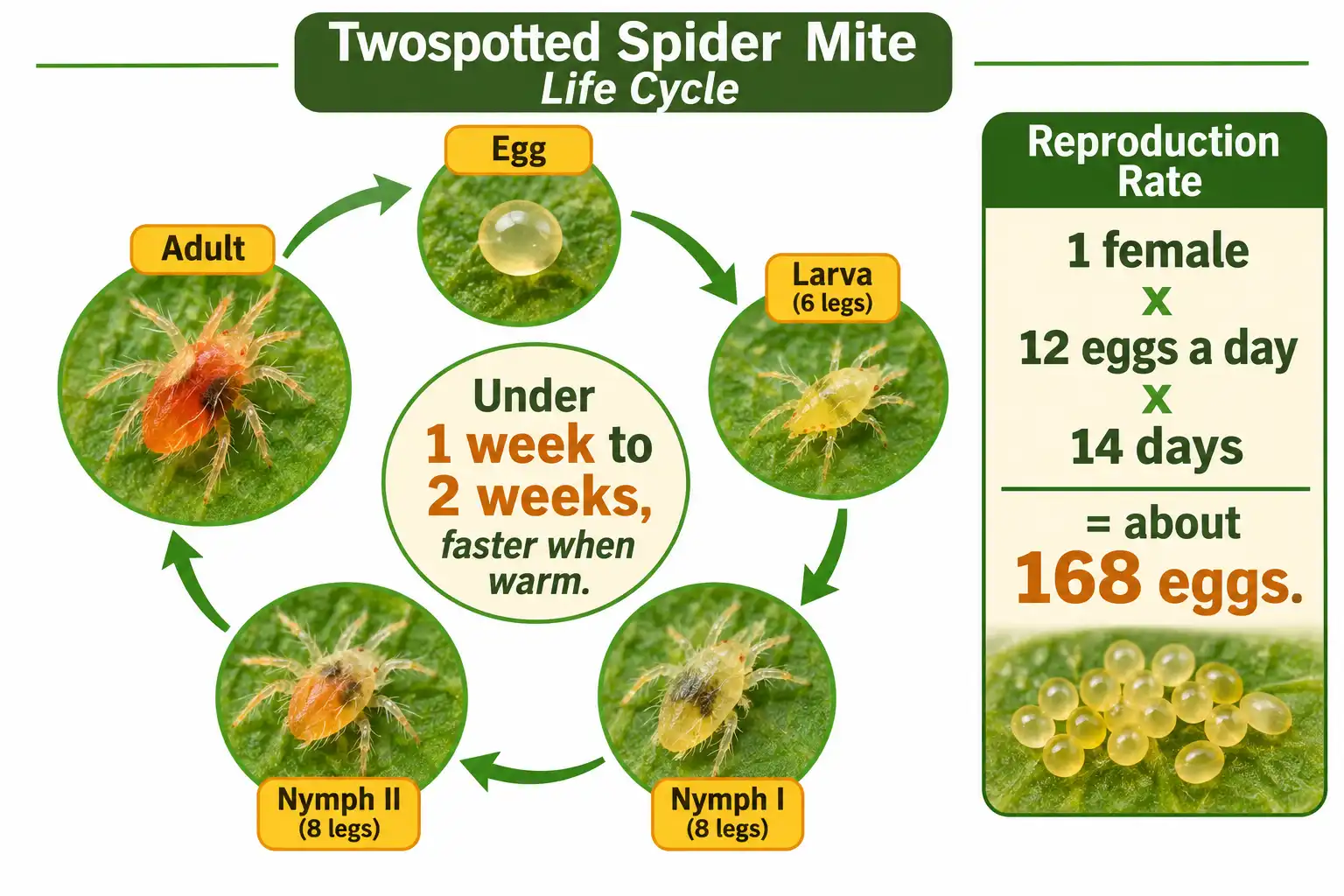
The twospotted spider mite is the main species on houseplants, according to Colorado State Extension. University of Minnesota Extension puts it at about 1/50 inch long. It is yellow-orange, with a dark spot on each side. Colonies live mostly on leaf undersides.
The White Paper Test
Hold a sheet of white paper under a stem and tap the leaves. Iowa State Extension says any mites show up as tiny moving specks on the paper. A 10X hand lens, which UC IPM recommends, shows the eight legs and dark spots. Also check leaf undersides for eggs. They look like round, clear droplets that turn cream colored before hatching.

Problems That Look Similar
The University of Kentucky’s houseplant pest guide and other extension sources describe a few look-alikes:
- Thrips: silvery patches dotted with dark specks of excrement, and no webbing.
- Cyclamen mites: too small to see. Leaves twist and turn brittle, and buds deform. Kentucky notes they mostly hit African violets and cyclamen, and they need a different approach.
- Drought stress: Minnesota Extension warns that mite stippling can be confused with it.
- Spider webs: Colorado State says ordinary spider silk often gets mistaken for mite webbing. So look for moving specks inside it.
Webbing is the clearest clue. UC IPM notes that it sets spider mites apart from thrips and from aphids clustering on new growth.
Why Spider Mites Spread So Fast Indoors
Warm, dry rooms suit spider mites. In fact, University of Minnesota Extension ranks them as the number one houseplant pest because heated winter homes favor them. Colorado State explains why: dry air lets mites feed more, and drought-stressed plants become more nutritious to them.
Their life cycle is short, too. UC IPM says a generation can finish in under a week when heat and food are favorable. Minnesota gives 1 to 2 weeks from hatch to adult, depending on temperature. So warmer rooms mean faster cycles.
Egg numbers explain why one rinse never finishes the job. Colorado State says a mature female may lay about a dozen eggs a day for a couple of weeks. Taking that as 12 eggs a day for 14 days, one surviving female can leave roughly 168 eggs behind.
How to Get Rid of Spider Mites on Houseplants, Step by Step
Start with physical controls. They work on any plant, cost nothing, and leave no residue.
- Isolate the plant and check its neighbors. Move it away from other houseplants, then paper-test every plant nearby. Colorado State advises treating all susceptible houseplants at the same time.
- Decide whether to keep it. Iowa State says a small, heavily infested plant is usually easier to discard than to nurse back. If you discard it, bag it before carrying it out.
- Prune the worst growth. Cut off bronzed, yellowed, or webbed leaves. Colorado State says to trim, bag, and remove heavily infested leaves.
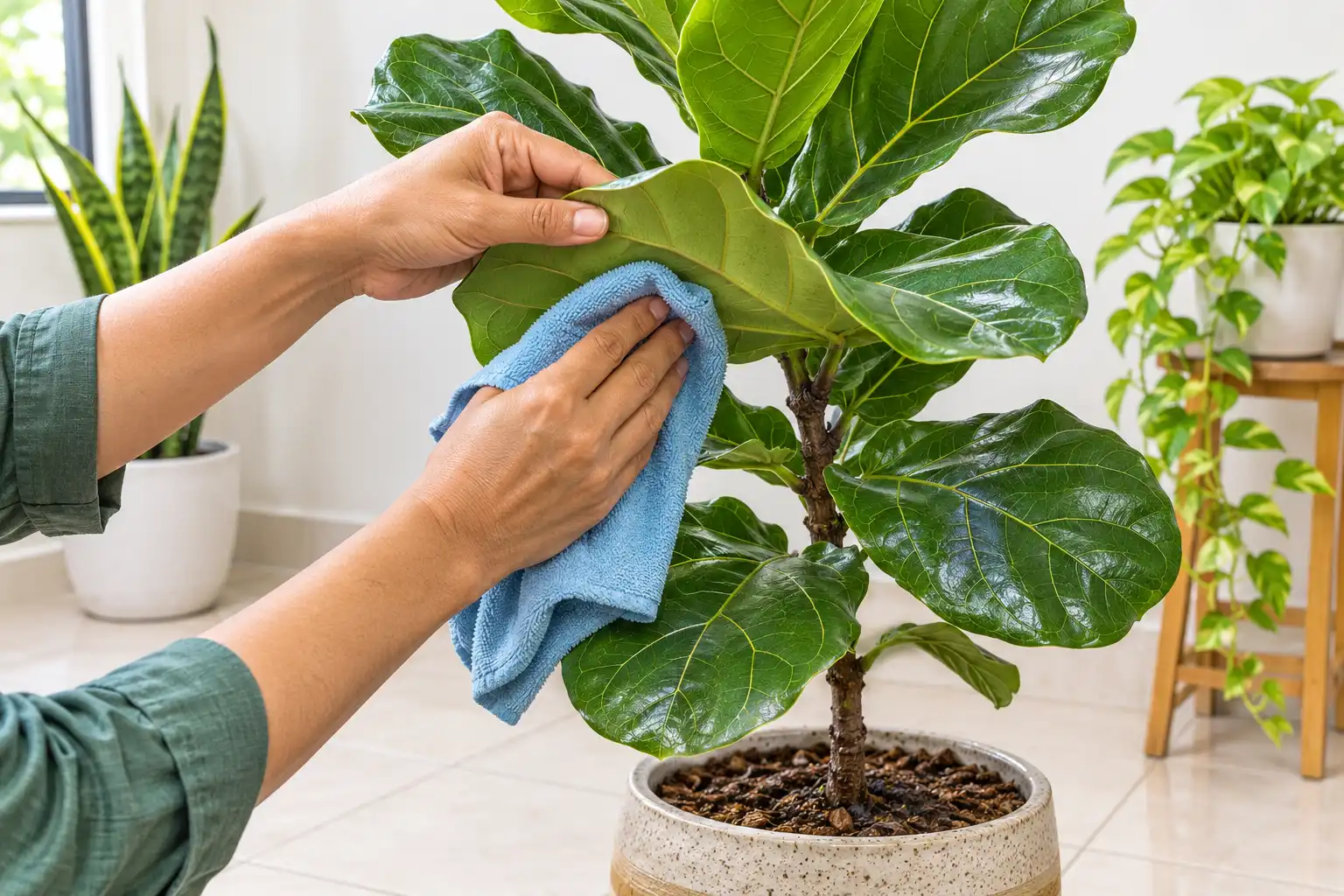
- Rinse leaf undersides hard. Take small plants to the shower or sink and aim the spray up at the undersides. Kentucky advises water strong enough to knock pests off but not strong enough to damage the plant. For plants too big to move, Colorado State suggests wiping each leaf with a soft, damp cloth instead.
- Repeat and recheck. Rinse again on a schedule, and run a paper test each time.
The water does more than wash mites away. It also breaks up their webbing, which Colorado State says may delay egg laying.
How Often to Rinse
Extension sources give different schedules. UC IPM suggests a water spray or mist on leaf undersides at least once a day while a plant is infested. By contrast, Colorado State repeats rinsing and wiping at one to two week intervals while mites persist. Daily misting is practical for one or two plants. Weekly rinsing fits a larger collection better.
Either way, Clemson cautions that rinsing alone often fails against heavy infestations. If paper tests still turn up mites after a week or two, move on to soap or oil.
Once tests come up clean, keep watching. The University of Kentucky keeps new plants apart for 30 days to see whether pests appear. That same 30-day window works well for a treated plant before it rejoins the others.
Spider Mites Treatment Options Compared
Each treatment fits a different situation. This table sums up what the extension sources say about each one.
| Treatment | What it does | Best for | Main limit | Source |
|---|---|---|---|---|
| Hard water rinse | Knocks mites off and breaks webbing | Light infestations on movable plants | Often fails on heavy infestations | Clemson, Colorado State |
| Damp cloth wipe | Removes mites by hand | Large plants that stay put | Slow on plants with many leaves | Colorado State |
| Rubbing alcohol swab | Wipes off mites, with some contact kill | A few infested leaves | Not practical for a whole plant | Univ. of Kentucky |
| Insecticidal soap | Kills mites it wets | Moderate infestations | Webbing blocks it, and eggs survive | Colorado State, Univ. of Kentucky |
| Horticultural or neem oil | Smothers mites it coats | Moderate infestations | Can injure stressed plants or above 90°F | UC IPM, Clemson |
| Predatory mites | Eat spider mites | Larger collections | Starve without prey, and sprays kill them | UC IPM, Clemson |
| Discarding the plant | Removes the source | Small, heavily infested plants | You lose the plant | Iowa State |
Insecticidal Soap, Horticultural Oil, and Neem Oil
Insecticidal soap and horticultural oil are the main sprays for spider mites on houseplants. Colorado State says few chemical controls work indoors, and these two are the primary ones.
Sources rank them differently, though. UC IPM prefers soap or oil when treatment is needed, and Minnesota calls both reasonably effective. Colorado State goes further on oil and calls it perhaps the most effective miticide for home use. Yet it rates soap as only marginal against twospotted spider mites, partly because webbing blocks it. So rinse the webbing off first, whichever product you choose.
Neem oil counts as a horticultural oil here. UC IPM lists it with canola and cottonseed oils as acceptable for spider mites. Like other oils, it works only on the pests it coats, which is also how neem oil handles aphids.
What the Label Controls
The product label sets the dilution, the plants it covers, how often to reapply, and any wait before harvest. Still, a few points hold across products:
- Contact only. Iowa State notes these sprays have no residual activity, so cover leaf undersides completely.
- Eggs survive. Kentucky says mite eggs are not susceptible to insecticides. That is why Iowa State expects repeat treatments.
- Test first. UC IPM suggests trying a product on part of the foliage several days before a full treatment.
- Water first and avoid heat. Minnesota advises watering plants before spraying, and UC IPM warns against spraying above 90°F.
- Protect people and pets. Keep children and pets away from treated plants for as long as the label says. In mild weather, Kentucky suggests treating plants outdoors and letting them dry fully before bringing them back in.
Does a Spider Mites Home Remedy Work?
Plain water is the home remedy with the strongest support. Every extension guide cited here starts with forceful rinsing.
Rubbing alcohol has more limited backing. The University of Kentucky lists a cotton swab dipped in rubbing alcohol as a way to wipe off mites. It notes the alcohol also affects mites the swab misses. That suits a handful of leaves, not a whole plant. So try it on one leaf and wait a few days first, the same caution UC IPM gives for soaps and oils. None of the guides cited here gives a spray dilution for spider mites, so we don’t publish one.
Homemade soap sprays carry more risk. Minnesota Extension advises against them because they can burn and damage plants.
Kitchen sprays are largely unproven. Some commercial miticides use plant extracts such as clove, rosemary, and mint oils, per UC IPM. However, none of the extension guides cited here recommends homemade garlic or pepper sprays for spider mites.
Humidity helps with prevention. Clemson says higher humidity indoors can reduce spider mite numbers and damage. None of these guides sets a target humidity figure, though.
Do Predatory Mites Work Indoors?
They can, but extension sources disagree on how practical they are for houseplants. Colorado State says there are generally no biological controls for house plants. Yet its same fact sheet notes that commercial predatory mites have worked on interior plants, with humidity as the main limit.
Clemson is more hopeful. It says Mesoseiulus longipes handles low humidity and suits indoor plants. Phytoseiulus persimilis works best from 55°F to 85°F, while the californicus mite works from 55°F to 110°F, mainly as prevention.
Timing matters most. UC IPM suggests bringing heavy infestations down with soap first, then releasing predators. Its guideline is one predator for every 10 spider mites. So for a plant you estimate carries 200 mites, that points to about 20 predators. The supplier’s directions set the actual release.
After that, hold off on sprays. Clemson notes that soap and oil kill beneficial mites on contact.
Products That Can Make Spider Mites Worse
Some insecticides make spider mite problems worse. UC IPM says carbaryl, some organophosphates, and some pyrethroids often kill mite predators and can even speed up mite reproduction. Colorado State adds that malathion can aggravate mites. Soil applications of the systemic insecticide imidacloprid have also contributed to outbreaks.
That matters indoors, where systemic products for other houseplant pests are common. Check the active ingredient before using one on a plant with mites. Colorado State also warns that spider mites often develop resistance, so a product that worked once may fail later.
Whatever you use, follow the label. As Minnesota Extension puts it, “the label is the law.”
Spider Mites on Edible Plants Indoors
Edible plants grown indoors can get spider mites too. Minnesota Extension lists cucumbers, snap beans, peas, tomatoes, and lettuce among the twospotted spider mite’s hosts, and Colorado State adds eggplant. That includes vegetables grown in pots that come inside for winter.
Sprays need extra care on food plants. A product labeled for houseplants or ornamentals does not cover a plant you plan to eat. So use only a product whose label lists that crop, and follow its wait before harvest.
Water is the safest first step for edibles because it leaves nothing on the food. For example, leafy greens such as arugula grown on a windowsill take the same rinses and white paper checks as any houseplant.
Why Spider Mites Keep Coming Back
Exterminating spider mites takes persistence more than strong chemicals. When mites return, check these common gaps:
- Eggs survived. Rinses and contact sprays miss eggs, so a new hatch follows. Keep treating through it.
- A neighbor went untreated. Mites move back from any infested plant left out of treatment.
- Webbing shielded the colony. Colorado State notes that webbing keeps soap from reaching mites.
- The plant stayed too dry. UC IPM says water-stressed plants suffer the most damage. Still, avoid overwatering, which Minnesota warns can cause root rot.
How to Keep Spider Mites Off Houseplants
Prevention comes down to inspection and steady care:
- Quarantine new plants. Kentucky keeps new plants apart for 30 days. Minnesota Extension adds that pests often ride in when plants move indoors for winter.
- Paper-test on a schedule. Minnesota suggests checking garden plants every 3 to 5 days in dry weather. That pace also suits houseplants in a heated winter room.
- Rinse or wipe leaves through winter. Minnesota says regular washing during winter helps keep mites at bay.
- Wash hands and tools between plants. Kentucky advises this when moving from one group of plants to another.
- Pick less-prone plants. Minnesota lists succulents, cacti, pothos, snake plant, hoya, and ferns as having fewer mite problems. Palms, philodendrons, and figs see more, and Iowa State adds ivy and Norfolk Island pine.
FAQs on Spider Mites Treatment for Houseplants
Can spider mites spread to my other houseplants?
Yes, mites crawl across touching leaves, and UC IPM notes they also ride air currents. Isolate the infested plant, then paper-test its neighbors and treat every infested plant at the same time.
How long does it take to get rid of spider mites?
Plan on several weeks, because eggs survive both rinses and contact sprays. Keep rinsing and checking until white paper tests stay clean, then keep the plant apart for another 30 days.
Does neem oil kill spider mites on houseplants?
Yes, neem oil kills the spider mites it coats, and UC IPM lists it as acceptable. It has no residual activity, so cover leaf undersides fully and follow the label for everything else.
Can I use a houseplant spray on indoor herbs?
Only if the product label lists that herb, such as basil, as a crop. Houseplant-only sprays don’t cover food plants, so check the crop list and harvest wait, or use water rinses.
Should I throw away a plant with spider mites?
For a small plant with heavy webbing, often yes, and Iowa State says discarding is usually easier. A larger or valued plant is worth pruning, rinsing, and treating before you give up.
Does misting houseplants prevent spider mites?
Misting helps, since Clemson says higher indoor humidity can reduce spider mite numbers and damage. It won’t clear a heavy infestation alone, so pair it with pruning, rinsing, and soap or oil.
Putting This Into Practice
Start with water and patience. Isolate the plant, prune the worst leaves, and rinse the undersides hard. Then check with white paper on a set schedule. Add soap or oil only if mites hang on, and let the label set every detail. Finally, give new and treated plants 30 days apart.